
What Muscles Do Tricep Dips Work: Elbow Angle Matters
Think tricep dips only hit your arms? Elbow angle and torso lean quietly shift the work to your chest and shoulders. Here's what muscles do tricep dips work and how to fix your form.
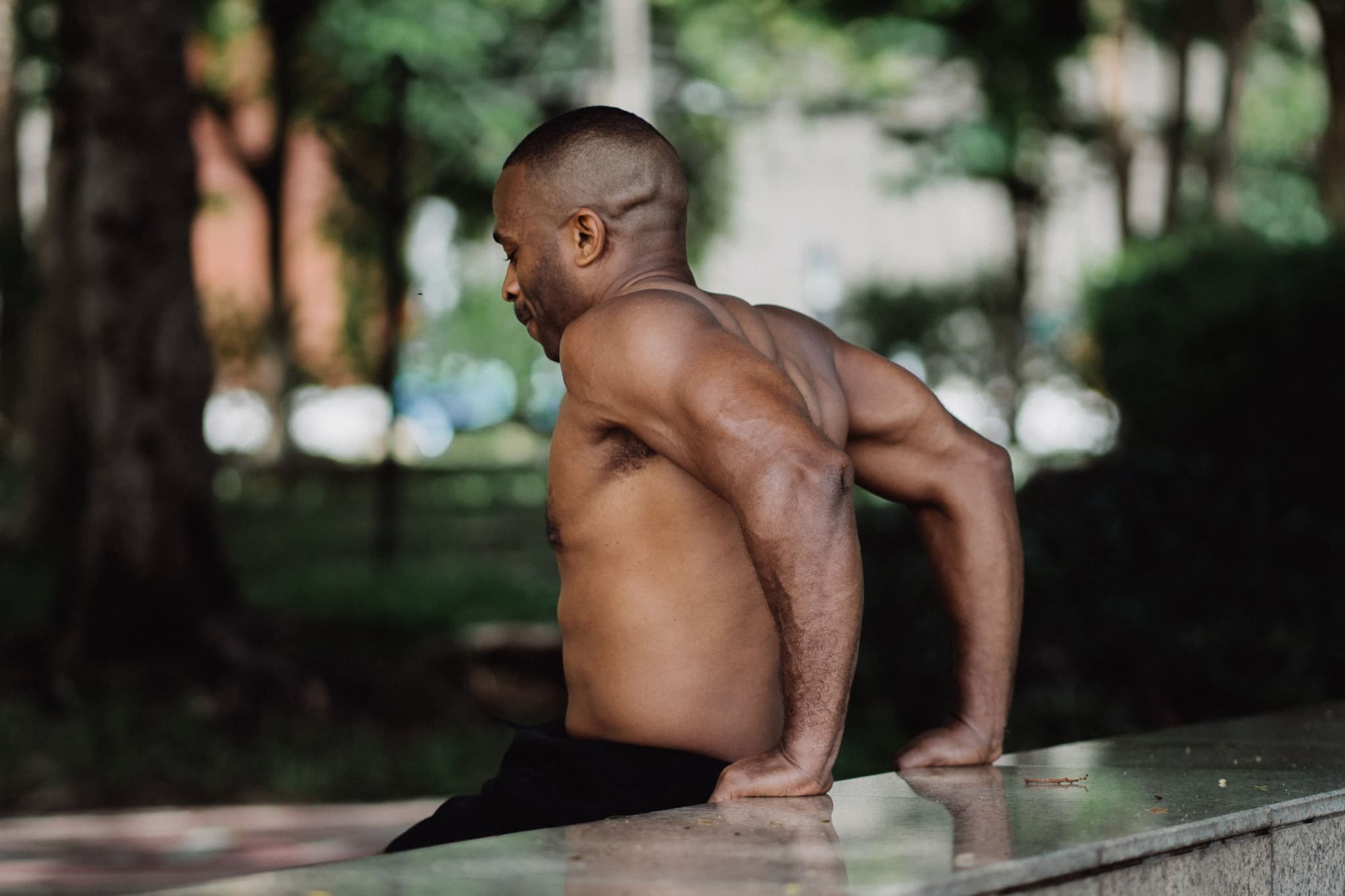
Bend your elbows and let them flare out while leaning your torso forward on a dip, and you've quietly turned a triceps exercise into a chest workout. That's the real answer to what muscles do tricep dips work: it depends on angles most people never think to check. The primary muscles targeted shift based on elbow position and body lean. Most guides hand you a muscle list and call it done. Triceps, front delts, chest, fine. But that list doesn't explain why your shoulders ache after a session, or why a dip on a bench feels nothing like the same move on parallel bars at the gym.
This article breaks down the actual mechanics behind the movement. You'll see how elbow position shifts the workload from arms to chest, how torso angle changes the target muscle entirely, and where most dip injuries actually start. You'll also get a clear path for progressing from bench dips to weighted bar dips, plus a straight comparison between dips and push-ups for anyone deciding which one earns a spot in their routine.
What Muscles Do Tricep Dips Work
Primary muscle: Triceps brachii
Secondary muscles:
Anterior deltoids
Pectoralis major
Trapezius
Core and abdominals
What Muscles Do Tricep Dips Work? (Quick Answer)
Tricep dips work more than your arms. As a compound movement, they recruit muscle groups across your upper body at the same time, which is why dips build strength faster than most isolation moves.
Here's the breakdown:
Primary:
Triceps brachii (all three heads work together, though the long head gets a unique stretch at the bottom of the rep)
Secondary:
Pectoralis major (lower chest fibers)
Anterior deltoids
Stabilizers:
Rhomboids and trapezius (scapular control)
Rotator cuff muscles
Core (rectus abdominis and obliques, keeping your torso upright)
The long head is the only one of the three tricep heads that crosses the shoulder joint, running from the scapula down to the elbow. That extra reach is what puts it under a stretch when your shoulder extends at the bottom of a dip, a position most straight-arm pressing exercises don't create.
Your elbow angle during the descent shifts how much load each head takes on. Keep your elbows tucked closer to your body and you bias the triceps more; flare them out and you shift more work to the chest and front delts.
The Muscle Mechanics: Why Elbow Angle Changes What Muscles Tricep Dips Work
Your body doesn't recruit muscle randomly. Every joint angle changes the leverage math, and dips are a case study in how a few degrees can shift the entire workload.
What Muscles Do Tricep Dips Work?
Primary Mover: Triceps Brachii (Long Head)
Triceps brachii
Anterior deltoids
Pectoralis major
Trapezius
Core and abdominals
The long head of the triceps drives elbow extension, which is the whole point of a dip. Tricep dips achieve 85-90 percent activation of the triceps brachii, according to Jefit's EMG-based exercise rankings, putting them near the top of the list for that muscle.
A 2011 master's thesis by Brittany Boehler at the University of Wisconsin-La Crosse backs this up with lab data. Using EMG readings on the combined long and lateral heads, the study found no significant difference between triangle push-ups, kickbacks, and dips. The research concluded that triangle push-ups were the best triceps exercise, with kickbacks and dips rated equally effective.
Synergists and Stabilizers: Anterior Delts, Pecs, Traps, Core
Triceps don't work alone. Your anterior delts and pectoralis major assist with shoulder flexion and stabilization as you lower and press. Your traps and core lock your torso in place so the movement stays clean instead of collapsing into a shoulder shrug. This tricep muscle activation pattern depends on how you position your body—small changes in form shift which muscles carry the load.
Elbow Tuck vs. Elbow Flare: The Load-Shifting Switch
Most people lose triceps gains right here. According to ATHLEAN-X, flaring your elbows outward during a dip reduces triceps activation and dumps that stress onto the shoulder joint instead, raising injury risk with every rep.
Keep your elbows tucked close to your body, with roughly a 90-degree bend at the bottom, and you maximize both range of motion and triceps engagement.
Next, we'll look at how bench, ring, and bar dip variations change this equation further.
Tricep Dips vs. Chest Dips: How Torso Angle Shifts the Target Muscle
The same movement pattern produces two different results depending on how you position your body. Your torso angle, elbow path, and equipment setup decide whether tricep dips emphasize your triceps or shift load to your chest.
Stay upright and the tension stays on your triceps. Lean forward and let your elbows flare out, and the load shifts to your pecs.
Upright Torso = Triceps Emphasis
Keep your chest tall, elbows tucked close to your ribs, and shoulders stacked over your hips. This position locks your elbow joint into the primary role, forcing your triceps to do the extension work with minimal help from your chest.
Forward Lean + Flared Elbows = Chest Emphasis
Tip your torso forward, let your elbows drift outward, and you shift the mechanics toward a pressing motion similar to a decline bench press. A forward lean of roughly 30 to 45 degrees shifts the primary workload from your triceps onto your pectoral muscles, particularly the lower chest fibers. Your triceps become secondary support instead of the primary mover.
Tricep Dips vs. Chest Dips: Quick Comparison
Setup | Torso Position | Elbow Position | Primary Target |
Tricep Dip | Upright | Tucked in | Triceps |
Chest Dip | Leaned forward | Flared out | Chest |
Dips can work your chest, but only if you change your form to invite it in. Next, let's look at what happens to your shoulders when you get that angle wrong.
Dip Form Cues to Protect Your Shoulders
Tricep dips have a reputation for wrecking shoulders. The movement itself isn't the problem. Bad positioning is. Fix your form and the risk drops fast.
Keep Elbows Tracking Back, Not Out
Watch your elbows in a mirror or on video. If they're winging out to the sides as you lower, you're setting up for trouble. When the elbows flare out, you reduce the effectiveness of the triceps activation and shift the tension to the shoulders, increasing the risk of injury.
Your elbows should track backward, close to your torso, like you're trying to brush your ribs on the way down. This keeps the load on your triceps instead of grinding through your shoulder capsule.
Stop when you notice your elbows drifting sideways. Reset, tuck them back in, and finish the rep with control.
How Deep Is Too Deep? The Shoulder-Elbow Line
Depth is where most lifters get greedy. Deeper feels like more work, but past a certain point you're just loading your shoulders, not your triceps.
A 90-degree elbow bend is your target. Don't blow past it chasing extra range. Once you pass that point, you're not adding benefit to the tricep dips exercise, so don't try to go deeper. You'll get the full benefits without dipping below this level.
Letting your elbows move outward when you dip places substantial stress on the shoulders and greatly increases the risk of shoulder impingement. Use your elbow as the checkpoint. The moment your shoulder joint sinks past it, pull back and let your triceps do the work they're built for.
Progressing Tricep Dips: Bench to Bar to Weighted
You don't need parallel bars on day one. Tricep dips scale well, and picking the right variation for your current strength keeps your shoulders safe while you build real pressing power.
Regression: Bench or Chair Dips
Start here if straight-bar dips feel out of reach or your shoulders complain during standard reps. Place your hands on a bench behind you, legs extended, and lower your hips toward the floor.
Bending your knees reduces the load your triceps have to move, since less of your bodyweight sits on your arms. Straighten your legs when you want more difficulty without changing equipment.
Standard: Parallel Bar Dips
Once you can do 12 to 15 clean bench dips, move to parallel bars. Your full bodyweight now hangs from your shoulders and arms, which demands more from your triceps, chest, and stabilizers.
Control the descent. Don't drop and catch yourself at the bottom.
Progression: Weighted Dips
Bodyweight dips stop challenging you once you can knock out 15 to 20 reps with good form. Add resistance at that point, either with a dip belt or a dumbbell held between your feet.
Add weight in small increments, 5 to 10 pounds at a time, and keep your rep range around 6 to 10 for strength gains. This dips workout structure—moving from bench to bar to loaded—builds sustainable strength without jumping too fast into heavy resistance.
How to Program Tricep Dips in Your Resistance Training Split
Dips earn a spot in your routine, but they're demanding on the shoulder joint, so how you program them matters as much as how you perform them.
What Muscles Do Tricep Dips Work?
Tricep dips primarily target the triceps brachii, the large muscle on the back of your upper arm. Secondary muscles activated include the anterior deltoids, pectoralis major, trapezius, and core stabilizers.
Primary:
Triceps brachii
Secondary:
Anterior deltoids, pectoralis major, trapezius, core/abdominals
Sets, Reps, and Frequency
Two to three sessions a week is the sweet spot for tricep dips. Your triceps recover fast compared to bigger muscle groups, but the shoulder joint needs a day off between sessions, especially if you're loading depth aggressively.
Bend to a 90-degree elbow angle. Lowering yourself until your elbows form a 90-degree angle, or slightly more, maximizes muscle activation, and ATHLEAN-X points out that letting the shoulders roll forward past that point is what drives the risk for shoulder impingement.
Stop the descent once your shoulders reach elbow level. Cathe Friedrich makes the same point about depth: once your shoulders reach the level of your elbows, you've dipped deeply enough, and you'll get the full benefits of the exercise without going any lower. Past that point you're not building more muscle, you're just loading the joint.
How Many Tricep Dips Should I Do a Day?
Goal | Sets | Reps | Rest |
Strength | 4 | 6-8 | 90 sec |
Hypertrophy | 3-4 | 10-12 | 60 sec |
Endurance | 3 | 15-20 | 45 sec |
Start with the hypertrophy range if you're new to dips. Add weight once you hit the top of your rep range for two consecutive sessions.
Where Dips Fit: Push Day, Arm Day, or Full-Body
On a push day, load dips after your primary pressing work like bench or overhead press. Your triceps are already warm, so you'll get more out of each rep than if you started cold.
On arm day, dips can headline. Pair them with isolation tricep exercises like skull crushers or pushdowns for volume.
Keep your torso upright throughout. That posture keeps the emphasis on your triceps rather than sliding the tension toward your chest.
For a full-body split, slot dips in wherever pressing movements land. Just don't stack them the day after a heavy bench session.
Tricep Dips vs. Push-Ups: Which Builds More Tricep Activation?
Push-ups feel safer, dips feel harder, and most lifters assume harder means better for muscle growth. The EMG data tells a flatter story.
A 2011 University of Wisconsin-La Crosse thesis by researcher Brittany Boehler measured tricep activation across eight exercises, including dips, triangle push-ups, and kickbacks. Looking at the combined EMG values for the entire movement, there was not a significant difference between the triangle push-up, kickbacks, and dips.
The study concluded that triangle push-ups were the best triceps exercise, although kickbacks and dips were equally effective in targeting the triceps brachii muscle. The gap between them wasn't wide enough to call one exercise superior.
Are tricep dips better than push-ups for triceps?
Roughly equal. Neither tricep dip nor push-up wins outright—both deliver comparable tricep muscle activation. The choice comes down to comfort, not gains. If your shoulders ache at the bottom of a dip, triangle push-ups give you comparable tricep recruitment without loading the joint the same way. If wrist position bothers you during push-ups, dips solve that problem instead.
Pick based on which joint complains least, then fine-tune with grip width and hand placement.
Tricep Dip FAQs
Do tricep dips work biceps? No. Biceps stay almost completely dormant during a dip. The movement is an elbow extension pattern, so the triceps do the work while the biceps only fire isometrically to stabilize the joint. If you want bicep engagement, pair dips with a pulling exercise since dips are a pressing movement.
Are tricep dips bad for your shoulders? Dips aren't inherently dangerous, but elbow flare changes everything. When the elbows flare out, you reduce the effectiveness of the triceps activation and shift the tension to the shoulders, increasing the risk of injury. Keep a roughly 90-degree elbow bend, and you'll get full range of motion and better muscle engagement while sparing your shoulders.
What muscles do tricep dips work? Tricep dips primarily target the triceps brachii. Secondary muscles include the anterior deltoids, pectoralis major, trapezius, and core muscles. The exact distribution depends on your body angle—a more upright posture emphasizes the triceps, while forward lean recruits more chest.
How many tricep dips should I do a day? There's no universal number. It depends on your training experience and how dips fit into your weekly split. Beginners often do fine with 2 to 3 sets of 8 to 12 reps a few times a week, while advanced lifters can push volume higher on weighted variations. Depth matters more than daily rep count: quality reps beat cranking out extra sets with poor range of motion.
Do tricep dips work your chest? Yes, to a degree. Leaning your torso forward during the descent shifts some load onto the pectoralis, especially the lower fibers, though the triceps still do most of the work. When your shoulders reach the level of your elbows, you've dipped deeply enough. Don't go past that point—you'll get the full benefits without increasing shoulder injury risk.
The Bottom Line
What muscles do tricep dips work? Mostly the triceps, but only when you control two variables: elbow angle and depth. Flare your elbows or drop too low, and you shift more of the workload to your shoulders and chest. Keep your elbows close to your sides and your body upright, and your triceps do more of the work. Lean forward and let your elbows flare, and your chest takes over. Stop around a 90-degree bend, and you've got an efficient compound press, backed by EMG data rather than gym folklore.
The lesson isn't that dips are risky. Sloppy dips are risky. Precision turns this move into a real tricep builder instead of a shoulder tax.
Put it to work. If you're newer to dips or feel any shoulder strain, start with bench dips and cue yourself to stop at 90 degrees every rep. If you've got the strength and clean form already, add dips to your next push day and feel the difference elbow control makes.
Related Articles
Dumbbell Arm Exercises for Beginners: Why Free Weights Beat Cables
Cables feel safer, but they hide the mistakes that matter most. See why dumbbell arm exercises beginners should master first build real strength, better balance, and honest form fast.
Step-Ups for Hamstrings: Box Height, Stance & Form Guide
Are step-ups actually a hamstring exercise, or just quads in disguise? Here's how box height, stance, and hip hinge decide the answer.
7 Progressive Overload Mistakes Beginners Make (and Fixes)
Stalled lifts? You might be making one of these 7 progressive overload mistakes beginners make without realizing it. Get the symptoms, causes, and exact fixes before it costs you months.