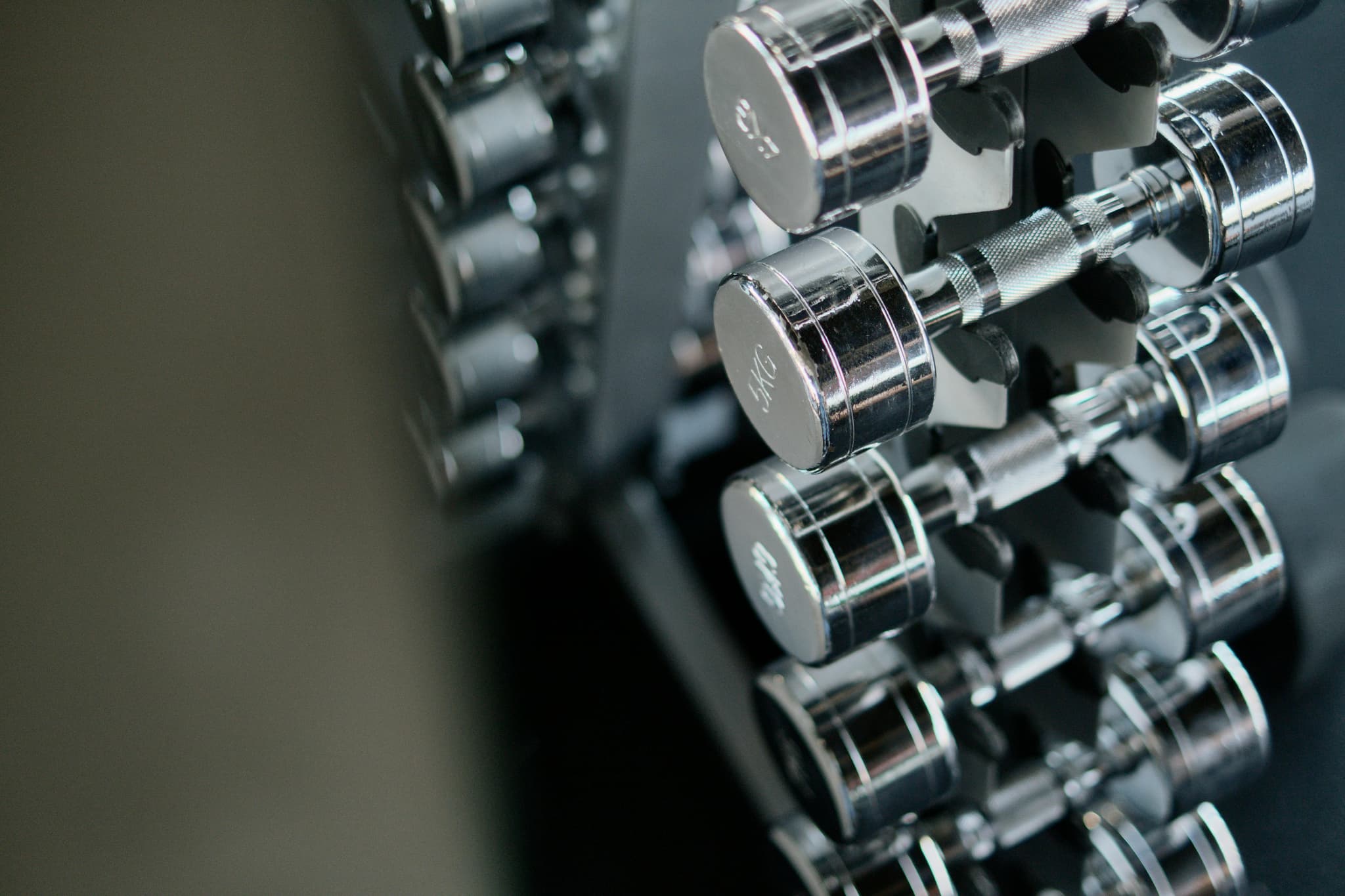

Dumbbell Arm Exercises for Beginners: Why Free Weights Beat Cables
Cables feel safer, but they hide the mistakes that matter most. See why dumbbell arm exercises beginners should master first build real strength, better balance, and honest form fast.
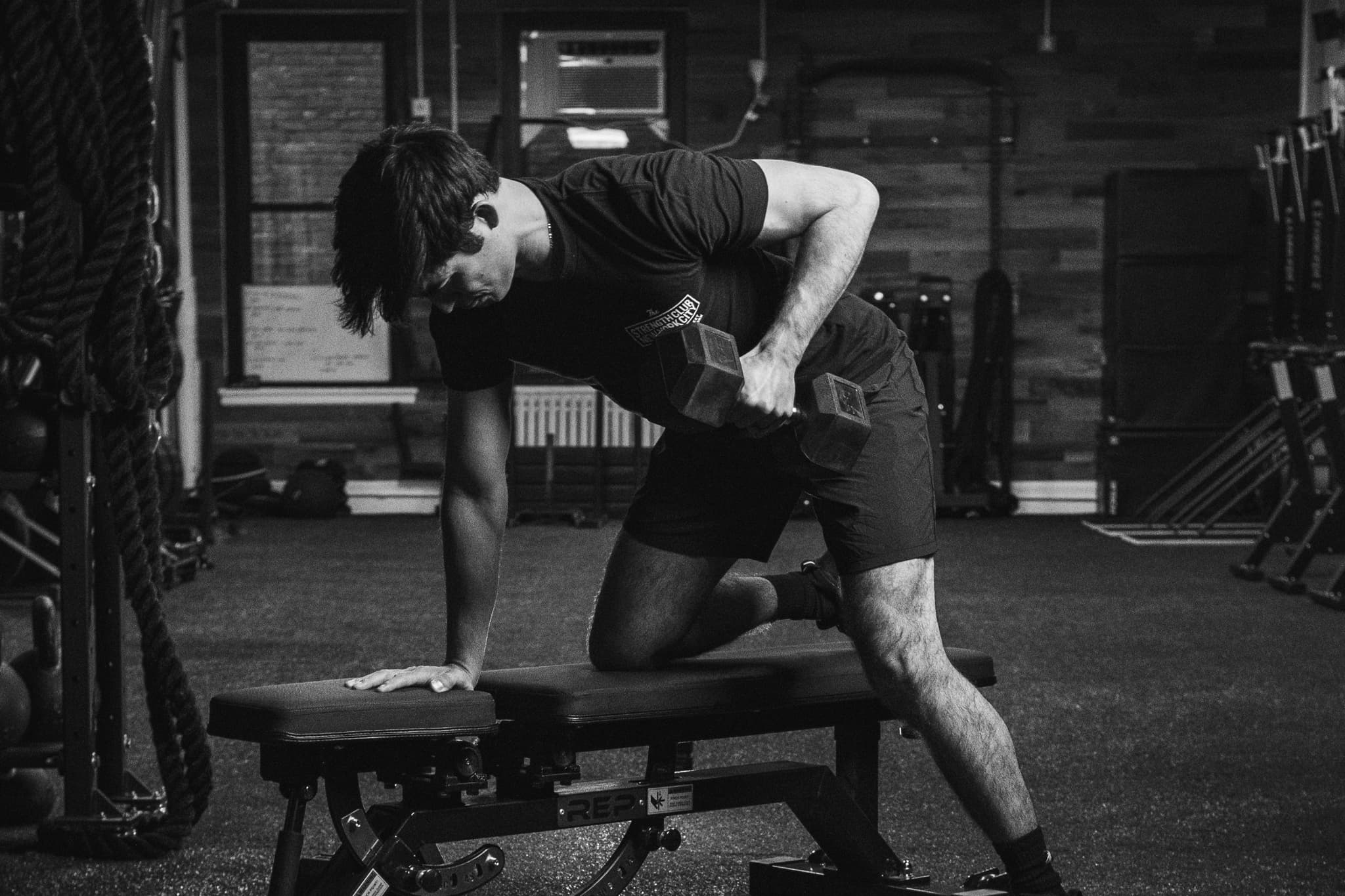
Grab a dumbbell instead of walking over to the cable machine, and your beginner gains might show up faster. That's the case for dumbbell arm exercises beginners should try first, before they ever touch a cable stack.
Cables feel easier. They guide the weight, so nothing wobbles and nothing feels awkward. But that guidance hides the exact mistakes you need to catch early. Free weights for arms won't let you cheat.
This article settles the dumbbells-versus-cables debate with real research, not gym folklore. Studies on the "bilateral deficit" show that when both arms work together on a machine, they often can't produce as much combined force as each arm working alone. You'll see why that matters for beginners. Then you'll get a full beginner arm workout: four dumbbell exercises for biceps and triceps, five form cues that fix common mistakes, and a simple answer to how often you should train arms each week. All you need is one pair of dumbbells and about 20 minutes.
Dumbbells vs. Cables for Beginners: The Quick Answer
Dumbbells win for beginners because they force each arm to work independently and teach real balance. They also cost nothing if you train at home. Cables feel smoother, but that smoothness hides mistakes you need to feel and fix early on. For dumbbell arm exercises beginners should start with, dumbbells expose weak spots faster than any machine.
If you're picking your first tool, here's what matters:
Dumbbells build honest strength.
No machine track guiding your arm means your muscles and joints do the real work.
Free weights for arms expose weak spots fast.
A wobbly wrist or a lazy left arm shows up immediately, so you catch bad habits before they become permanent.
Cables are great later, not first.
They're smooth and low-risk, but that same smoothness lets sloppy form slide.
Start with dumbbells. Once your form feels solid, cables make a nice addition, not a replacement.
Dumbbell Arm Exercises for Beginners Beat Cables
Science backs up what good coaches already tell beginners. Free weights build strength that carries over to real life. Cables build strength that mostly stays on the cable machine.
That difference matters more than most new lifters realize.
What a Major Strength-Training Review Found
Researchers pooled data from 13 studies covering 1,016 participants (789 men and 219 women) to compare free-weight training against machine-based training.
Strength in free-weight tests increased significantly more with free-weight training than with machines, while strength in machine-based tests tended to increase more with machine training than with free weights. The study ran in BMC Sports Science, Medicine and Rehabilitation in 2023.
In plain language: training with dumbbells builds real-world strength you can use anywhere. Your muscles learn to stabilize a weight, control it, and move it through space. That skill transfers to everything from carrying groceries to picking up your kid.
Cable machines don't ask your body to do that work. The machine handles stability for you. You get stronger on the machine, but that strength doesn't always show up anywhere else.
For someone starting a beginner arm workout with proper form, this research points in one direction. Pick the tool that trains your whole body to work together, not just your arms in isolation.
Dumbbells do that job. The next section covers the exact moves worth learning first.
Stabilizer Muscles and Unilateral Strength: The Free-Weight Advantage
Grab a dumbbell instead of a cable handle and your body has to do more work. Not harder work. Smarter work.
That's where learning proper form with dumbbells really starts to matter. Dumbbell arm exercises for beginners demand stabilizer control that machines simply don't require.
Your Small Muscles Get to Work Too
Cables run on a fixed track. Your shoulder joint doesn't have to fight for control because the machine already picked the path.
A dumbbell has no track. Your rotator cuff, forearm muscles, and tiny shoulder stabilizers all jump in to keep the weight steady. PowerBlock points to EMG research showing these stabilizer muscles fire harder during dumbbell exercises than they do on comparable machine versions.
Hampton Fitness makes a similar case for free weights in general. That instability trains the muscle instead of getting in its way.
One Arm Can't Hide Behind the Other
Chances are one of your arms is weaker than the other. A cable machine will never tell you that.
Revolution Nutrition explains that dumbbell training works each arm independently, which helps correct imbalances most lifters don't even know they have.
Merach Fit lays out a clear example with rows. Do a cable row and your stronger arm can quietly take over. Grip a dumbbell in each hand instead, and there's nowhere for that imbalance to hide. Each side has to pull its own weight, literally.
Portability and Cost: Dumbbells Fit Your Home, Your Bag, and Your Budget
A cable station needs a wall, a stack of plates, and a chunk of your living room. Dumbbells need a corner.
That difference matters when you're just starting out and testing whether this gym thing sticks. A basic pair of adjustable dumbbells costs less than one month of many gym memberships. Hampton Fitness, a manufacturer known for building weights used in commercial gyms, makes dumbbells with long-term durability that makes them a cost-effective choice for serious home gym users, while cable machines rely on pulleys and cords that wear out over time.
You can toss dumbbells in a bag for a trip. Try that with a cable tower.
For dumbbell arm exercises beginners can do anywhere, this flexibility means you're never stuck. No gym open? Train in your garage. Traveling for work? Pack a resistance band or a light pair of dumbbells and keep your routine going.
Free weights for arms also scale with you. Buy one adjustable set now, and it grows as you get stronger. No new equipment, no upgrade fees.
That kind of setup makes it easy to stay consistent, and consistency is what actually builds arms.
Fair's Fair: When Cables Can Match Dumbbells
Dumbbells aren't magic. Cables have their place, and pretending otherwise would be lying to you.
Take lateral raises. Researchers put 24 resistance-trained adults through an 8-week program comparing dumbbell and cable versions of the same exercise. Both built the lateral deltoid at basically the same rate (Frontiers in Physiology, Larsen et al., 2025).
Timing matters here. That study used lifters who already knew how to move well. They had years of practice controlling their joints and finding the right muscle.
You don't have that yet. Once you've built a foundation with dumbbell arm exercises for beginners, cables become a genuinely useful tool. They add variety, keep tension on a muscle through a full range of motion, and give your joints a break from stabilizing every rep.
But that's a later chapter. Right now, you're still learning what good form feels like. Dumbbells teach you that lesson faster because they don't let you fake it. Master that first, and cables will make a lot more sense when you get there.
Picking Your Weight: A Beginner Arm Workout Starting Point
Weight choice makes or breaks a beginner arm workout, so figure out your load before you touch a single dumbbell arm exercise.
How to Choose Your Starting Dumbbell Weight
Grab something light enough to control for 12 clean reps. Most beginners start light for curls and triceps work, often in the 5 to 10 pound range for women and closer to 15 to 20 pounds for men. Let your own strength decide rather than chasing a number you saw online.
Test it before committing. If rep 8 turns into a wrestling match, drop down. If rep 12 feels easy, size up next session.
Form matters more than the number on the dumbbell. A wobbly 15-pound curl teaches your body bad habits. A smooth 8-pound curl teaches it the movement.
Beginner Arm Workout: Sets and Reps
Stick to 2 to 3 sets per exercise when you're starting out. Aim for 10 to 15 reps each set.
That rep range builds muscle memory without wrecking your joints. It also gives you enough volume to feel sore the next day without leaving you too wiped to show up again.
Rest 60 to 90 seconds between sets. Your arms need that window to recover, and you need it to reset your form.
Once you've got your weight and rep scheme locked in, you're ready to put them to work. Here's where those numbers turn into real exercises.
The Beginner Arm Workout: Dumbbell Arm Exercises for Biceps and Triceps
Here are four dumbbell arm exercises for beginners that build real strength, not just sore muscles. Each one trains your arms independently, so you can't lean on your dominant side. That's the whole point of free weights for arms.
Bicep Curl: Build the Front of Your Arm
Stand tall, dumbbells at your sides, palms facing forward. Curl the weight up without swinging your hips or elbows. Keep your elbow pinned to your ribs the whole time.
Do 3 sets of 10 reps per arm. Curl one arm at a time and watch your weaker arm work harder to keep pace. That's the stabilizer effect doing its job.
Overhead Tricep Extension: Target the Back of Your Arm
Hold one dumbbell overhead with both hands, elbows pointing forward. Lower the weight behind your head slowly, then press back up. Keep your elbows still; they shouldn't flare out to the sides.
Aim for 3 sets of 10 reps. Your shoulders and core have to stay locked in place to keep the weight from drifting. A cable machine does that job for you automatically, so this move asks more of your stabilizer muscles.
Tricep Kickback: Isolate and Control
Hinge at the hips with a flat back, one dumbbell in hand. Keep your upper arm parallel to the floor and extend your forearm back. Squeeze at the top for a full second before returning.
Do 3 sets of 12 reps per arm. Working one arm at a time means your stronger side can't quietly pick up the slack, so each triceps has to pull its own weight.
Dumbbell Shoulder Press: Build Pressing Strength
Sit or stand with a dumbbell in each hand at shoulder height. Press both weights overhead without arching your back. Lower with control; don't just drop them.
Do 3 sets of 8 reps. Notice how your weaker arm has to catch up to finish each rep at the same time as the other. That's your body building balanced strength, one rep at a time.
Learning Proper Form with Dumbbells: 5 Coaching Cues
Learning proper form with dumbbells starts with one idea: you control the weight the whole time. There's no track, no guided arm, no machine handling part of the work for you. That's what makes dumbbell arm exercises for beginners such a good teacher.
Here's how to build that control from your first session.
1. Keep your wrists straight. A bent wrist during a curl shifts stress into your joint instead of your muscle. Check your form in a mirror if you have one.
2. Move slow on the way down. Beginners rush the lowering phase. Slowing it down forces your stabilizer muscles to switch on.
3. Squeeze at the top, don't just lift and drop. A one-second pause teaches your body to control the weight, not just move it.
4. Let your off-hand rest, don't help. Dumbbells expose weak sides fast. Resist the urge to cheat with momentum from your stronger arm.
5. Stop the set before your form breaks. Sloppy reps teach bad patterns.
Dumbbells require you to control the weight throughout the entire range of motion, unlike cable machines that run along a fixed path. That constant demand builds strength around your joints and cuts your injury risk over time. Cables keep tension steady, so they don't ask your stabilizers to work nearly as hard.
Master these five cues, and your next arm workout will feel different.
How Often Should Beginners Train Arms with Dumbbells?
Twice a week is the sweet spot for dumbbell arm exercises beginners should follow. Your muscles need about 48 hours to recover before you hit them again.
Monday and Thursday works well. So does Tuesday and Friday. Pick two days with a gap between them and stick to it.
Skip the temptation to train arms daily. Soreness doesn't mean progress, and beginners often confuse the two. Your biceps and triceps grow during rest, not during the workout itself.
If you're doing full-body training three times a week, your arms already get worked through pressing and pulling movements. Adding two focused arm sessions on top of that is plenty for someone just starting out.
Consistency beats frequency here. Two solid sessions a week for two months will build more strength than five random ones squeezed in whenever you feel like it.
Once you've got your schedule locked in, the next question is how much weight to actually pick up.
FAQ: Dumbbell Arm Exercises for Beginners
Are dumbbells better than cables for building arm muscle?
For beginners, dumbbells have the edge, and the research backs it up. A systematic review and meta-analysis covering 13 studies and 1,016 participants found that strength in free-weight tests increased significantly more with free-weight training than with machines, while strength in machine-based tests tended to increase more with machine training than with free-weights. In plain terms: train on dumbbells, get stronger on dumbbells. Train on machines, get stronger on machines.
Your arms need to work in the real world, not just on a cable stack. Free weights for arms force the small stabilizer muscles to fire in a way cables don't. That builds strength that carries over to everyday movement, not just to the next machine you sit down at.
Can you build arm muscle with just dumbbells?
Yes. You don't need a cable station or a full rack of machines to grow your biceps and triceps.
A basic set of dumbbells covers curls, presses, and extensions. That's enough to hit every angle your arms need. Add weight as you get stronger, and the muscle keeps responding.
Plenty of lifters have built solid arms with nothing but a pair of dumbbells and a bench. Skipping the machines won't hold you back.
Grab a pair, learn the moves, and put in the work.
The Bottom Line
Every angle points the same direction. Dumbbells cost less, fit in a closet, and force your body to learn balance and control that cables let you skip. For a beginner, that control is the whole game. Cables have their moment later, once your form is locked in and your weak side has caught up to your strong one. But that moment isn't day one.
Day one belongs to a pair of dumbbells and a plan you'll actually stick to. Dumbbell arm exercises for beginners covered here give you exactly that: a simple, honest starting point that builds real strength instead of just moving weight around.
Save this workout before you forget it. Bookmark the page, screenshot the exercises, or do whatever keeps it handy for Monday. And if you want more no-nonsense guides like this one, stick around and subscribe.
Related Articles
Step-Ups for Hamstrings: Box Height, Stance & Form Guide
Are step-ups actually a hamstring exercise, or just quads in disguise? Here's how box height, stance, and hip hinge decide the answer.
7 Progressive Overload Mistakes Beginners Make (and Fixes)
Stalled lifts? You might be making one of these 7 progressive overload mistakes beginners make without realizing it. Get the symptoms, causes, and exact fixes before it costs you months.
How to Progress Isometric Exercises Without Adding Weight
Stuck holding the same plank time for weeks? Learn how to progress isometric exercises using a 6-step framework that goes beyond just holding longer.