
Sumo Squat vs Regular Squat Muscles: EMG Breakdown
Same lift, totally different muscle map. See exactly how sumo squat vs regular squat muscles stack up across quads, glutes, and adductors—so you can pick the stance that matches your goals.
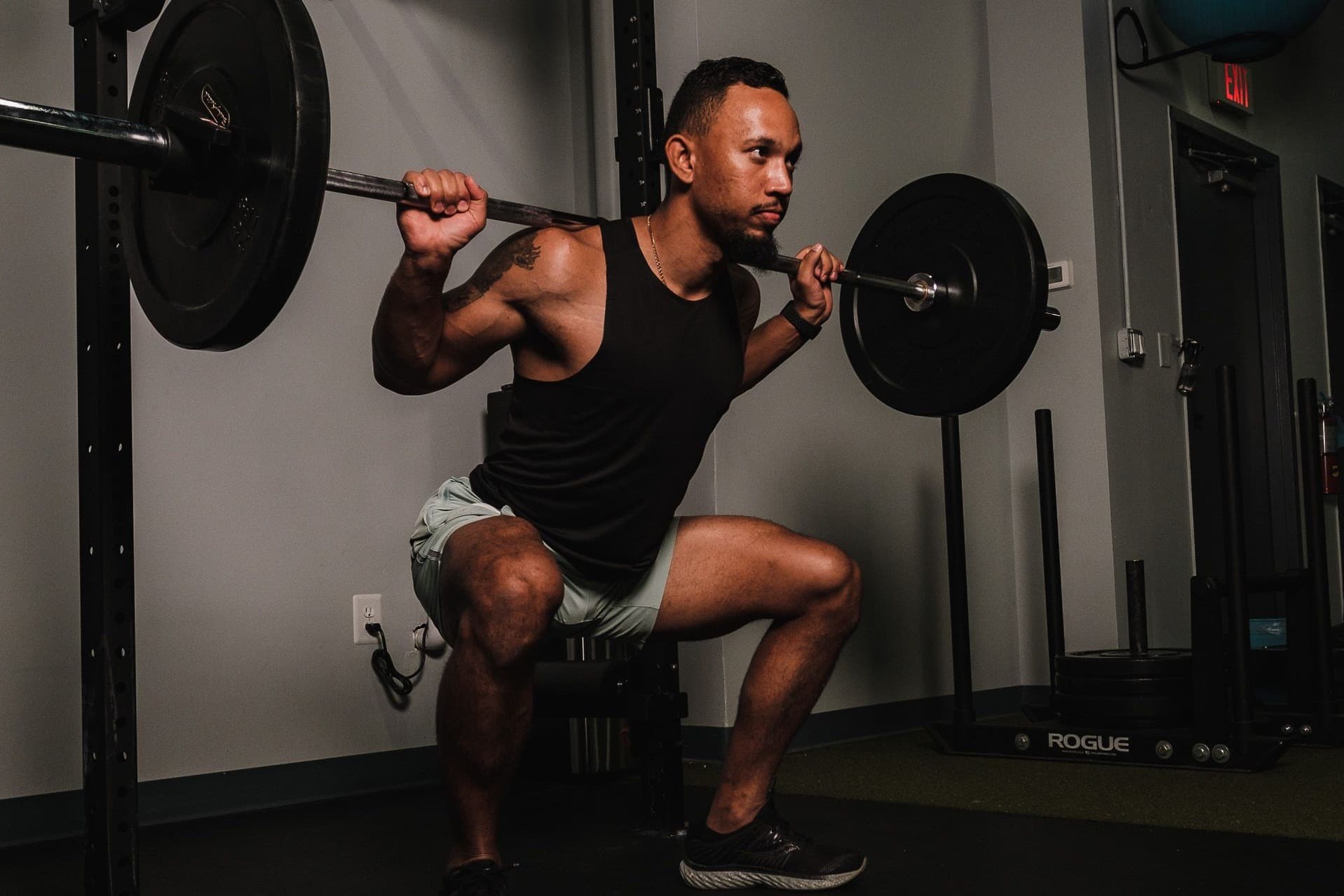
Widen your stance a few inches and turn your toes out, and the squat changes at the joint level, not just in appearance. That's the real question behind sumo squat vs regular squat muscles: which joints absorb the load, and which muscles end up doing the work to move it. Most gym-floor explanations stop at "sumo hits glutes, regular hits quads." The EMG data doesn't. Some of it even pushes back against the popular idea that a wide stance automatically maxes out your adductors. This article covers what happens at your hips, knees, and spine under each stance, breaks down activation across the major muscle groups, and explains how to program both variations for quad size, glute development, or a fit tailored to your own joint structure.
Sumo Squat vs Regular Squat Muscles: The Quick Answer
The main difference comes down to hip position. A wide stance and turned-out feet open the hips, so sumo squats bias the glutes and adductors harder. Regular squats push more load onto the quads because the knees travel farther forward and the torso stays more upright.
Muscle Group | Sumo Squat | Regular Squat |
Quads | Moderate | High |
Glutes | High | Moderate |
Adductors | High | Low |
Hamstrings/Erectors | Moderate | Moderate |
That table is the skeleton. The next sections put muscle and tendon behind each number.
The Biomechanics Behind Sumo Squat vs Regular Squat Muscle Activation
Muscle activation doesn't change because you decide it should. It changes because your joints sit at different angles, and those angles dictate which muscles have to work to move the bar.
How Stance Width Changes Hip and Knee Angles
Widen your stance and turn your toes out, and your hips move into more abduction and external rotation before you even start the descent. A multi-experiment analysis of squat stance width confirms this: the hip abduction angle at mid-lift was significantly larger in the wide stance compared to both mid and narrow conditions. Knee mechanics move the opposite direction. The knee flexion angle was statistically larger in the narrow stance width, and the hip-to-knee joint extension moment ratio was significantly greater in the wide stance.
Your knees travel differently too. In a wide stance squat, the tibia stays closer to vertical through the rep because the hip does more of the work of lowering you. Research on national-level powerlifters backs this up: the hip was significantly more flexed, and the thigh was more horizontal, in the wide and medium condition compared to the narrow. That shifts mechanical tension toward the hip extensors and adductors, since they're controlling that outward femur angle against the load.
Why Narrow Stance Shifts Load to the Quads
A regular, shoulder-width squat forces a different compromise. Your knees travel forward to keep the bar over your midfoot, which increases knee flexion and pushes the tibia forward at the bottom of the rep.
The EMG literature supports this trade-off. One study on stance width and lower-extremity muscle activation found that gluteus maximus activation was significantly greater in the wide squat condition, and separate observations showed that muscle activity in the gluteus maximus and adductor longus muscles was significantly larger in the wide stance condition. The forward knee travel in a narrow stance also changes the moment arm at the hip versus the knee in a low-bar or high-bar regular squat. A study on stance width and barbell placement found that the wide stance width resulted in a greater hip extensor and knee adduction moment, while the narrow stance width resulted in a greater knee extensor moment. Less hip torque, more knee torque. That's what drives the extra quad recruitment lifters feel in a narrow stance under the same bar.
Sumo Squat vs Regular Squat Muscles: Activation Comparison
Numbers settle arguments better than opinions do. Here's how the two stances compare across every major muscle group, based on EMG data pulled from stance-width and squat-variation research.
Muscle | Sumo Activation | Regular Activation | Why |
Quadriceps | Moderate | High | Regular squats require greater knee flexion, so the quads do more work extending the knee back out. |
Gluteus Maximus | High | Moderate-High | The wide stance places more demand on the hip extensors, pulling in more glute max fiber. |
Gluteus Medius | High | Low-Moderate | External rotation and abduction in sumo load the medius directly as a stabilizer. |
Adductors | High | Low | Sumo's wide stance stretches the adductor longus under load, forcing it to work eccentrically and concentrically. |
Hamstrings | Moderate | Moderate | Both variations recruit hamstrings similarly for hip extension, with only minor differences reported. |
Erector Spinae | Moderate | Moderate-High | Regular squats' forward torso lean may increase spinal loading demand compared to sumo's upright posture, though direct comparisons are limited. |
Quadriceps Activation
Regular squats consistently show higher quad activation, and the reason traces back to knee travel. Research comparing stance widths found that knee flexion angle was statistically larger in the narrow stance width, and a separate multi-experiment analysis found the same pattern held for force output: the narrow condition significantly increased the quadriceps forces, whereas both experiments showed that the wide stance width significantly enhanced the posterior-chain muscle forces.
Gluteus Maximus and Medius Activation
Sumo squat glutes get worked from two angles at once. Wider, low-bar stances shift more of the workload onto the hip extensors: training with a high-bar narrow stance could be beneficial when targeting the knee extensors and plantar flexors, whereas a low-bar wide stance could be beneficial when targeting the hip extensors. The medius handles a different job, controlling femoral position against the abduction torque created by the wide stance. Gluteus medius also seems to reach higher degrees of activation with a wider foot placement (15° hip abduction). Not every study agrees on the size of the gap, so treat these numbers as directional rather than exact.
Adductor Activation
This is where sumo separates itself. In a study of competitive bodybuilders comparing five squat variations, both sumo-style back squats and external-rotated sumo back squats showed greater vastus lateralis and adductor longus activation compared to all other exercises. The adductor activation result lines up with what most coaches see in practice: a wide stance lengthens the adductors under load, then forces them to contract hard to bring the femurs back toward midline. Not every adductor muscle shows the same gap.
Hamstrings and Posterior Chain
Hamstring involvement stays fairly consistent between stances. Both variations require hip extension, and the hamstrings contribute at similar levels whether your feet are wide or shoulder-width.
Erector Spinae and Core Stability
Regular squats likely place somewhat more demand on the erector spinae, driven by the forward torso lean needed to keep the bar over midfoot. Sumo's upright torso should reduce that moment arm and ease spinal erector workload without eliminating it.
Pick your stance based on which row in that table matches your training goal this cycle.
Does a Wide Stance Squat Really Maximize Adductor Activation?
Coaches repeat it so often it sounds like settled fact: go wide, torch your adductors. The research tells a messier story.
A 2024 study in the Journal of Biomechanics modeled three-dimensional hip moments across squat variations and found that adductor activation shifts with stance width rather than simply increasing with it. The data suggests the adductor muscles serve as primary hip extensors in narrow stance squats, while wide stance squats demand greater gluteus maximus contribution instead.
The anatomy explains the pattern. Adductor magnus has two heads that behave differently depending on hip position and load angle. In a regular squat with a narrower stance, the adductors work harder to extend the hip and stabilize the pelvis. In a sumo squat vs regular squat comparison, the wider stance reduces the mechanical demand on the adductors because the glutes take on more of the extension work. This isn't a flaw in the wide stance squat—it's just a different muscle distribution.
What this means for your training: if adductor strength or hypertrophy is your goal, a narrower stance may actually be more direct. A wide stance squat builds tremendous glute and outer quad strength, but it doesn't necessarily maximize the inner thigh muscles the way conventional wisdom suggests. Both variations have their place. The choice depends on what you're trying to build.
Sumo Squat Glutes vs Regular Squat Glutes: What the Data Shows
Ask around any gym and you'll get the same answer: sumo squats build bigger glutes. The wide stance, the hip abduction, the whole setup screams glute activation. The EMG data tells a messier story.
A 2021 study in the International Journal of Environmental Research and Public Health measured muscle activation across squat variations in ten competitive bodybuilders. During the descending phase, gluteus maximus and gluteus medius activation was greater in the front squat than in all other exercises tested, including the sumo-stance back squat. That result runs against the popular narrative, given that front squats use a narrower stance and less hip abduction than sumo squats.
Why Sumo Squat Glutes Don't Always Outperform Other Variations
The explanation comes down to torso position, not hip angle. Front squats force a more upright trunk to keep the bar balanced over the midfoot, and that upright posture demands more from the glutes to control hip extension through the lift. Sumo squats let you lean forward slightly more, which shifts some of that demand onto the adductors and hip external rotators. The same study found that during the ascending phase, sumo and externally rotated sumo squats showed greater vastus lateralis and adductor longus activation than the other variations tested.
Stance width matters, but it's not the only lever controlling glute recruitment. Bar position and torso angle pull just as much weight in the equation.
Sumo squats aren't a weak glute exercise. Labeling any single variation as "best for glutes" oversimplifies how the sumo squat vs regular squat muscles respond to several variables at once, not just how wide your feet are set.
Programming a Quad-Focused Block With the Regular Squat
If quad size is the target, the regular squat variation earns the top slot in your program. A narrower stance and a more upright shin angle push knee flexion demand higher, and the research backs this up. In a study using musculoskeletal modeling across two experiments, the narrow condition significantly increased the quadriceps forces, whereas both experiments showed that the wide stance width significantly enhanced the posterior-chain muscle forces.
When comparing sumo squat vs regular squat muscles, that mechanical difference is why narrow stance beats sumo when quad hypertrophy is the goal. Build the rest of your programming around that bias instead of fighting it.
Sets, Reps, and Frequency for Quad Hypertrophy
Run 3-4 sets of 8-12 reps, stopping each set 1-2 reps short of failure (RIR 1-2). That rep range sits in the sweet spot for mechanical tension and metabolic fatigue, both of which drive growth in the quadriceps.
Train the pattern twice a week. Keep your stance and squat depth consistent from session to session. Switching stance width or depth every workout makes it harder to track progress or overload the same joint angles.
A simple SHRED-style block: squat on day one with moderate load and full reps, squat on day two at slightly higher intensity with a couple fewer reps in reserve. Progress load or reps every one to two weeks as recovery allows.
Coaching Cues to Bias the Quads Further
Keep your stance just outside hip width and point your toes forward, not out. This keeps the hips from rotating externally and keeps the mechanical demand on the knee extensors.
Drive your knees forward over your toes as you descend, rather than sitting back into your hips. Squat to at least parallel. Deeper squats increase quadriceps demands at the knee joint, so cutting the range short trades away growth stimulus you're already set up to get.
Pair this block with a hip-dominant accessory day and you cover both ends of the lower body without the two lifts competing for the same adaptation.
Programming a Glute and Adductor-Focused Block With the Sumo Squat
If posterior chain size is the goal and a wide stance squat is the main tool, the programming logic flips from a quad-dominant approach. As the shin stays more vertical and the torso stays upright, hip extension torque rises, so the glutes and other hip extensors carry more of the workload across each rep. Research on stance width backs this up. One review of stance-width studies found the hip-to-knee joint extension moment ratio was significantly greater in the wide stance, and EMG data from the same body of research showed the muscle activity in the gluteus maximus and adductor longus muscles was significantly larger in the wide stance condition.
The difference between sumo squat vs regular squat muscles comes down to load distribution at the hip. A regular squat emphasizes knee extension and quad drive. A sumo squat emphasizes hip extension and glute recruitment because the wider stance reduces knee travel and increases the mechanical advantage of the hip extensors.
Sets, Reps, and Frequency for Glute and Posterior Chain Hypertrophy
Run sumo squats in the 6- to 12-rep range for 3 to 4 sets, twice a week if recovery allows. Glutes respond well to moderate loads worked through a full range of motion, and the sumo setup lets you sit deep into the hip without excessive knee travel. Pair it with hip thrusts or Romanian deadlifts on a second day to hit the same tissue from a different angle.
Where the Adductor Nuance Changes Your Programming
Don't build your whole adductor plan on the assumption that a wider stance guarantees more adductor work. A Journal of Biomechanics modeling study found adductor muscle EMG does not increase for wider stance squats, matching older EMG work on the same question. But the literature doesn't agree across the board. A separate stance-width review reported the opposite pattern, with the muscle activity in the gluteus maximus and adductor longus muscles significantly larger in the wide stance condition. Two credible bodies of evidence point different directions, so treat stance width as an unreliable lever for adductor activation.
Program sumo squats for glutes first. If adductor size matters to you specifically, add direct adductor work like cable adductions or Copenhagen planks rather than relying on stance width alone to do that job.
Sumo Squat vs Regular Squat Muscles: Which Fits Your Goal
Nobody wins this argument outright, and that's the point. The choice between sumo squat vs regular squat muscles worked depends on your joint structure, your training history, and what you're trying to build this training cycle.
Treat it as a decision framework, not a popularity contest.
When to Prioritize One Over the Other
If you have long femurs and a history of knee pain in a narrow stance, sumo probably feels better. Conventional squats require the knees to bend to a greater degree and the pelvis to lower further than sumo squats allow, creating a larger range of motion. That extra knee bend is what drives up stress at the kneecap, so the wider stance can mean less grinding under it and room to load heavier.
If your hips are tight or you've dealt with adductor strains, stick with the narrower stance of the regular squat. Narrow stance squats are usually more quadriceps-centric, and the inner and outer thighs are much less involved, which keeps the adductors out of a range they aren't ready to handle.
Powerlifters chasing a bigger competition total often lean sumo because the shorter range of motion favors raw load. Bodybuilders chasing quad sweep lean regular squat for the opposite reason: the regular squat recruits the quadriceps more than the sumo squat because it's more of a knee-dominant exercise, requiring more bending and straightening of the knee joint.
Why Most Lifters Should Program Both
Rotating stances trains the same joints through different mechanical angles, so no single tendon or muscle group absorbs all the stress cycle after cycle. A lifter who only squats one way eventually plateaus in ways that stance variation would have prevented.
Base your choice on your goal, your anatomy, and your injury history, then let one stance lead the training block while the other supports it.
Common Questions on Sumo Squat vs Regular Squat Muscle Activation
Is sumo squat harder than regular squat?
It depends on which joint is doing the complaining. The wide stance shifts load toward the hips and adductors, so limited hip mobility makes sumo squats feel brutal in a way regular squats don't. Regular squats tax the ankles and quads more through greater knee flexion, so a stiff ankle flips the difficulty the other way.
Do sumo squats work the quads?
Yes, just not as the prime mover. A 2022 study on squat stance width biomechanics found that the narrow stance width significantly enhanced peak power production and quadriceps forces, which tracks with the sumo stance needing less knee flexion to hit depth. The quads still handle knee extension on the way up. They just work as support, not as the main driver.
Can sumo squats build muscle?
Sumo squats build muscle. Research on competitive bodybuilders found that larger feet-stance increases thigh muscle activity, possibly because of their longer length. That's a notable finding: it cuts against the assumption that a wide stance quiets the thighs. Higher activation during training tends to track with more growth over time, but no study has directly measured hypertrophy differences between sumo and regular squat stances over a training block. Pick your stance based on which muscle group you want to prioritize this training cycle, and don't assume the quads get shortchanged just because the stance is wide.
Are sumo squats better for the glutes?
Better is the wrong question. Research on stance width and EMG activity shows the muscle activity in the gluteus maximus and adductor longus muscles was significantly larger in the wide stance condition. Sumo doesn't just load the adductors more. It tends to load the glutes more too, which contradicts the idea that regular squats are the real glute builder and sumo is strictly a hip-adductor exercise.
Are sumo squats bad for your knees?
Not inherently. Widening the stance shifts the knee's tracking angle to follow the toes, which tends to reduce the twisting and shearing forces that show up when the knees track inward. Problems show up when the stance gets forced wider than your hips allow, not from the sumo pattern itself.
How often should you do sumo squats?
Two to three sessions a week works for most lifters, provided the adductors get enough recovery time since they fatigue on a different schedule than the quads. Rotate sumo with regular squats across a training block rather than running both every session. The joint demands differ enough that stacking them without a plan just adds junk volume.
The Bottom Line
Strip away the gym mythology and the sumo squat vs. regular squat debate isn't about picking a winner. Hip angle and knee travel dictate where torque gets distributed, and that mechanical fact should drive your programming, not a stance-width superstition.
A wide sumo stance shifts more of the range of motion into dropping the hips, making the glutes and adductors work harder together to extend the hips. In that same wide stance, the knees don't bend as much, so the quads work hard but move through less range. A narrow stance flips that pattern: deeper knee flexion puts the quads in the driver's seat.
The difference in sumo squat vs regular squat muscles comes down to this mechanical split. Neither pattern is better. They're different tools for different jobs.
Stop asking which squat is superior and start asking what your current training block requires. Quad hypertrophy calls for one joint angle. Glute and adductor development calls for another. Both belong in a well-built program, just not in the same phase with the same intent.
If you want that structure already mapped out, SHRED's hypertrophy blocks apply this exact logic so you're training with purpose, not guesswork.
Related Articles
Dumbbell Arm Exercises for Beginners: Why Free Weights Beat Cables
Cables feel safer, but they hide the mistakes that matter most. See why dumbbell arm exercises beginners should master first build real strength, better balance, and honest form fast.
Step-Ups for Hamstrings: Box Height, Stance & Form Guide
Are step-ups actually a hamstring exercise, or just quads in disguise? Here's how box height, stance, and hip hinge decide the answer.
7 Progressive Overload Mistakes Beginners Make (and Fixes)
Stalled lifts? You might be making one of these 7 progressive overload mistakes beginners make without realizing it. Get the symptoms, causes, and exact fixes before it costs you months.