

Step-Ups vs Lunges: A Goal-Based Decision Guide
Step-ups and lunges both hit quads and glutes hard, but they build different athletes. This goal-based guide breaks down which move wins for glute growth, quad strength, and joint-friendly training.
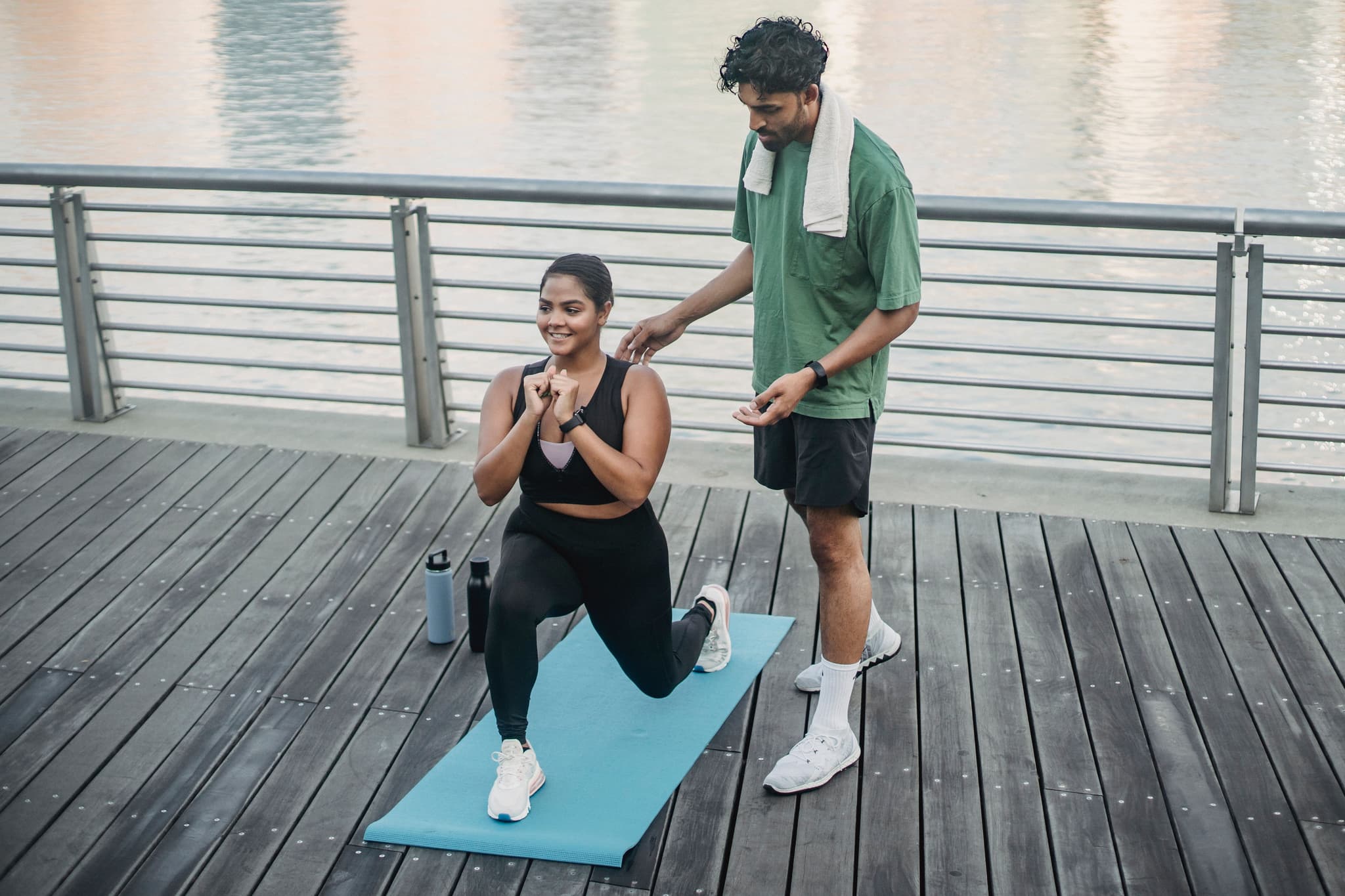
Step-ups and lunges both torch your quads and glutes, but they don't build the same athlete. Pick the wrong one for your goal and you'll spin your wheels for months.
Your training goal and your knee history point you toward one or the other. So does your apartment layout, honestly. Most guides compare step-ups vs lunges by listing muscles worked and call it a day. That's not enough to actually decide anything.
This piece breaks down step-ups vs lunges by goal, joint stress, and difficulty type, then hands you programming you can use this week. You'll get form fixes for the mistakes that quietly wreck knees and lower backs, plus swaps for bad days, tight spaces, or shaky balance.
Near the end, you'll find a decision matrix that maps your specific goal, glute growth, balance, low-impact training, whatever it is, to a clear winner and the reason behind it. No hedging, no "it depends" without follow-through.
Step-Ups vs Lunges: Quick Answer for Your Goal
Pick step-ups if you want quad-dominant work with less stress on the knee and spine. One EMG study found step-ups produced slightly higher quadriceps activation than lunges, likely due to the greater knee flexion angle during the step-up's concentric phase. Step-ups also involve less eccentric loading, which is part of why they tend to feel easier on the knees and lower back than lunges.
Pick lunges if you want a bigger glute demand and more hip-stability work through a longer range of motion. Reverse lunges activate the glutes more effectively than step-ups because of the hip extension required during the movement. Hamstring involvement doesn't split the two nearly as cleanly as people assume. A comparative EMG analysis found no significant difference in hamstring activation between lunges and step-ups.
Neither exercise wins outright. Your knees, your goals, and your equipment access decide the winner.
If you're rehabbing a cranky knee or training for hiking and stair-heavy activities, step-ups usually feel better and transfer more directly. If you want a movement that builds hip stability and challenges your balance in multiple directions, lunges, especially walking or reverse variations, do that job better.
Neither exercise is optional in a well-built lower body program. The real question is which one earns priority this training block.
Step-Ups vs Lunges: Muscles Worked and Activation Differences
The step-ups vs lunges muscles debate isn't as simple as "both work your legs." Each move recruits your lower body differently based on joint angles and how much your body relies on momentum to control the descent. Here's what the EMG research actually shows.
Glute Activation: Lunges Take the Lead
Forward lunges recruit the glutes more than step-ups do. That gap comes down to hip extension range: a lunge forces your hip through a longer arc as you drive back up, which demands more from your glute max.
Research published in the European Journal of Applied Physiology found that reverse lunges activated the gluteus maximus more effectively than step-ups because of the hip extension required during the movement (Escamilla et al., 2010). If glute size and strength are your priority, lunges have the edge on paper.
Quad Activation: Step-Ups Hit Harder
Step-ups flip the script on the quads. A study in the Journal of Applied Biomechanics showed that step-ups lead to greater quadriceps activation compared to squat variations (Wilson et al., 2016). The mechanism carries over to lunges too: your front leg does nearly all the work pushing your body weight upward against gravity, with no backward leg absorbing part of the load the way there is in a lunge.
That single-leg demand translates directly to quad strength gains, particularly in the vastus lateralis and rectus femoris.
Hamstrings: A Statistical Tie
A comparative EMG analysis published in the Strength and Conditioning Journal found no significant difference in hamstring activation between lunges and step-ups (McCurdy et al., 2005). Both movements engage the hamstrings similarly during the eccentric lowering phase, whether you're stepping down from a box or lunging back to standing.
So if hamstring development is your main concern, exercise selection here matters less than load and tempo.
Pick step-ups if you want more quad work. Pick lunges if glutes are the priority. Either way, load and range of motion matter more than which exercise you pick.
Joint Impact: Which Is Easier on Your Knees and Lower Back
Step-ups are generally easier on your knees than lunges when you keep the step height at or below knee level, but step height matters more than the exercise name itself. That's the honest answer, and it's the one most fitness articles skip because it doesn't fit a clean yes-or-no headline.
A 2011 study in the Journal of Orthopaedic & Sports Physical Therapy tested forward step-ups, lateral step-ups, and forward step-downs, adjusting each person's step height to permit a standardized knee flexion angle of 45 degrees. Peak patellofemoral joint stress came out significantly higher during the step-down (13.8 ± 0.4 MPa) than during the lateral step-up (11.5 ± 0.8 MPa) or forward step-up (11.2 ± 0.6 MPa). Knee flexion angle, not the exercise label, drives most of the compressive force on the kneecap. Push a step-up's height until it matches a lunge's depth, and you close most of the gap between the two moves.
Why Eccentric Loading Matters More Than You Think
Lunges demand more eccentric control on the way down, and that lowering phase is where a lot of knee and hip stabilizer work actually happens. Your quads and glutes have to decelerate your body weight against gravity, not just push it back up. Step-ups skip most of that eccentric demand because gravity does less work on the descent when you're stepping down from a shorter platform.
That trade-off is real. If you're rehabbing a knee or building tendon resilience, some eccentric loading helps. If you're managing an acute flare-up, less eccentric stress is the safer bet short term.
How Step Height Changes the Equation
A step aerobics study that tracked the knee-up move on a 15 cm platform found the knee joint is most prone to injuries and overtraining, followed by the hip and ankle joints. Researchers also found greater vertical ground reaction forces during stepping down, suggesting greater load to the joints on the way down than on the way up.
Go too high on a step-up and you'll round your lower back to complete the rep, trading knee stress for spinal stress.
Keep your step height at or below knee level and step-ups stay genuinely gentler on both joints. Push past that, and you've built a harder lunge with extra steps.
Step-Ups vs Lunges: The Goal-Based Decision Matrix
Enough theory. If you want a straight answer for your specific situation, use this table to match your goal with the right exercise.
Table: Match Your Goal to the Right Exercise
Goal | Winner | Why |
Glute growth | Lunges | Longer eccentric phase and greater hip extension range under load recruit more glute fiber over a full set. |
Quad growth | Step-ups | The push-through motion keeps constant tension on the front leg's quad without the trailing leg sharing the work. |
Knee-friendliness | Depends on setup | Step-ups win at a shin-height box; lunges win if you shorten stride length. Neither wins by default. |
Athletic performance and balance | Step-ups | Single-leg stance on an unstable surface trains proprioception closer to how sprinting and cutting actually load your body. |
Beginners | Step-ups | Fixed platform height removes the balance and depth-judgment variables that trip up new lifters on lunges. |
Limited equipment | Lunges | A body-weight lunge needs zero gear. Step-ups need a box, bench, or stable platform of the right height. |
Time efficiency | Lunges | Walking lunges cover more ground and hit both legs faster in a superset-style flow without repositioning. |
No single exercise wins every category. Your gym setup, your training age, and your actual goal all pull in different directions.
If you're programming around a knee issue or chasing a specific hypertrophy target, log both variations for a few weeks and let your own progress data settle the argument. The SHRED app's exercise tracker makes that comparison simple, so you can see which one moves the needle for you.
Which Is Harder: Step-Ups or Lunges?
Step-ups are harder from a balance and coordination standpoint, while lunges demand more loading capacity. The answer depends on which dimension of difficulty matters for your training goal.
Step-ups place all of the load (going up and down) on the one leg stepping up. Your ankle, knee, and hip have to stabilize independently while you drive up onto an elevated surface. Miss your footing on the box and you feel it immediately.
During a lunge the load is distributed between two legs through the crucial part of the movement, so you get a stability assist that step-ups don't offer. Lunges can also typically be loaded with more weight, which may have a positive impact on joint and muscular adaptation.
If your goal is raw strength and loading capacity, lunges win the difficulty contest. If your goal is balance, proprioception, and single-leg control, step-ups are tougher and expose weaknesses lunges tend to hide.
Form Cues and Common Mistakes for Each Exercise
Good programming doesn't matter if your form falls apart on rep six. Here's where most people break down on each lift, and how to fix it before it turns into a nagging knee or lower back issue.
Step-Up Form Cues and Fixes
When comparing step-ups vs lunges, form differences become clear fast. Step-ups demand stability on an elevated surface, which changes how your body recruits muscle.
Cue: Drive through the whole foot, not just your toes.
Mistake: Pushing off the bottom leg to launch yourself up.
Fix: Plant your top foot fully on the box and press it down into the platform like you're trying to leave a footprint.
Cue: Keep your torso stacked over your hips.
Mistake: Leaning forward from the waist to build momentum.
Fix: Brace your core and imagine a string pulling the crown of your head toward the ceiling as you rise.
Cue: Control the descent.
Mistake: Dropping down fast and letting the trailing leg slam into the floor.
Fix: Lower for a full two-count instead of one, especially if your knees already bark at you.
Lunge Form Cues and Fixes
Cue: Load the front heel.
Mistake: Rising up onto the front toes, which shifts stress into the knee joint.
Fix: Keep your front foot flat and think about pushing the floor away as you stand.
Cue: Drop straight down, not forward.
Mistake: Letting the front knee travel way past the toes on the descent.
Fix: Picture a vertical line running from your front knee to your ankle and stay behind it.
Cue: Keep the hips level.
Mistake: Letting one hip hike up or rotate mid-rep, which shows up more on the rear-foot-elevated version.
Fix: Check yourself in a mirror or on video from the front, not just the side.
These small breakdowns add up fast once you load the bar or grab heavier dumbbells. Clean up your form first, then chase the extra weight.
How to Program Step-Ups and Lunges in the Same Week
You don't have to choose one for life. Most well-built leg programs use both step-ups and lunges, just not on the same day at the same intensity.
Sample Weekly Split: Combining Both Movements
Here's a simple two-day split for anyone training legs twice a week:
Day 1 (strength focus): Lunges, 4x10 per leg, moderate to heavy dumbbells or a barbell. Day 2 (unilateral/stability focus): Step-ups, 3x12 per leg, bodyweight or light load, knee-height box.
If you train legs three times a week, add a third day of step-ups at a higher box (hip-height) for 3x8 per leg, loaded heavier. That gives you a strength day, a volume day, and a power day, so you're not stacking redundant stress on the same tissue.
Sets, Reps, and Step Height Guidelines by Goal
For hypertrophy, lunges in the 8-12 rep range with a controlled descent do more work than step-ups at the same rep count. Lunges put your leg through a longer eccentric phase, and that extra time under tension is what drives growth.
For balance and single-leg stability, step-ups win. Use a knee-height box, 3-4 sets of 10-15 reps, and slow the concentric phase down.
For a knee-friendly session, or as a step-up alternative to lunges when someone has anterior knee pain, drop the box height to just below knee level and stick to bodyweight or light dumbbells, 3 sets of 12-15 reps.
Which to Do First and Why
Do the harder-loading movement first. If you're lifting heavy that day, lunges go first while your stabilizers are fresh. If balance and coordination are the priority, step-ups go first, since fatigue kills single-leg balance faster than it kills your ability to grind out a heavy set of lunges.
Either way, don't program both at max effort in the same session. Pick one as the driver and the other as the accessory, then rotate which one leads each week.
Step-Up Alternatives to Lunges (and Vice Versa)
Injuries, cramped apartments, and shaky balance don't care about your program design. Sometimes you need a step-up alternative to lunges, or the reverse, and the switch should be quick once you know your constraint.
When to Substitute Step-Ups for Lunges
If lunges aggravate your knee on the descent, the front knee traveling too far past the toes is usually the culprit. Step-ups cut that eccentric knee stress down because you're stepping up onto a box, not lowering into a stretched position under load. The movement involves less eccentric loading than lunges, which makes step-ups generally easier on the knees and lower back.
Limited space is another trigger. Lunges need a walking path or enough room to reverse and reset. Step-ups need a box and about two square feet of floor.
If you're rehabbing an ankle or knee and need to build single-leg strength without the deceleration demand of a reverse or walking lunge, step-ups let you load the leg in a more controlled, vertical path.
When to Substitute Lunges for Step-Ups
No box, bench, or sturdy platform at the height you need? Lunges only require floor space, so they're the practical swap when equipment is the limiter.
Balance-impaired lifters, particularly older adults or anyone with inner-ear or vestibular issues, sometimes find the elevated, single-leg stance of a step-up harder to control than a lunge. Some sources argue the opposite, that step-ups are more stable than lunges because the working foot stays fixed on the platform rather than moving through space. Test both with the lifter and let their stability, not the exercise's reputation, make the call.
Match the substitute to the actual constraint, not the exercise name.
Let SHRED Auto-Adjust Step Height, Load, and Variation for You
Manually calculating the right step height for your femur length, the right load for your knee tolerance, and the right variation for a bad ankle day is a lot to figure out on your own. SHRED does that math for you.
The app looks at your training history, your reported joint issues, and your actual performance data, then adjusts your step-up height or lunge depth automatically. If your knees flagged discomfort on last week's walking lunges, SHRED shifts you toward reverse lunges or a lower step-up box before you even ask. If your balance scores are climbing, it bumps up the coordination demand instead of just piling on plates.
That matters because the decision matrix only works if someone applies it week after week, as your body changes. SHRED tracks that drift for you. When you're deciding between step-ups vs lunges, the app removes the guesswork about which muscles you're targeting and how much load your joints can handle.
You still choose between step-ups and lunges. You just don't have to babysit the load selection, the box height, or the variation swap every time your knees, your goals, or your gym setup changes.
The Bottom Line
The step-ups vs lunges debate isn't a coin-flip once you look at the specifics. For glute growth and athletic carryover, lunges generally involve a longer stride, which increases glute activation, and research has shown reverse lunges activate the gluteus maximus more effectively than step-ups because of the hip extension required during the movement. For quad-dominant strength with a joint-friendly profile and real single-leg balance transfer, step-ups take it, since step-ups elicited slightly higher quadriceps activation compared to lunges, likely due to the greater knee flexion angle during the step-up's concentric phase, as long as you keep the step height honest. Most lifters training legs more than once a week should stop picking a side and program both, on different days with different intensities.
Look at tonight's session. If balance and knee tolerance matter more today, load up the step-ups. If you're chasing glute size and can handle more spinal loading, lunges are your move. If you don't want to guess how to split this across a full week, open SHRED and let it build the program around your goals and joints. No spreadsheet needed.
Related Articles
Dumbbell Arm Exercises for Beginners: Why Free Weights Beat Cables
Cables feel safer, but they hide the mistakes that matter most. See why dumbbell arm exercises beginners should master first build real strength, better balance, and honest form fast.
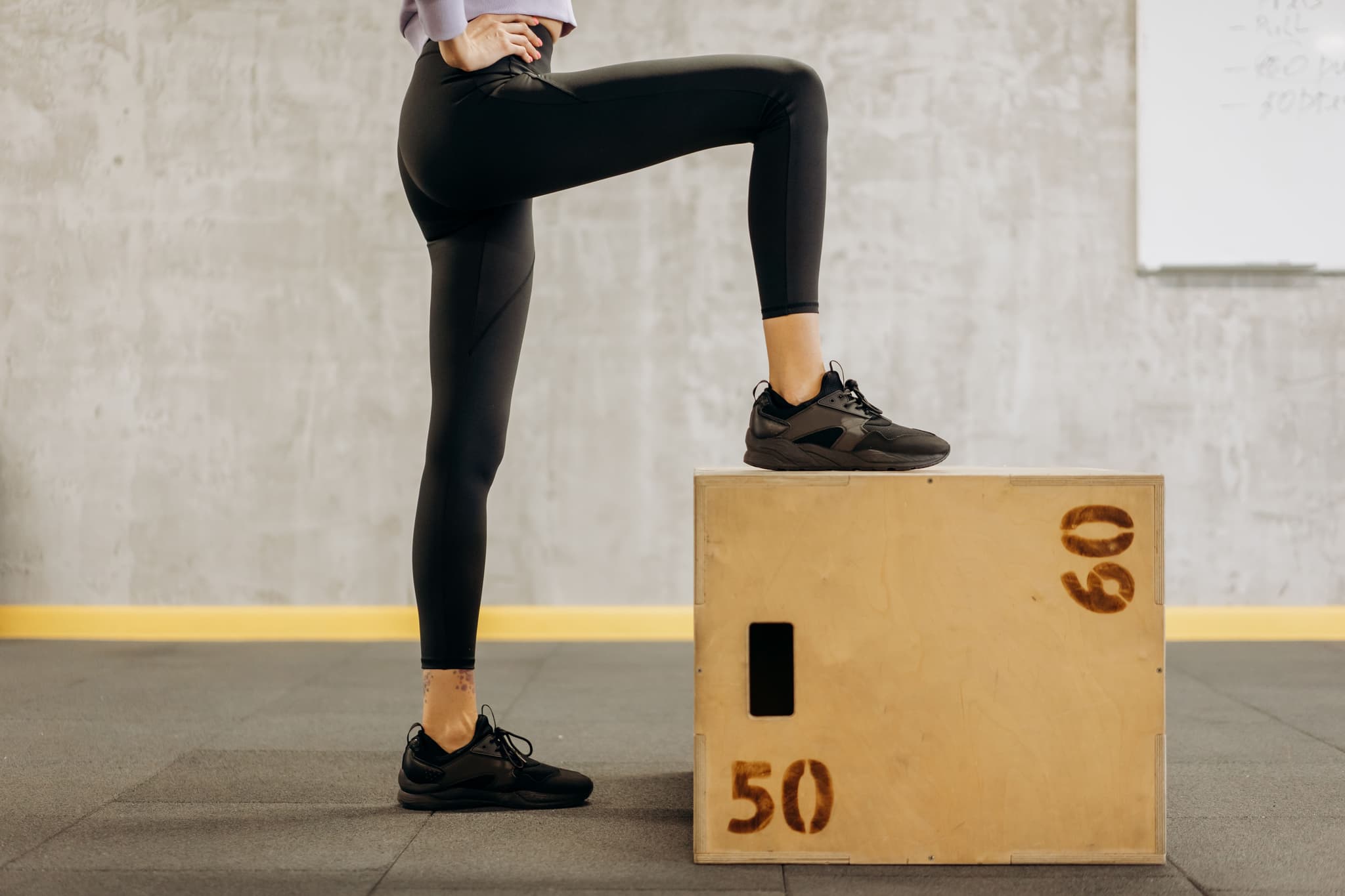
Step-Ups for Hamstrings: Box Height, Stance & Form Guide
Are step-ups actually a hamstring exercise, or just quads in disguise? Here's how box height, stance, and hip hinge decide the answer.

7 Progressive Overload Mistakes Beginners Make (and Fixes)
Stalled lifts? You might be making one of these 7 progressive overload mistakes beginners make without realizing it. Get the symptoms, causes, and exact fixes before it costs you months.