
Squat Depth Muscle Activation: Pick the Right Depth for Your Goal
Not all squat depths build muscle the same way. This breakdown maps squat depth muscle activation across quads, glutes, hamstrings, and adductors — so you can train smarter, not just deeper.
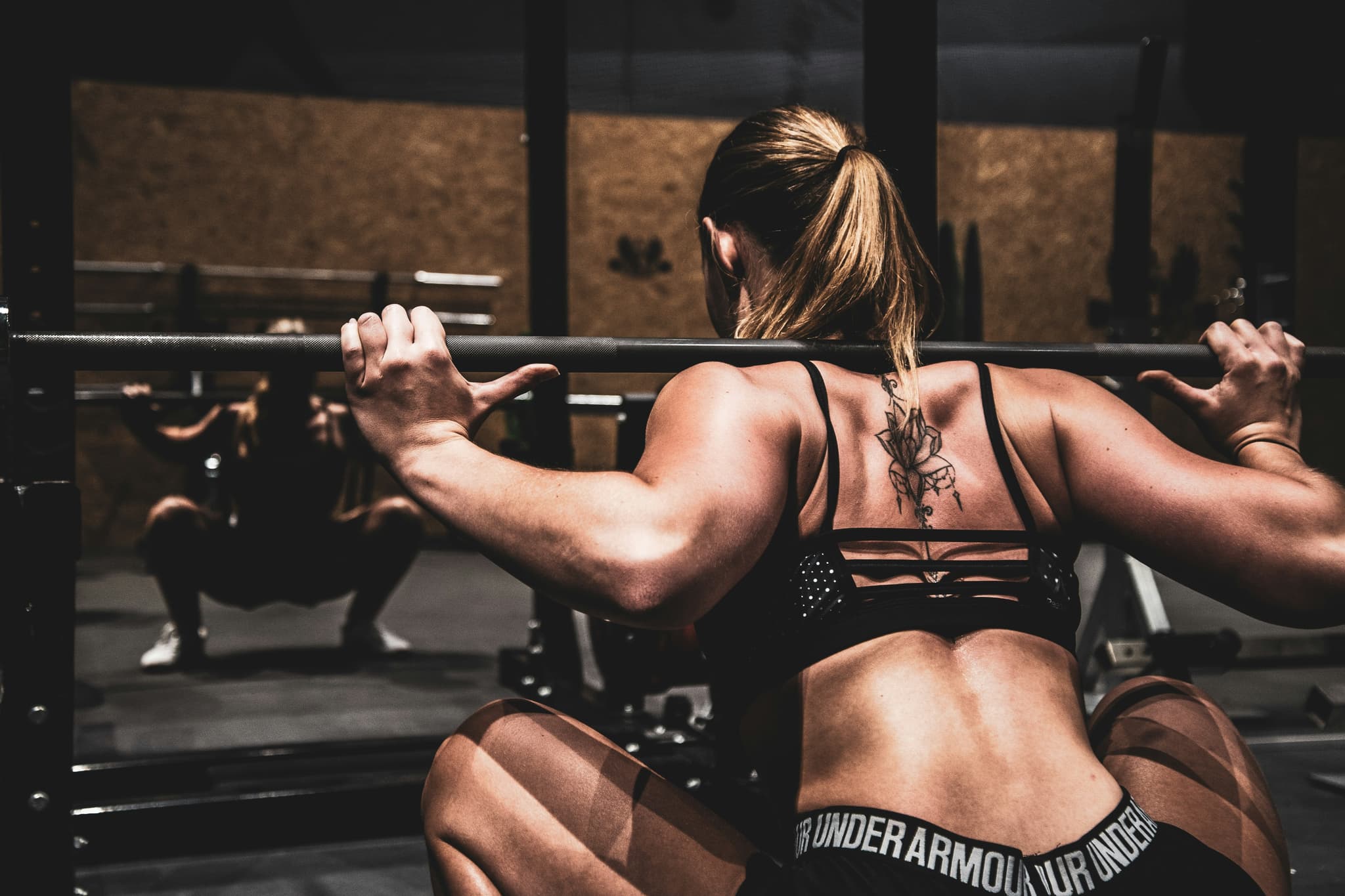
The squat depth debate has been built around the wrong question. Squat depth muscle activation is more complicated than most guides make it, because the depth that lights up an EMG monitor is not always the depth that builds the most muscle.
EMG records electrical activity in muscles during a single rep — it does not tell you whether that muscle is going to grow. This piece separates those two things and gives you something more useful than a generic "go deeper" prescription.
Three depths get analyzed here: quarter squat, parallel, and full range of motion squat. Four muscles get mapped across all three: quads, glutes, hamstrings, and adductors.
Each one responds differently to depth, and individual anatomy can produce results that contradict population averages. Each response has a mechanistic reason behind it. By the end, you get a goal-specific prescription based on what you are actually training for. Here is the full squat depth muscle activation map, and what to do with it.
What Changing Squat Depth Actually Does to Your Muscles
Squat depth directly shifts the joint angles at your hip and knee, which changes the moment arms acting on each muscle and determines how hard that muscle has to work. This is why squat depth muscle activation varies so much across different rep ranges.
The primary agonists in the squat are the quadriceps femoris, the adductor magnus, and the gluteus maximus, with the erector spinae and abdominals working isometrically to hold your spine in position throughout the movement. Each of those muscles gets a different stimulus depending on how far you descend.
Depth is measured by where your hip crease sits relative to your knee at the bottom of the rep:
Quarter squat
: Hip crease stays well above the knee.
Parallel squat
: Hip crease reaches roughly the same height as the top of the knee.
Full range of motion squat
: Hip crease descends below the knee.
As you descend past parallel, hip flexion increases, the gluteus maximus lengthens under load, and the demand on the adductor magnus rises. The knee angle at the bottom also affects how much of the load your quads are managing through the entire range. Those mechanical differences are what the research is actually measuring.
Squat Depth and Muscle Activation: Quarter, Parallel, and Full at a Glance
For maximum glute activation, squat to full depth. Shallow squats load the quadriceps heavily but deliver less than half the gluteus maximus EMG output you get at full range of motion squat.
How Squat Depth Affects Muscle Activation: Quarter vs. Parallel vs. Full
Muscle Group | Quarter Squat | Parallel Squat | Full Squat |
Quadriceps/VMO | High; VMO underactivated | High; VMO peaks near parallel | High; sustained through range |
Gluteus Maximus | Low (16.9% EMG) | Moderate (28.0% EMG) | Highest (35.4% EMG) |
Hamstrings | Minimal | Moderate | Active at bottom |
Adductors | Low | Moderate | High contribution |
Erector Spinae | Low to moderate | Moderate | Highest demand |
Primary Use Case | Power and sport-specific loads | General strength training | Deep squat glutes and hypertrophy |
The EMG figures in the gluteus maximus row come from Caterisano et al., published in the Journal of Strength and Conditioning Research, tracking concentric-phase activation across all three depths in a controlled setting. The jump from quarter to parallel to full is not gradual; activation rises meaningfully at each step down. VMO activation peaks around parallel depth, and research on quadriceps activity during squatting supports parallel as the target depth for VMO-focused programming, which is why parallel squats hold up well for quad-dominant work.
Treat depth as a deliberate programming variable. The table above tells you exactly which muscles you are prioritizing or leaving behind at each position.
Squat Depth and Muscle Activation: How Range of Motion Changes Which Muscles Work Hardest
Squat depth muscle activation doesn't follow a single linear rule across all muscle groups. Each muscle has its own depth-response curve, and understanding why each curve looks the way it does changes how you train.
Quadriceps and VMO: Why Parallel Is the Peak, Not the Floor
A shallow squat, say a quarter-squat rep, does load the quads through a short range, but it leaves the VMO significantly undertrained. Research supports prescribing squats to the parallel thigh position when targeting the VMO. The knee angle at parallel creates the highest mechanical demand on the VMO. Descending below that depth shifts more load to the hip extensors, so the quad stimulus plateaus rather than climbing.
That's the core argument against chasing depth purely for quad development. Parallel is the target.
Gluteus Maximus: The Depth-Activation Gradient Explained
Deep squat glutes respond directly to increased hip flexion range, and the EMG data makes this relationship hard to dismiss. Caterisano et al. measured the relative contributions of four hip and thigh muscles across partial, parallel, and full squat depths in ten experienced lifters using 100–125% of body weight, with EMG data expressed as a percentage of total electrical activity of the four muscles.
They found that gluteus maximus EMG amplitude increased significantly with depth: 35.5% at full depth versus 28.0% at parallel. That progression isn't coincidental. Greater hip flexion stretches the gluteus maximus, increasing the elastic energy stored in the muscle and amplifying its force output on the way up. The stretch-shortening cycle does real work here. Cut depth short and you cut glute contribution short.
Later research found results differing from Caterisano et al., partly because that study did not use relative loading across depths, which appears to have influenced the outcome.
Hamstrings and Adductors: The Depth Story Most Articles Skip
The hamstrings act primarily as dynamic stabilizers in the squat, not prime movers, and their activation stays relatively consistent across depths. They control knee flexion mechanics more than they drive hip extension in this pattern.
The adductor magnus is the overlooked piece. It has significant contribution to extension and rotation across a range of activities, and in some scenarios may generate greater hip extension torque than the hamstring group. Its hip extension moment arm changes with hip angle, making it a more effective hip extensor than either the hamstrings or gluteus maximus when the hip is flexed, with peak contractions occurring in positions of hip flexion, such as full squats. Train exclusively at partial depth and you leave that motor unit contribution untouched.
Why EMG Doesn't Predict Hypertrophy — and What Actually Does
EMG measures electrical activation during a single rep. It tells you a muscle is being recruited, not that it's being forced to grow.
Hypertrophy is driven by mechanical tension, and the magnitude, duration, and position of that tension all matter. The enhanced stimulus created when muscles are loaded in a lengthened position comes from both active contractile elements and passive structures contributing to force production. That combined load provides a stronger anabolic signal than tension applied at short or mid-length positions. Peak EMG readings don't always reflect where that tension is highest.
This is where partial squats lose the argument. Research on squat depth muscle activation shows hypertrophy generally favors deeper squats for the anterior thigh, adductors, and gluteus maximus, though differences are small when volume is equated. The quads, adductor magnus, and gluteus maximus all reach a more stretched position at the bottom of a full range of motion squat, and that stretch under load is a primary mechanical signal for growth. A quarter squat might generate high quad EMG through a short arc, but it cuts off the portion of the rep where mechanical tension on the muscle is greatest.
Squatting to parallel or below does produce strong contractile stimulation of the quadriceps, with VMO hitting peak EMG values of 93.4% MVIC during the concentric phase at parallel depth. That number is real. What it doesn't capture is the stimulus happening in the descent, at end range, where the muscle is longest and the growth signal is loudest.
The Load Variable: How Absolute vs. Relative Loading Changes Squat Depth Muscle Activation
The claim that parallel squats produce higher gluteus maximus activation than full squats contradicts what most depth guides will tell you. The reason it gets buried is that it requires explaining a methodological distinction most coaches skip.
Most studies use absolute loading: every participant squats the same weight at every depth. That sounds fair, but it ignores a basic mechanical reality. You can move significantly more load in a quarter squat than a full squat. Fix the weight and you're not actually controlling effort; you're just making the deeper squat harder by default.
Relative loading fixes this by testing each depth at its own rep-max. Now you're comparing maximal efforts across depths, not penalizing one depth for being harder. Under those conditions, the parallel squat can match or exceed the full squat for gluteus maximus output.
Contreras et al. (2016), published in the Journal of Applied Biomechanics, tested this with resistance-trained females and found no significant EMG differences between full, parallel, and front squats for gluteus maximus, biceps femoris, or vastus lateralis when each variation was loaded to its own 10RM.
Depth is one variable. Load is the other. Change the load structure and the activation rankings shift with it.
Depth Prescription by Goal: Glutes, Quads, and Athletic Performance
Goal: Glute Hypertrophy — Go Below Parallel, Load Accordingly
For deep squat glutes, descend to at least 10–15 degrees below parallel on every working set, and load that specific range accordingly.
Caterisano et al. recorded gluteus maximus EMG of 16.9% at partial depth, 28.0% at parallel, and 35.4% at full squat during the concentric phase. Going below parallel nearly doubles glute contribution compared to partial depth. But as the load-equated data shows, parallel squats outperform full squats on peak GM activation when weight is matched to a depth-specific 5RM. Don't carry your parallel-depth load into a deeper range and expect the same output. Train the depth with the weight it actually demands.
Programming note: 3–4 sets of 6–10 reps at 70–80% of your below-parallel 1RM, twice per week.
Goal: Quad Development and VMO Definition — Own Parallel with Heavy Loads
To maximize VMO stimulus and squat depth muscle activation at parallel, use the heaviest load you can control at that depth.
The Journal of Fitness Research recorded VMO peak EMG at 93.4 ± 36.9% MVIC during the parallel squat concentric phase, the highest value across all depths tested. A shallow squat limits knee flexion range and reduces how far the VMO is pushed into its working length, which is why partial-depth training consistently underdelivers on VMO definition. Parallel depth also allows greater absolute loading than below-parallel work, keeping mechanical output per set high.
Programming note: 4–5 sets of 4–6 reps at 80–87% of your parallel 1RM.
Goal: Athletic Performance — Full Range of Motion Squats Build Positional Strength
Athletes need full range of motion squats year-round because sport loads joints at positions that partial training never prepares.
Full-range squats build hip extensor and adductor strength through the lengthened positions that absorb force during sprinting, cutting, and landing. Partial-range overload has a place in dedicated strength phases, but it doesn't replace that positional capacity.
Programming note: 3–5 sets of 5–8 reps at 65–75% of 1RM through full range. Use partial-range work selectively, not as your default squat pattern.
Your goal determines your depth. Pick one and build your loading strategy around it.
How to Calibrate and Program Your Squat Depth Starting Today
Define your depths by anatomy, not feel:
Quarter squat:
hip crease sits above the top of the kneecap.
Parallel squat:
hip crease aligns with the top of the kneecap.
Full squat:
hip crease descends below the top of the kneecap.
Apply this protocol starting your next session:
Set your primary depth by goal. Full-depth squats produce more favorable hypertrophy outcomes for the anterior thigh, adductors, and gluteus maximus than partial squats, though differences are small when volume is equated. Default to parallel or full for your main working sets.
Use parallel to maximize quad output. The vastus medialis obliquus peaks during the parallel squat concentric phase. That depth earns a dedicated training block if quad strength is your priority.
Assign a secondary depth for overload or variation. Quarter squats support heavier absolute loads. Program them after primary depth work, not in place of it.
Lock in one primary depth per block. Rotating depths every session dilutes the adaptation signal. Commit to your anchor depth for four to six weeks before reassessing.
The Bottom Line
Squat depth is a training variable, not a ranking system. The sooner you stop treating deeper as inherently better, the more precise your training becomes. Every depth shifts the joint angles, the moment arms, and the muscular demand.
Squat depth muscle activation changes based on your target muscle and your relative load — and how you sequence depth across a training block matters just as much. The right depth is not the deepest you can hit. It is the depth that matches your goal and supports your loading strategy, programmed with intent.
Before your next squat session, answer one question: what are you actually training for? If you cannot answer that clearly, your depth choice is already wrong. Get the structure to answer it right with SHRED's programming resources.
Related Articles
Dumbbell Arm Exercises for Beginners: Why Free Weights Beat Cables
Cables feel safer, but they hide the mistakes that matter most. See why dumbbell arm exercises beginners should master first build real strength, better balance, and honest form fast.
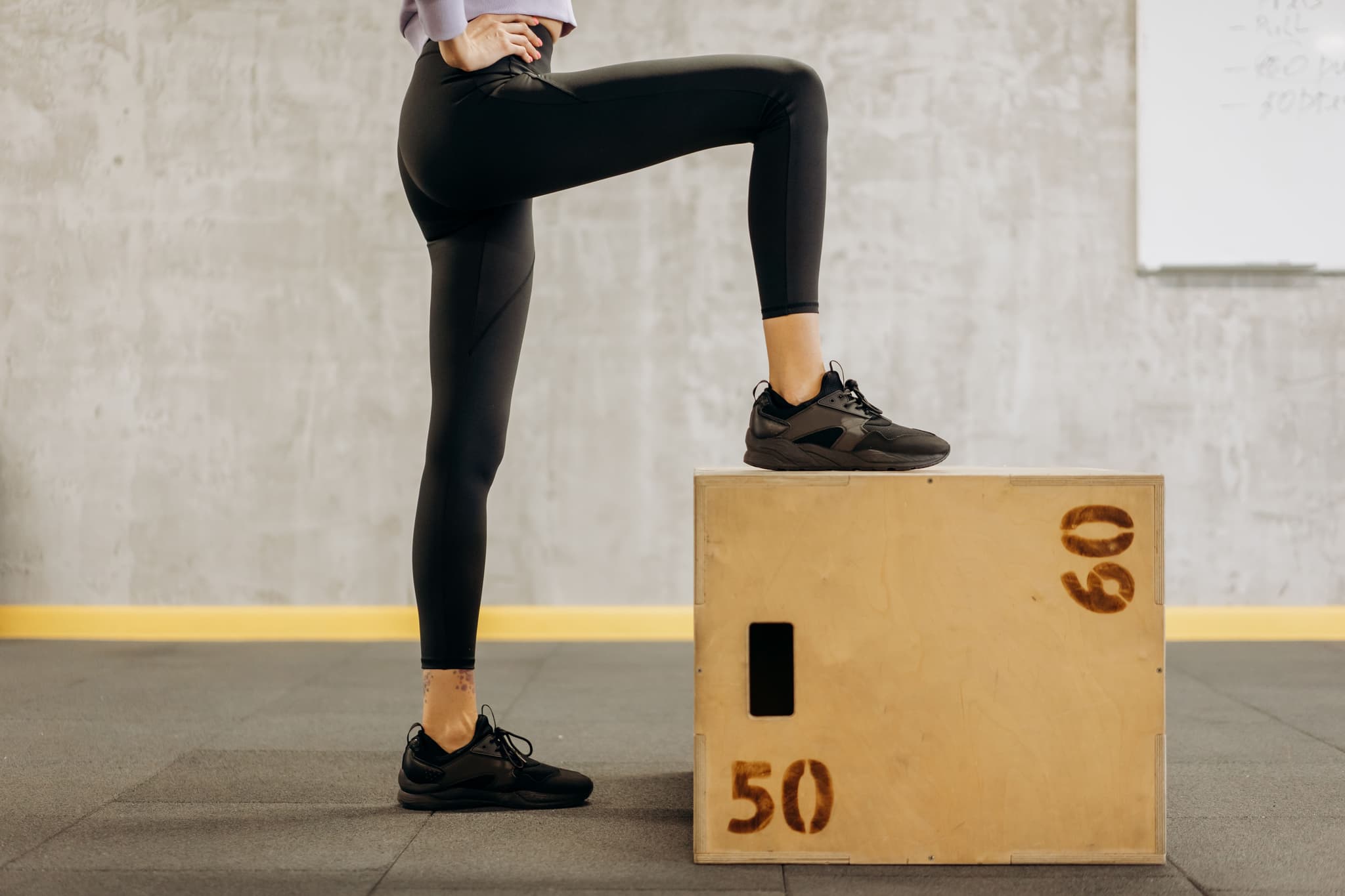
Step-Ups for Hamstrings: Box Height, Stance & Form Guide
Are step-ups actually a hamstring exercise, or just quads in disguise? Here's how box height, stance, and hip hinge decide the answer.
7 Progressive Overload Mistakes Beginners Make (and Fixes)
Stalled lifts? You might be making one of these 7 progressive overload mistakes beginners make without realizing it. Get the symptoms, causes, and exact fixes before it costs you months.