
Pronated vs Supinated Grip: The Real Difference in Arm Muscles
Palm direction changes more than comfort—it rewires which arm muscle does the work. Here's what EMG data actually shows about pronated vs supinated grip arm muscles, plus how to program each for curls, rows, and pulldowns.
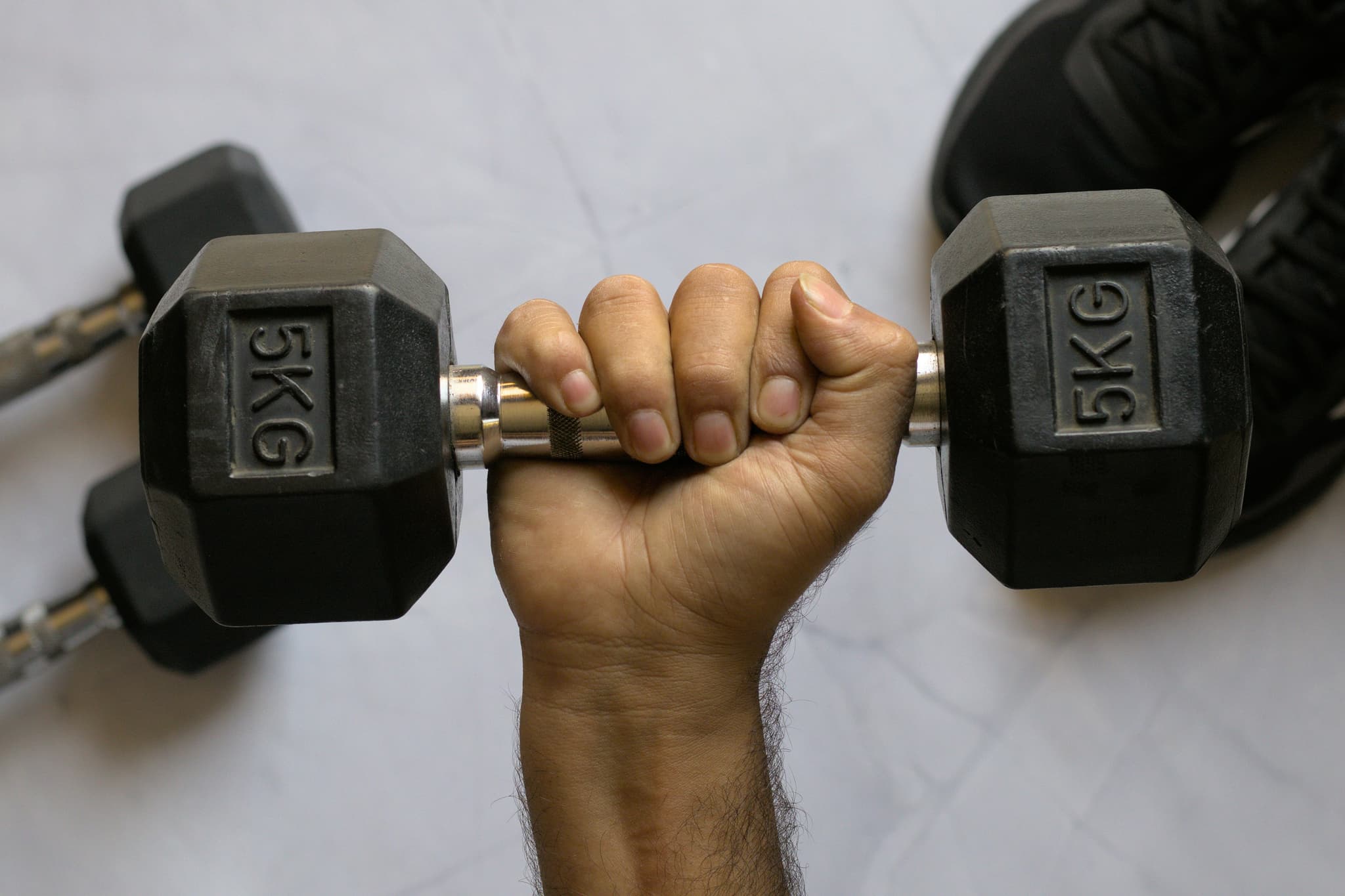
Flip your palm from facing forward to facing your body, and you change which muscles do the heavy lifting in a curl. That's the core of the pronated vs. supinated grip debate, and the fitness world still hasn't settled it. Legion Athletics argues that grip orientation barely moves the needle on muscle activation. Gripzilla-style forums rank grips like the science is settled: supinated for biceps, pronated for brachialis, case closed. Both sides are working from real data, just incomplete slices of it.
The real answer lives in EMG readouts and joint mechanics, not gym folklore or forum consensus. Rotate your forearm and you change the angle your biceps, brachialis, and brachioradialis pull from, which changes which muscle wins the recruitment fight. Understanding how pronated grip and supinated grip affect arm muscle activation requires looking at the actual mechanics. This article pulls together the studies both camps cite, breaks down what each one actually measured, and gives you a grip-by-grip framework for curls, rows, and pulldowns.
Pronated vs Supinated Grip: The Quick Answer
Grip position comes down to forearm rotation relative to your body's midline, not just which way your palms happen to face. A pronated vs supinated grip determines which arm muscles take on the load during pulling and curling movements. In a pronated grip, your forearm rotates so the radius crosses over the ulna, turning your knuckles away from you. A supinated grip does the opposite—the forearm rotates so the bones sit parallel, turning your palms toward your torso.
Here's the breakdown:
Grip Type | Hand Position | Primary Muscles |
Pronated grip | Palms face down or away from you | Brachialis and brachioradialis |
Supinated grip | Palms face up or toward you | Biceps brachii |
Neutral grip | Palms face each other | Biceps and brachialis evenly |
This rotation, not hand placement alone, determines muscle recruitment patterns for any pulling exercise.
The Joint Mechanics Behind Pronated vs Supinated Grip Arm Muscle Activation
Grip position changes arm muscle activation because it changes the angle each muscle pulls from. Rotate your forearm and you rotate the tendon paths of your biceps, brachialis, and brachioradialis around the radius and ulna. Same joint, same muscles, completely different leverage.
How Forearm Rotation Changes a Muscle's Line of Pull
The biceps brachii tendon wraps around the radius. When you supinate, that tendon sits in a position where it can pull efficiently on both elbow flexion and forearm rotation at once. When you pronate, the radius rotates underneath the tendon, twisting the muscle's angle of pull away from its strongest line.
Naito and colleagues confirmed this with EMG data in 1995: the biceps brachii showed an increase and a decrease of EMG activities during supination and pronation, respectively. Brachialis and brachioradialis do the reverse, picking up more of the workload as grip position shifts toward pronated.
Why Pronation Puts the Biceps at a Mechanical Disadvantage
This isn't a small effect. A 2018 study in Physiological Reports measured maximal voluntary contraction force across forearm orientations and found MVC and VA were higher in supinated (213.6 ± 49.6 N; 93.0 ± 5.2%) and neutral (243.6 ± 48.0 N; 96.1 ± 3.2%) compared with pronated (113.6 ± 21.3 N; 70.9 ± 20.4%).
That's close to half the force output, purely from a change in joint mechanics. Part of this drop comes from reduced neural drive, but force production in the pronated orientation is reduced and this likely arises from reductions in descending drive as suggested by the decline in VA, and part comes from the tendon path itself losing mechanical advantage. Either way, the biceps can't generate the same contractile force when its tendon path is twisted out of alignment, so the nervous system leans on brachialis and brachioradialis to cover the gap.
That force gap makes your chin-up grip choice a mechanical decision, not a cosmetic one. Pick the grip based on which muscle you want doing the work.
Pronated vs Supinated Grip Arm Muscles: Full Comparison Table
Numbers settle arguments better than opinions do. Here's how pronated vs supinated grip arm muscles respond across common lifts, based on EMG data rather than gym chatter.
Exercise | Grip | Primary Muscles Activated | EMG Finding | Source |
Bicep Curl | Supinated | Biceps brachii | Significantly higher biceps activation compared to pronated curls | PMC Biceps Brachii EMG Curl Study |
Bicep Curl | Pronated | Brachialis, brachioradialis | Reduced biceps recruitment, greater load shifted to brachialis | PMC Biceps Brachii EMG Curl Study |
Forearm Rotation Task | Supination | Biceps brachii, supinator | Biceps acts as prime mover during resisted supination | PMC EMG Study on Forearm Supination/Pronation |
Forearm Rotation Task | Pronation | Pronator teres, pronator quadratus | Biceps activity drops sharply, pronators take over | PMC EMG Study on Forearm Supination/Pronation |
Pull-Up / Chin-Up | Supinated (chin-up) | Biceps brachii, lats | Higher biceps EMG readings versus pronated pull-ups | ResearchGate - Grip Width & Hand Orientation Study |
Pull-Up / Chin-Up | Pronated (pull-up) | Brachialis, brachioradialis, lats | Shifted emphasis toward brachialis and back musculature | ResearchGate - Grip Width & Hand Orientation Study |
The pattern holds across every row. A supinated grip consistently favors the biceps brachii, while a pronated grip redirects the work toward brachialis and brachioradialis. Grip width matters too, but hand orientation is the bigger lever for shifting where the tension lands.
If you're programming arm work or pulling movements, this table is your cheat sheet for matching grip position to target muscle. The next question is how to apply it inside an actual workout.
Why the Research on Pronated vs Supinated Grip and Muscle Activation Seems Contradictory
Read enough grip studies and you'll notice two camps talking past each other. One camp says grip barely matters. The other publishes charts ranking exercises by which grip wins. Both are right, because they're measuring different things.
Where the Studies Agree
Dickie et al. (2016) attached EMG sensors to lifters running pull-up variations with different hand orientations. Results indicate that EMGPEAK and EMGARV of the shoulder-arm-forearm complex during complete repetitions of pull-up variants are similar despite varying hand orientations; however, differences exist between concentric and eccentric phases of each pull-up.
Grip position didn't rewrite the muscle recruitment pattern. What did shift was the phase of the lift. The concentric phases of each pull-up variation resulted in significantly greater EMGARV of the brachioradialis, biceps brachii, and pectoralis major in comparison to the eccentric phases, regardless of how the hands were turned.
That's the part the "no real difference" crowd reads correctly. Total muscle involvement across a full pull-up rep doesn't swing wildly based on grip alone.
Where They Diverge (and Why That's Not a Contradiction)
Michael Matthews at Legion Athletics makes a similar point about pulldowns: most studies show that biceps activation is similar whether weightlifters use a pronated or supinated grip during pulldown exercises. He also notes that with a supinated grip, it trains your biceps a little more than the pronated grip, though the difference probably isn't huge.
Subtle isn't zero. Rank exercises by that small margin and you get the "definitive" lists other sites publish. Average across a full pull-up cycle and margins wash out. Same data, different lens.
Grip Position and Exercise Technique: Applying the Research
Theory only gets you so far. Here's how the EMG data plays out across the lifts people ask about most.
Biceps Curls: Supinated Grip for Peak Biceps and Brachioradialis
For maximum biceps and brachioradialis recruitment, the dumbbell curl with a supinated grip wins. Coratella and colleagues (2023) found that biceps brachii and brachioradialis activation were highest with the supinated grip during the ascending phase of biceps curls, while the anterior deltoid showed greater activation with pronated and neutral grips.
That distinction matters for anyone chasing arm size specifically. A pronated curl isn't a bad exercise, but it shifts real work onto the shoulder. If your curls start to feel like a front raise, check your grip position before you add weight.
Pull-Ups vs Chin-Ups: Lower Trapezius vs Pec Major and Biceps
Grip position here changes more than an arm question—it changes a back question too. Youdas et al. (2010) demonstrated significantly greater activation of the lower trapezius during pronated-grip pull-ups compared to supinated-grip chin-ups, while the supinated grip produced significantly greater activation of the pectoralis major and biceps brachii.
Neither grip beats the other outright. They train different things. Pick pull-ups for scapular control and mid-back development. Pick chin-ups for more biceps and chest carryover in a vertical pull.
Lat Pulldowns: Subtle Shifts, Not Dramatic Ones
Pulldowns get lumped into pull-up debates constantly, but the machine changes the equation. Grip-related shifts in muscle activation on the lat pulldown appear smaller than what shows up in bodyweight vertical pulls, thanks to the fixed bar path and seated position limiting how much forearm rotation can alter the recruitment pattern.
Switch pulldown grips for shoulder comfort or lat feel, not because you're expecting a big biceps shift.
Deadlifts: Mixed-Grip Choice Is About Bar Security, Not Arm Muscle Activation
People ask about mixed-grip deadlifts expecting an arm activation story. There isn't one. Lifters pronate one hand and supinate the other on heavy pulls for bar security, plain and simple. A double overhand grip tends to roll out of the hands as the bar gets heavy, and the mixed grip stops the bar from rotating in the palms.
It has nothing to do with recruiting more biceps or brachialis fibers. Treat your deadlift grip as a strength-and-safety tool, and save the grip-for-gains thinking for curls and pulldowns.
What Is a Neutral Grip, and When Should You Use It?
A neutral grip means your palms face each other, thumbs pointing up, like you're holding a hammer or gripping a set of parallel dumbbell handles. Use it when you want strong pulling or curling force without putting your elbow or wrist in a rotated position—it's one of the three main grip positions alongside pronated and supinated grip.
The strength numbers back this up. A 2018 study on elbow flexors measured maximal voluntary contraction force at 243.6 N neutral, 213.6 N supinated, and 113.6 N pronated. That's not a small edge. Neutral grip outperformed supinated grip in this dataset, and both beat pronated grip by a wide margin.
In the neutral position, your forearm lets the biceps and brachioradialis both contribute without fighting rotational torque. Nothing gets twisted into a weak angle.
This makes neutral grip a smart default when your elbow or wrist complains during regular curls or rows. Hammer curls, neutral-grip pull-ups, and landmine presses let you train hard without the pronated penalty.
Grip choice matters for comfort as much as it does for output. The research on which grip wins outright is split, so the practical question becomes how you apply that split in your own training.
Does Grip Type Actually Affect Muscle Growth?
Here's where a lot of lifters connect dots that shouldn't be connected. A 2023 EMG study found biceps brachii activation was about 19% higher with a supinated grip than a pronated grip during the curl's lifting phase, and suddenly people treat that as proof of bigger arms down the road. That's a leap the data doesn't support.
What is pronated vs supinated grip? A pronated grip means your palms face down or away from your body. A supinated grip means your palms face up or toward your body. The difference in grip position changes which arm muscles fire during a movement, but the size of that difference is often overstated.
EMG measures electrical activity in a muscle during a single rep, on a single day, usually in a lab with a handful of subjects. It tells you nothing about what happens after 12 weeks of training. Muscle growth depends on mechanical tension applied across enough sets, at a hard enough effort, repeated consistently over months. Grip position influences which fibers get recruited in that specific movement, but it's a small lever compared to total volume and progressive overload.
Think of arm muscle activation differences as a tiebreaker, not a strategy. If your curl volume and intensity are already dialed in, choosing a supinated grip might nudge biceps recruitment slightly higher. It won't rescue a program that's undertrained to begin with.
That distinction matters once you start comparing specific grip positions side by side.
Grip Safety: Separating Evidence From Gym Folklore
Scroll through any forum thread on curls or rows and someone will tell you a supinated grip protects your elbows. Someone else will swear it wrecks your wrists, depending on which coach they follow. Neither claim holds up under scrutiny. Current evidence does not support labeling one grip orientation as inherently safer or riskier than another for joint health.
What the research does show is a difference in force output, not injury risk. A 2018 study measuring voluntary activation across forearm orientations found maximal voluntary contraction was higher in supinated (213.6 N) and neutral (243.6 N) positions compared with pronated (113.6 N) (Kohn et al., Physiological Reports). That's a mechanical disadvantage, not a safety verdict.
A pronated grip simply asks your elbow flexors to produce force from a weaker position. Lifters often mistake that strain for joint stress when it's a strength deficit built into the anatomy.
Keep that distinction in mind before you rewrite your program around fear rather than physiology.
Build Your Pronated vs Supinated Grip Training Program
Reading the research is one thing. Rotating your grip week to week is what actually changes your arms. Here's a simple framework that puts Coratella, Youdas, and Dickie's findings to work without overcomplicating your split.
Sample Weekly Grip Rotation
Day 1: Supinated curls, 4 sets of 8–10 reps. During the ascending phase, biceps brachii excitation was greater with the supinated grip compared to pronated and neutral handgrips, and the brachioradialis showed the same pattern—which is exactly the peak contraction you're chasing here.
Day 2: Pronated-grip pull-ups, 3 sets to near failure. Youdas et al. found significantly greater activation of the lower trapezius during pronated grip pull-ups compared to supinated grip. Follow with pronated bent-over rows, 3 sets of 10 reps, for lat and rear delt work.
Day 3: Supinated chin-ups, 3 sets to near failure. The supinated grip revealed significantly greater activation of the pectoralis major and biceps brachii compared to the pronated grip. Pair with neutral-grip curls for a joint-friendly finisher.
Rotate grips within the same movement pattern rather than picking one and sticking with it forever. Dickie and colleagues, using 19 trained males performing pull-ups and chin-ups, didn't find the differences between pull-ups and chin-ups that the Youdas groups did, so don't assume one grip orientation is carrying all the work. The concentric phase of each pull-up variation produced significantly greater average EMG activity in the brachioradialis, biceps brachii, and pectoralis major. Your pulling tempo matters as much as your hand position.
Tracking Grip Variation for Progressive Overload
Grip rotation only pays off if you're tracking it. Log which grip position you used per set, not just total volume. A workout app that lets you tag exercise technique details—grip, tempo, range of motion—makes it easy to spot whether supinated curls are actually outpacing your pronated pulldown numbers over eight weeks.
Skip that tracking, and you're just guessing which grip built the muscle.
Pronated vs Supinated Grip Arm Muscles: Frequently Asked Questions
What is the difference between pronated and supinated grip?
A pronated grip means your palms face down or away from your body, while a supinated grip means your palms face up or toward your body. These grip positions activate different arm muscles during exercises like curls, pull-ups, and rows. The choice between them affects which muscles bear the load and how effectively you build strength in specific areas.
Is pronated or supinated grip better for biceps?
Supinated grip wins for biceps brachii activation. Research on biceps curls found that biceps brachii and brachioradialis activation were highest with the supinated grip during the ascending phase, while the anterior deltoid showed greater activation with pronated and neutral grips. The biceps brachii flexes the elbow and supinates the forearm, so a palms-up grip lets it do both jobs at once. Pronated grip shifts more of the work to the brachialis and forearm extensors, a solid swap if you're chasing forearm size or balanced elbow-flexor development.
What muscles does a supinated grip work?
A supinated grip lights up the biceps brachii most directly, but it also recruits the brachioradialis and, depending on the exercise, the lats and rear delts during pulling movements. An EMG study on forearm rotation found that the supinator showed higher activation than the biceps brachii at lower torques, but as applied torque increased, biceps brachii activity increased proportionally more than the supinator. In plain terms, the heavier the load, the more the biceps takes over the supination work.
Pronated vs supinated grip for deadlifts
Most lifters use a mixed grip—one hand pronated, one supinated—for heavy deadlifts because it keeps the bar from rolling out of your hands. That's a grip-security decision, not an arm-activation one, though it does load the biceps tendon on the supinated-side arm more than the other. Alternate which hand you supinate between sets to spread out that stress.
Pronated vs supinated grip for pull-ups vs chin-ups
Chin-ups produce significantly higher biceps brachii EMG activation than pull-ups, while the lower trapezius fires harder during pull-
The Bottom Line
Your biceps, brachialis, and brachioradialis all work on every curl and every row, no matter which way your palms face. What changes is how much load each one carries, because rotating your forearm changes the leverage those tendons pull from. That's the pronated vs. supinated grip arm muscles debate stripped of gym folklore: the muscles stay the same, but the workload shifts with the angle.
Pick your grip based on which muscle you want to hit hardest. Supination pushes more work onto the biceps brachii. During the ascending phase, biceps brachii excitation is greater with the supinated grip compared to the pronated and neutral handgrip, and the brachioradialis also shows greater excitation with the supinated grip compared to pronated or neutral. That runs against the old gym rule that pronating shifts work onto the brachioradialis. Wrist position doesn't change brachialis activation at all, since brachialis has no influence there, while biceps brachii acts as a supinator and brachioradialis keeps the forearm in a more neutral zone. Use a neutral grip when your wrists or elbows need a break from rotation.
Balanced arms come from rotating grips on purpose, set by set and week by week, not from chasing one "correct" grip. Use the program breakdown above to build that rotation into your training split, and check what the EMG research actually shows before you take grip advice from whoever's next to you at the rack.
Related Articles
Dumbbell Arm Exercises for Beginners: Why Free Weights Beat Cables
Cables feel safer, but they hide the mistakes that matter most. See why dumbbell arm exercises beginners should master first build real strength, better balance, and honest form fast.
Step-Ups for Hamstrings: Box Height, Stance & Form Guide
Are step-ups actually a hamstring exercise, or just quads in disguise? Here's how box height, stance, and hip hinge decide the answer.

7 Progressive Overload Mistakes Beginners Make (and Fixes)
Stalled lifts? You might be making one of these 7 progressive overload mistakes beginners make without realizing it. Get the symptoms, causes, and exact fixes before it costs you months.