
Leg Press vs Squat Muscles: The Real Activation Differences
Squats look harder, but research says leg press vs squat muscles activation doesn't favor squats the way most lifters assume. Here's what the joint data actually shows.
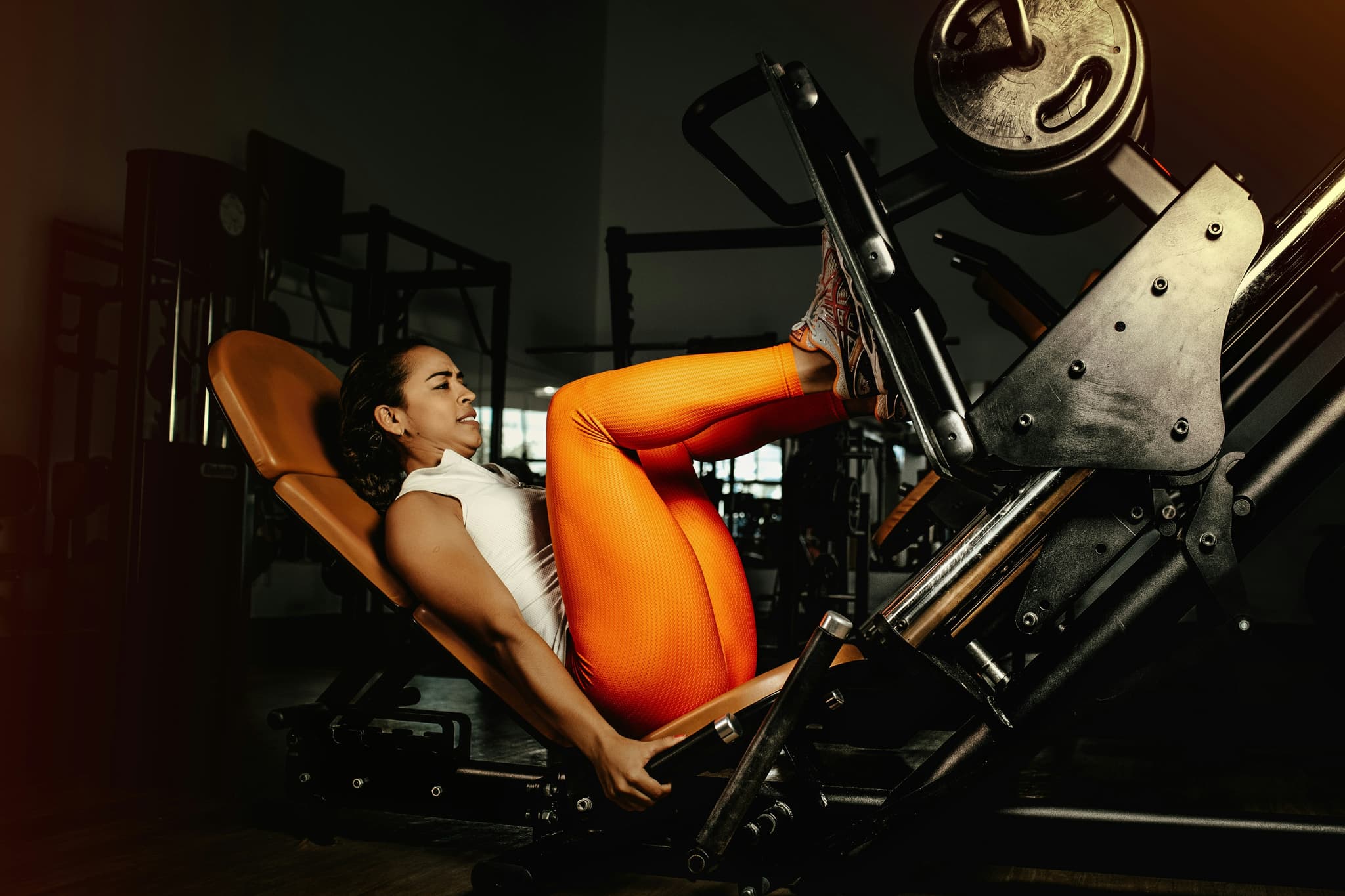
Ask most lifters which move destroys quads harder, and squats win by default. Bigger range of motion, more discomfort, more sweat on the floor. But when nine healthy adult habitually strength-training individuals were investigated using motion analysis and inverse dynamics-based musculoskeletal modelling to compute joint loads, muscle forces, and muscle activities in flywheel squats and leg presses, the results complicated that assumption. The study, led by Sjöberg and colleagues, concluded that for strength training of the quadriceps muscles, flywheel leg press might be preferable to flywheel squat, despite present evidence of higher total load in squat.
Understanding leg press vs squat muscles requires looking past total weight moved. These two lifts load your hips and knees in very different ways. The leg press can match or beat the squat for quad demand even when the squat moves more total weight. The difference comes down to how each exercise distributes force across your joints and which muscle groups carry the load.
This isn't another gym-blog take built on gut feeling and gym-bro folklore. What follows breaks down the actual joint mechanics behind each lift, what the research shows about hip and knee demand, and how that data should shape the way you program your training. If you want the real answer on leg press vs squat muscles based on measurements instead of assumptions, this is where the data settles the argument.
Do Leg Press and Squat Work the Same Muscles?
Leg press vs squat muscles overlap significantly but aren't identical. Both movements activate the quadriceps heavily, but the squat demands more from your core, lower back, and glutes because you're standing and stabilizing a loaded bar. The leg press, seated with back support, removes most of that stabilization work. A 2021 study in Frontiers in Sports and Active Living found quadriceps activation was similar between the two, yet hip-extension demand was actually moderately greater in the leg press.
Quick-Reference Table: Leg Press vs Squat Muscle Activation
Muscle Group | Leg Press | Barbell Squat |
Quadriceps | High | High |
Glutes | Moderate | High |
Hamstrings | Low–moderate | Moderate |
Adductors | Moderate | Moderate |
Erector spinae | Minimal | High |
Core stabilizers | Minimal | High |
Calves | Slight | Minimal |
The quads barely notice which machine you pick. Everything else on your body does.
The Research Behind Leg Press vs Squat Muscles
The overlap in quad activation looks strange once you measure joint mechanics instead of just muscle firing. Sjöberg et al., publishing in Frontiers in Sports and Active Living, measured net joint moments during both lifts and found a pattern that doesn't match what you'd guess from watching someone train.
Knee-Extension vs Hip-Extension Joint Moments
The knee-extension net joint moment was considerably greater in squat than in leg press (p ≤ 0.04). That tracks with how the squat feels. Your knees travel forward and your torso works to stay upright, and the joint ends up carrying a heavier mechanical load than it does on the machine.
The leg press told a different story at the hip. The hip-extension net joint moment was moderately greater in leg press than in squat (p = 0.03). The seated, reclined position of the leg press shifts more demand onto the glutes and hamstrings than most lifters assume when they picture it as a "quad machine."
Why Researchers Expected a Different Result
Before collecting data, the researchers hypothesized that leg press would produce higher moments than squat about the hip and ankle but not about the knee joint, and therefore that leg press would activate the hip-extensor but not the knee-extensor muscles to a greater extent than squat. That's a prediction that the leg press would shift more of the workload toward the posterior chain.
That part held up. The knee didn't cooperate with the rest of the hypothesis. Researchers expected little difference in knee-extensor moments between the two lifts, but the squat came out considerably higher instead. Quadriceps muscle activity was similar in squat and leg press, so the mismatch shows up in joint moment, not muscle activation. The squat's forward trunk lean and the balance demands of standing free weight change the mechanics enough to raise knee moment without any matching jump in quad EMG.
This is why squat muscle activation numbers can mislead lifters. The muscles doing the work look similar on an EMG readout, but the joints carrying that load are under measurably different demands.
Leg Press vs Squat Muscles: Full Breakdown
Once you separate the two lifts joint by joint, the picture gets a lot clearer. Here's how the major muscle groups stack up.
Muscle | Squat Role | Leg Press Role |
Quadriceps | Primary mover, high activation throughout the range | Primary mover, comparable activation to squat |
Glutes | Major contributor, especially out of the hole | Reduced role, more passive support |
Hamstrings | Moderate activation as hip stabilizers | Minimal activation, mostly along for the ride |
Adductors | Active in stabilizing the knees and hips | Lower involvement, less lateral demand |
Trunk/Spinal Stabilizers | High demand, core and erectors work to keep the spine neutral under load | Minimal demand, seat and backrest absorb the work |
Quadriceps
Both exercises hit the quads hard. This is the one place where leg press muscle groups and squat activation genuinely converge. A study by Sjöberg and colleagues, published in Frontiers in Sports and Active Living, used flywheel resistance training and inverse dynamics modeling to measure muscle forces in nine trained lifters. The research found quadriceps muscle activity was similar between squat and leg press. If quad size or strength is your main goal, either exercise gets the job done.
Glutes and Hamstrings
This is where the two lifts start pulling apart. The squat asks your glutes to fire hard, particularly as you drive up from depth, and your hamstrings pitch in to stabilize the hip. The leg press, seated and supported, takes a big chunk of that hip extension work off the table. Your glutes still contribute, but nowhere near the same intensity.
Hip Adductors and Abductors
The squat's standing, free-moving stance forces your adductors and abductors to control side-to-side knee tracking. On the leg press, the fixed sled path removes most of that lateral stabilization job. Your inner and outer thighs simply have less work to do.
Trunk and Spinal Stabilizers
The squat loads your spine directly, so your core and erector spinae stay switched on the entire set. The leg press's backrest handles that job for you. If trunk strength is part of your training goal, this gap matters more than the quad numbers suggest.
Machine vs Free Weight: Why Stability Changes the Loading Pattern
The joint-moment differences between these lifts aren't random. One movement asks your body to create its own stability, and the other builds that stability into the equipment.
That distinction explains most of what shows up on a force plate.
Why the Squat Demands More Trunk and Stabilizer Involvement
When you squat, the bar rides on your back and your feet are the only fixed points in the system. Your spine, hips, and core work continuously to keep that load from tipping you forward, backward, or sideways.
This is the mechanical reason the knee-extension net joint moment came out considerably greater in squat than leg press. The difference between leg press and squat muscles reflects this stability demand. Total exercise load and the knee-extension net joint moment were slightly and considerably greater, respectively, in squat than in leg press (p ≤ 0.04), a finding from Sjöberg and colleagues' flywheel resistance study in Frontiers in Sports and Active Living. Your body isn't just extending the knee. It's extending the knee while managing a load that has no external track to follow.
Why the Fixed Path of the Leg Press Shifts Moment Arms
The leg press machine removes that balancing act. The sled travels on a fixed rail, your back is supported by a pad, and the bar path is decided for you before you load a plate.
Sjöberg's team predicted this outcome before running the test. They hypothesized that leg press would produce higher moments than squat about the hip and ankle but not about the knee joint, and therefore that leg press would activate the hip-extensor but not the knee-extensor muscles to a greater extent than would squat. The data backed that up: the hip-extension NJM was moderately greater in leg press than in squat (p = 0.03).
Fix the path, and you change which joint absorbs the work.
Training Implications: How to Program Leg Press and Squat Together
Knowing that leg press and squat overlap in quad recruitment doesn't tell you how to build a leg day around them. The programming answer depends on load, joint angle, and what else is on the docket that session. Understanding how to use both movements requires knowing which muscle groups each one targets best.
The 11-Degree Depth Difference and What It Means for Loading
Load your leg press deeper than you'd ever squat. Leg press was performed at 11° deeper knee-flexion angle than squat (p = 0.01), a gap that matters for programming. The leg press lets you accumulate time under tension at a joint position the squat rarely reaches under heavy load. That makes it a solid tool for lifters chasing bottom-range quad development without the balance demands of a deep back squat.
Leg Press vs Single-Joint Knee Extension: A Hypertrophy Angle
If your goal is quad size and your toolbox includes leg extensions, swap in heavy leg press instead. The multi-joint exercise leg press produced higher EMG amplitude of the vastus lateralis (ES = 0.92, p = 0.003) than the single-joint exercise knee extension in a study of resistance-trained men. That's a meaningful gap. For hypertrophy blocks, this makes leg press a stronger anchor movement than isolation work, with extensions best reserved as finishing volume once the compound lift is done.
Squat's Edge: Full-Body Recruitment Under Load
Program your squat when the session calls for more than quad growth. Squat muscle activation extends beyond the quads—it recruits the glutes, hamstrings, and trunk stabilizers under load, while leg press muscle groups concentrate force on the quads and hip extensors. That's the practical case for putting squat at the center of a strength-focused program: it builds the hips, hamstrings, and trunk along with the quads, not just the prime mover.
Pair them deliberately. Squat first for the coordination and trunk demand, leg press second to push the quads past what spinal loading allows.
Which Is Better for Glutes, Quads, and Overall Hypertrophy?
The answer depends on what you're chasing. When comparing leg press vs squat muscles, the debate gets muddled the moment someone claims squats simply "work more muscles." That framing doesn't hold up against EMG data.
Quadriceps muscle activity was similar in squat and leg press in controlled biomechanical comparisons. The real separation shows up in the hips, not in some vague muscle count.
Glute Emphasis: What the Hip-Extension Moment Data Actually Suggests
Squats demand more work from the hip extensors to keep your torso upright and drive you out of the bottom position. Free-weight squats elicit greater muscle activation in the quadriceps femoris and hamstring muscles compared to the leg press, largely because of the increased stabilization demands required to control the squat movement. The leg press strips out most of that demand because the sled's fixed path holds your torso in place for you. If glute development is your priority, the joint-loading pattern points toward the squat, particularly with a stance and depth that load hip extension on purpose.
Quad Emphasis: Reading the EMG Similarity Correctly
For quad-focused hypertrophy, the leg press holds its own. Because activation levels are comparable between the two exercises, the deciding factor becomes load tolerance, not muscle recruitment. Most lifters can push more weight and grind out more controlled reps on a leg press without the technical breakdown that limits heavy squats.
So the better lift depends on the target. Squats hit the posterior chain harder. The leg press delivers quad volume without the stability tax. Neither one earns the label "better overall" once you're training for total leg size, since the muscles doing the work overlap more than the stereotype suggests.
FAQ: Leg Press vs Squat Muscle Questions Answered
Does leg press work the same muscles as squats?
Both lifts target the quads, glutes, and hamstrings, but the mechanical demand on your knees and hips differs by design. The knee-extension net joint moment was considerably greater in squat than in leg press (p ≤ 0.04), whereas the hip-extension net joint moment was moderately greater in leg press than in squat (p = 0.03), according to a study by Sjöberg and colleagues published in Frontiers in Sports and Active Living.
That means your knees work harder relative to your hips in a squat, and the reverse holds true on the leg press. When comparing leg press vs squat muscles, the primary muscle groups overlap, but the distribution of load across joints differs significantly.
Are leg presses better than squats?
Neither lift is categorically better. It depends on your goal: the squat demands more from your knee extensors and core stability, while the leg press shifts more of that hip-extension load without asking your spine to stabilize a bar.
If you're chasing raw quad fatigue with less technical risk, the leg press has an edge. If you want a lift that trains your whole body to brace and move as one unit, the squat wins.
Is leg press as effective as squats for building muscle?
For quad hypertrophy specifically, yes. The leg press holds its own. The joint-moment data doesn't point to an inferior muscle-building stimulus, just a different loading pattern across the hip and knee.
Where squats pull ahead is systemic demand. You're recruiting stabilizers and spinal erectors that the leg press doesn't ask for. Machine vs free weight differences matter most when total-body engagement is your priority.
Can leg press replace squats?
For quad-focused hypertrophy work, yes. For general strength and athletic transfer, no.
Squats train force production through a standing, load-bearing position that the leg press can't replicate. If your goals are purely muscular rather than athletic, the substitution works better than most lifters assume.
Which is better for glutes, leg press or squat?
The leg press produces a moderately greater hip-extension moment (p = 0.03), which points to slightly more glute-biased loading, especially with a high foot placement.
Do leg presses work quads more than squats?
No. The squat shows the greater knee-extension moment, meaning your quads face more mechanical demand there, not less.
The Bottom Line
The leg press vs squat muscles debate keeps circling back to the same insight: quad activation runs close between the two lifts, but joint demand doesn't. Some EMG research found that both wide and narrow stance squats had higher muscle activation for the quads and hamstrings than any leg press stance. Other studies show the two lifts land in the same range for quad recruitment, with the leg press even pulling ahead at deeper knee angles. Your knees carry more of the load on the leg press. Your hips, spine, and stabilizers pick up the slack on the squat. That divergence, not some myth about one exercise working more muscle, is what should drive your programming decisions.
Stop treating these as interchangeable or as competitors for a single slot on leg day. Use the squat when you need hip-dominant strength and full-body coordination under load. Use the leg press when you want to isolate the quads with less spinal fatigue, or when you're pushing volume past what your lower back can tolerate that day. Programmed together, they cover each other's gaps.
If you want a structured way to fit both into a week that builds strength instead of just soreness, check out our leg-day program builder for a plan that puts this research into practice.
Related Articles
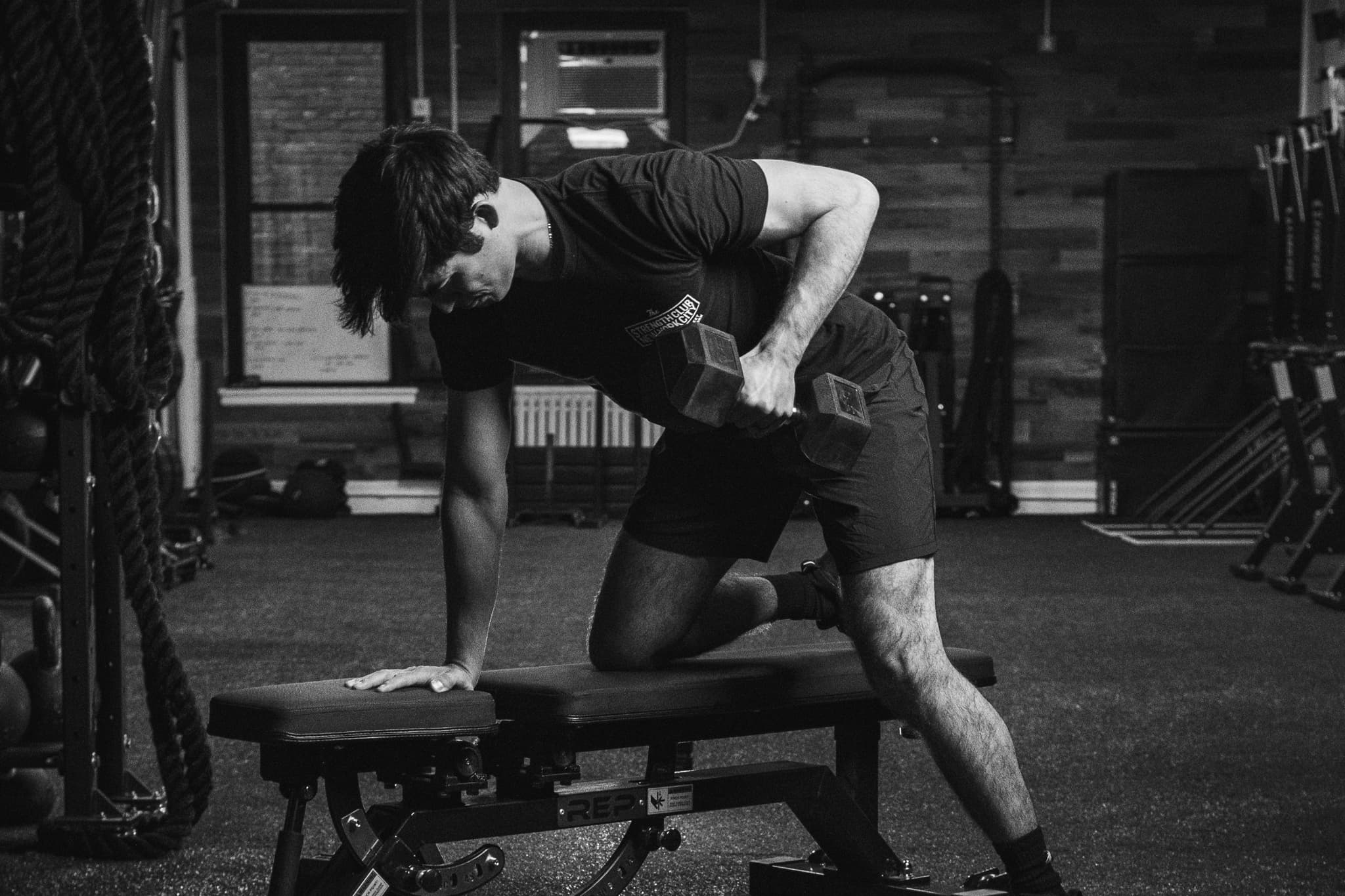
Dumbbell Arm Exercises for Beginners: Why Free Weights Beat Cables
Cables feel safer, but they hide the mistakes that matter most. See why dumbbell arm exercises beginners should master first build real strength, better balance, and honest form fast.
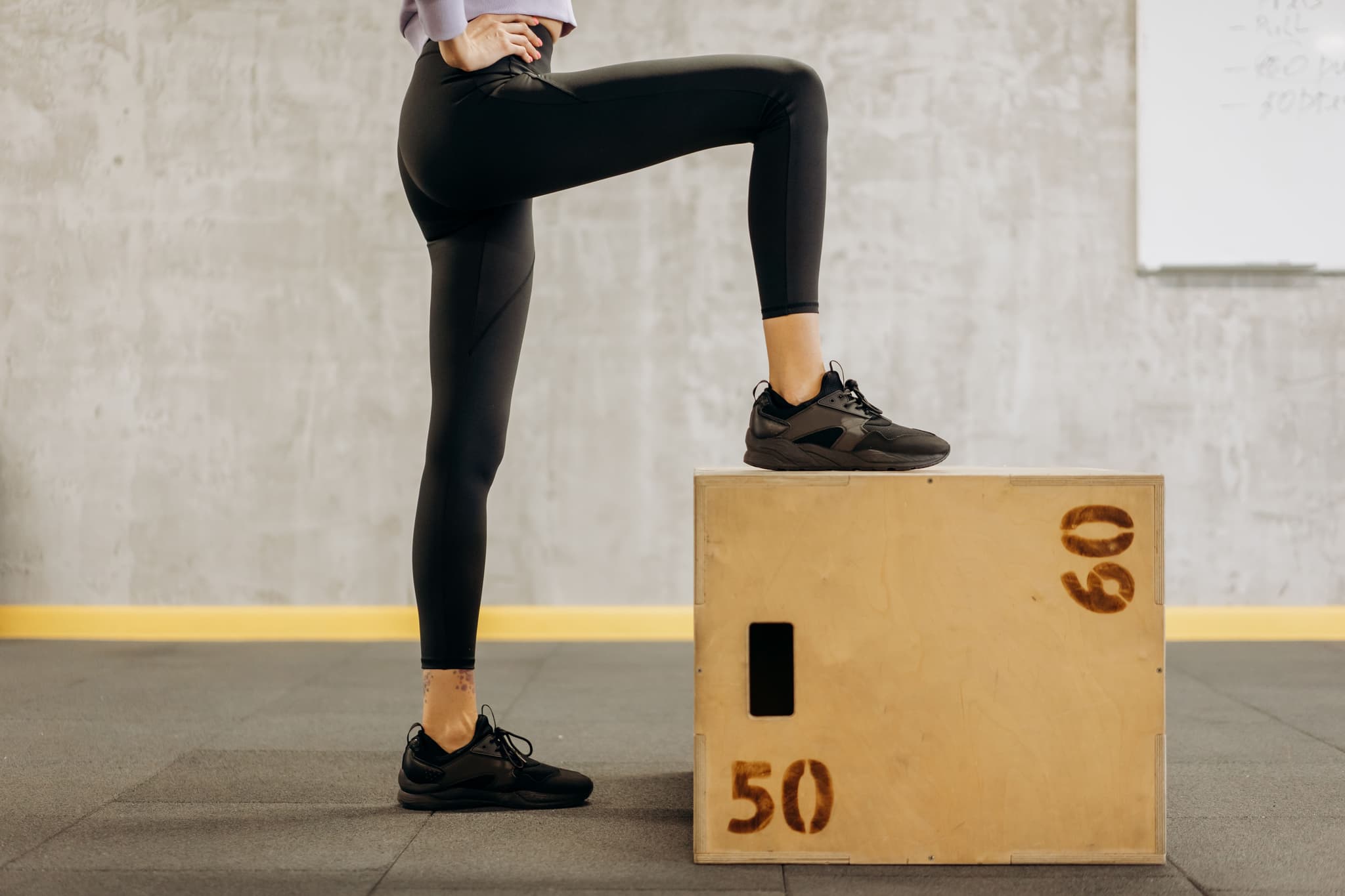
Step-Ups for Hamstrings: Box Height, Stance & Form Guide
Are step-ups actually a hamstring exercise, or just quads in disguise? Here's how box height, stance, and hip hinge decide the answer.
7 Progressive Overload Mistakes Beginners Make (and Fixes)
Stalled lifts? You might be making one of these 7 progressive overload mistakes beginners make without realizing it. Get the symptoms, causes, and exact fixes before it costs you months.