
The Grip Width Effect: Arm Muscles in Curls vs. Presses Explained
Two inches of hand placement can shift which muscles do the work. See how grip width arm muscles curls presses activation really changes—backed by EMG data, not gym lore.
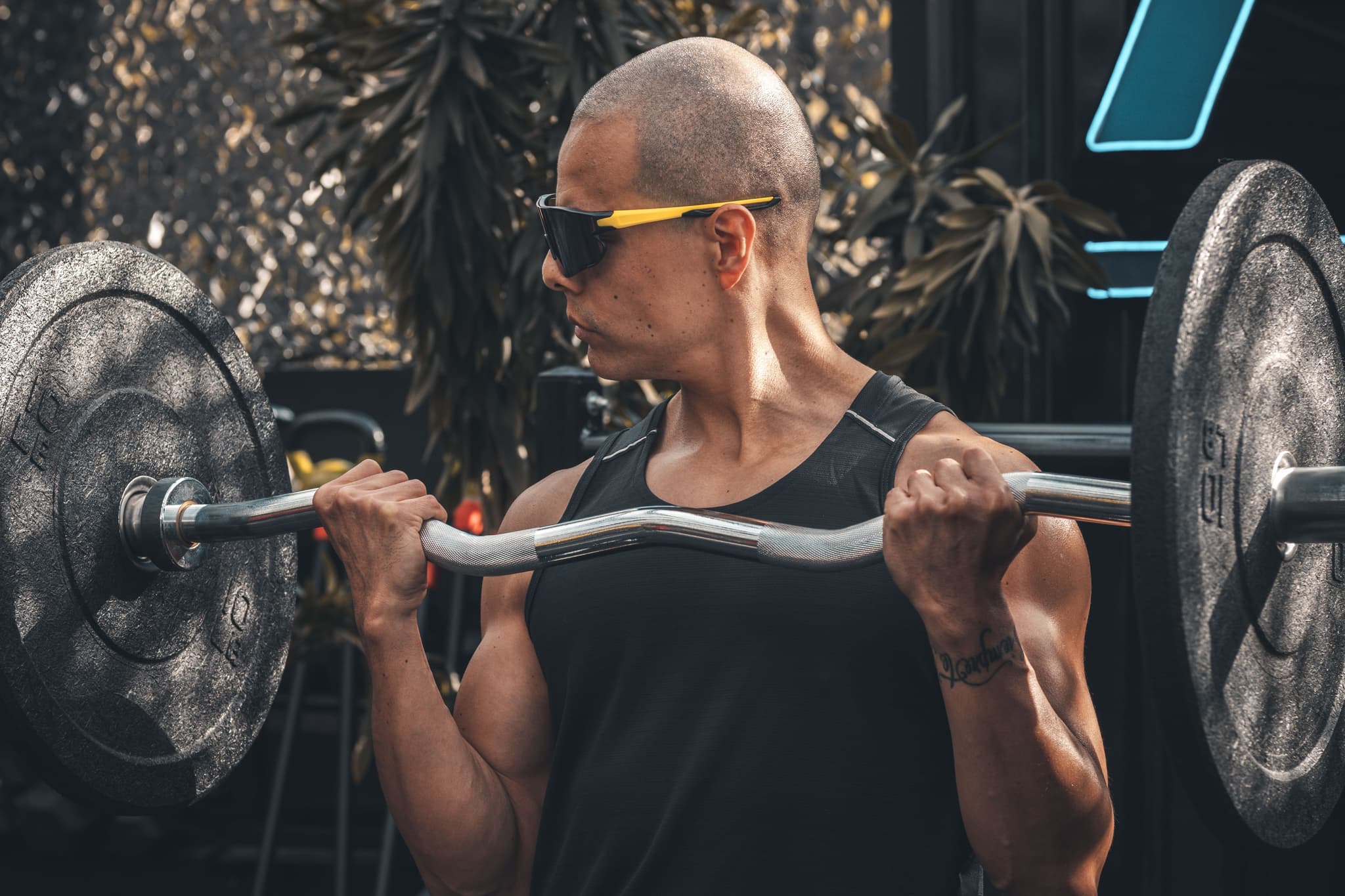
Change your hand position by two inches on a curl bar and you shift which head of the biceps carries the load. Do the same on a bench press and the effect runs deeper: grip width arm muscles curls presses respond differently depending on how wide or narrow you position your hands. Grip width changes how hard the biceps, triceps, and anterior deltoids work during both curls and presses. Most lifters never think about this. They pick a grip because it feels comfortable, or because they read somewhere that close grips build triceps and wide grips hit the outer bicep head on curls. Some of that advice holds up under EMG testing. A good chunk of it doesn't.
This piece breaks down what the muscle activation data actually shows for both movements. It also explains why joint angle, not tradition, drives most of the difference at the shoulder and elbow. And it covers where the popular claim that narrow grips build more triceps holds up under scrutiny, and where it doesn't. By the end, you'll know how to pick a grip based on what's happening at your joints, not what someone told you at the gym.
Grip Width and Arm Muscles: The Quick Answer
Grip width changes which arm muscle carries the load during curls and presses. On the bench press, biceps brachii activity increases with wider grips, while triceps brachii activation drops compared to medium or narrow positions. The anterior deltoid works harder with a medium grip than a narrow one. Curl grip width shifts emphasis between the long and short heads of the biceps, though research on this effect remains mixed.
Grip Width | Exercise | Primary Muscle Emphasis | Secondary Muscle Emphasis | Best Use |
Narrow | Bench Press | Triceps brachii | Anterior deltoid (lower than medium) | Triceps-focused pressing strength |
Medium | Bench Press | Triceps brachii, anterior deltoid | Biceps brachii | Balanced pressing, general strength |
Wide | Bench Press | Biceps brachii (increased activation) | Triceps brachii (reduced activation) | Chest-dominant pressing, less triceps demand |
Narrow | Bicep Curl | Short head, biceps brachii | Brachialis | Peak contraction, biceps thickness |
Wide | Bicep Curl | Long head, biceps brachii | Forearm flexors | Biceps length, outer head emphasis |
The table above lays out the general pattern for the bench press, where the evidence is fairly consistent. The curl rows are a rougher guide. Some EMG work points to wider grips favoring the long head, other testing finds the opposite, and at least one controlled study found no significant difference across narrow, medium, and wide grips at all. Treat those two rows as a starting framework, not settled fact.
The mechanical reason behind the bench press shifts comes down to moment arms and shoulder positioning. As your hands move out, the shoulder joint takes on more of the horizontal adduction work, which favors the pectoralis and biceps over the triceps. Bring your hands in, and the elbow extensors take on a larger share of the load.
Why Grip Width Changes Muscle Activation in the First Place
Grip width isn't a cosmetic choice. It changes the angle your wrist, elbow, and shoulder sit at when you load the bar, and that angle determines which muscle gets stuck doing the heavy lifting.
At any given joint angle, a muscle has more or less mechanical advantage—how much leverage a muscle has at that joint angle. In plain terms, a wider or narrower grip either puts a muscle in a stronger position to work or takes that advantage away.
Narrow the grip on a curl or a press, and you rotate the forearm and shoulder into a position where certain fibers stretch tighter or slacken off. Widen it, and the joint angles shift again, changing which muscle group sits in the strongest mechanical position to do the work. This is why grip width for arm muscles matters so much across different exercises.
How Hand Position Shifts Elbow and Shoulder Torque
Elbow flexion and shoulder rotation don't operate independently. When you change hand spacing, you change the torque demand at both joints at once, which is why grip width affects the biceps, triceps, and deltoids differently depending on the exercise.
Grip width matters beyond curls and presses too. A lat pull-down study found similar EMG activation between grip widths for latissimus, trapezius, or infraspinatus, but a tendency for biceps brachii activation to be greater for medium versus narrow grip (p = 0.09), when the entire movement was analyzed. The back muscles held steady across grip widths in that study, while the biceps responded to hand position, suggesting arm muscles are more sensitive to grip changes than back muscles are.
The pattern holds across exercises. Grip width shifts arm muscle involvement even when the target muscle for an exercise stays the same, which is exactly what shows up in the curl and press data next.
Grip Width and Bicep Curl Muscle Activation: What the EMG Actually Shows
Most gym folklore around curls sounds like this: narrow grip hits the outer head, wide grip hits the inner head, and your biceps will grow a peak if you just find the right hand spacing. It's tidy and repeated everywhere. The research doesn't back it up.
Grip Width in Bicep Curls: What EMG Studies Show
Narrow, Medium, and Wide Grip Curls: The Data
The one study that directly tested grip width on barbell-style curls found no significant difference in biceps or brachioradialis activity across narrow, medium, and wide grips. Same muscles, same rough output, no matter where your hands sat on the bar.
That result contradicts the inner head/outer head story lifters tell each other in the mirror. The biceps brachii doesn't have two heads you can selectively switch on with hand position the way you can shift load between chest and delts on a bench press. Grip width changes the wrist and forearm angle, but it doesn't appear to change which portion of the biceps does the work in any meaningful way.
The testing protocol was limited, using a single rep and the same load for every width, so it's not the final word. One rep doesn't tell you what happens across a fatiguing set of ten, and it doesn't account for how grip comfort or joint stress might change your output over time. Treat the finding as a solid data point, not gospel.
Broader EMG work on curl variations tells a similarly mixed story: some testing has found wider grips favoring the long head, other testing has found the opposite, with no consistent pattern across the available data.
What Grip Width Is Best for Bicep Curls?
Grip width probably isn't your main lever for biceps growth. Load, range of motion, and time under tension matter more than whether your hands are two inches wider or narrower than shoulder width.
Grip width still affects wrist comfort, elbow strain, and how the bar feels in your hands under heavy load, which shapes how consistently you can train the lift. It just won't rewrite your biceps shape the way marketing copy suggests.
Curls are largely grip-width agnostic in terms of muscle activation. The bench press is a different story. There, hand position does shift the workload between muscles in a measurable way.
Biceps brachii activity increases with increasing grip width, while a wide grip displays lower triceps brachii activation than medium and narrow grips.
How Grip Width Changes Bench Press Grip Muscle Activation: Biceps, Triceps, and Delts
Grip width doesn't just change how the bar feels in your hands. It rearranges the division of labor between your biceps, triceps, and front delts, and the EMG data on this is about as clear-cut as exercise science gets.
Does Wide Grip Bench Press Work Triceps More or Less?
Wide grip bench press works the triceps less, not more. A 2021 study published in the International Journal of Environmental Research and Public Health found that biceps brachii activity increased with increasing grip width, whereas wide grip displayed lower triceps brachii activation than medium and narrow hand positions. That runs against a lot of gym logic, where wide grip gets sold as the "triceps killer" of pressing variations.
Widen your hands on the bar and you're asking your biceps to do more stabilizing work at the elbow, even though the movement itself is a press, not a pull. The same research team found that anterior deltoid activity followed its own pattern: greater activity was observed using a medium compared to narrow grip. The shoulder isn't indifferent to hand spacing either. It has a sweet spot, and it sits closer to shoulder-width than to a tucked-in narrow grip.
Where Narrow Grip Loses Biceps Activation
Narrow grip bench press is the clearest loser for biceps involvement, and the numbers back it up hard. A study on competitive bench press athletes, published on PubMed, found 25.9–30.5% lower EMG activity in the biceps brachii using a narrow grip, compared to the medium and wide grip conditions. That's not a rounding error. That's close to a third of the biceps contribution disappearing depending on where you place your hands. The same study found no significant differences in muscle activation between grip widths, except the narrower grip decreased biceps brachii activation, so don't expect a narrow grip to boost triceps recruitment on its own.
If you're chasing triceps development off the bench, this data says to look somewhere other than a wide grip. And if you're wondering why your arms feel different session to session on the same lift, hand spacing is doing more of that work than most lifters give it credit for.
The Narrow-Grip Triceps Myth: What Contradictory EMG Data Really Means
You've probably heard some version of this rule: close-grip bench press for triceps, wide grip for chest. It gets repeated so often that most lifters treat it as settled science. It isn't.
A 2023 study by Tanimoto and colleagues, published in the journal Sports, investigated the lateral force and contribution of shoulder horizontal adductor and elbow extensor muscle activity during wide- and narrow-grip bench press in various conditions, including resistance-trained versus non-trained lifters, concentric versus eccentric phases, and fatigued versus non-fatigued states.
The researchers measured lateral bar force and the EMG activity of the pectoralis major and triceps brachii during 10RM bench press with a wide grip (81 cm) and a narrow grip (40 cm) in seven resistance-trained men and seven non-trained men. Instead of just measuring raw triceps activation, they calculated the EMG contribution ratio between pectoralis major and triceps brachii. If the narrow-grip myth held up, that ratio should shift clearly toward triceps as grip width narrowed.
It didn't.
The EMG contribution ratio between pec and triceps showed no significant differences between narrow and wide grip in nearly every condition tested, the lone exception being the eccentric phase of the fatigue trial in non-trained subjects. The triceps weren't dramatically more dominant at close grip than at wide grip, at least not in the way gym folklore assumes.
Grip width does reshape muscle demand, but not always the way you'd expect. The key to reconciling this finding with earlier research on bicep curl grip and deltoid activation is understanding that grip width studies rarely define "narrow" and "wide" the same way. Small shifts in hand spacing, bar path, or lift-off mechanics can change which muscle looks like the standout performer. Saeterbakken's data on biceps and deltoid activation came from different grip ranges and different methods for isolating muscle contribution than Tanimoto's triceps data. Both sets of findings are correct within their own parameters, they're just measuring different variables.
The honest takeaway is that grip width does reshape muscle demand somewhere in the chain. But treating "narrow grip equals maximal triceps activation" as settled fact oversells what the EMG data can actually support.
Choosing Grip Width for Arm Muscles in Curls and Presses
Take everything above and turn it into a decision. Here's what the data actually tells you to do with your hands on curls and presses.
Which Grip Width Builds Bigger Biceps in Curls?
If you're chasing bicep size, stop hunting for a magic curl grip. The one study that directly tested grip width on barbell-style curls found no significant difference in biceps or brachioradialis activity across narrow, medium, and wide grips, though the testing protocol was limited, using a single rep and the same load for every width, so it's not the final word either. Pick whatever width lets your wrists track cleanly and lets you load the bar with control. Grip width isn't the growth lever here. Load, range of motion, and rep quality are.
Grip Width for Triceps and Delt Emphasis in Pressing
Bench press works differently, and the pattern runs counter to what most lifters assume. In a study published in the International Journal of Environmental Research and Public Health, Saeterbakken and colleagues found that biceps brachii activity increased with increasing grip width, whereas wide grip displayed lower triceps brachii activation than medium and narrow. If your triceps feel undertrained on bench day, a narrower or medium grip is the more defensible choice, not the wide grip that gym lore usually recommends. The same research found greater anterior deltoid activity using a medium compared to narrow grip, so moving your hands out a notch also puts more work on the front delts. Just don't expect it to spare your triceps in the process.
Does Grip Width Matter for Long-Term Muscle Growth?
Over months of training, grip width on presses will nudge the ratio of triceps-to-delt-to-biceps involvement, and that's worth managing if you're chasing a specific weak point. On curls, the single-rep protocol behind the data means you shouldn't build your whole arm program around hand spacing. Pick a bicep curl grip that feels stable and repeatable, then put your energy into the variables that actually move the needle: total volume, progressive overload, and how close you train to failure.
FAQ: Grip Width, Arm Muscles, and Curls and Presses
Does grip width affect bicep curls?
Barely, based on the EMG data available. One study that directly tested grip width on barbell-style curls found no significant difference in biceps or brachioradialis activity across narrow, medium, and wide grips, though the testing protocol was limited, using a single rep. Treat that as a data point, not a final verdict.
What muscles does close grip curl target?
Close grip curls still hit the biceps brachii and brachioradialis as the prime movers, the same muscles worked at medium and wide grips. A related study on lat pull-down grip width found a tendency for biceps brachii activation to be greater for medium vs. narrow grip (p = 0.09) when the entire movement was analyzed, while EMG activation was similar between grip widths for latissimus, trapezius, and infraspinatus. That result fell short of statistical significance, and it came from a pulling exercise, not a curl. Don't assume it transfers directly to your curl variation.
Does grip width matter for muscle growth?
Less than most lifters assume. Grip width changes leverage, wrist position, and how a lift feels under load, but the direct EMG evidence on curls doesn't show a clear activation advantage tied to hand spacing. For the full breakdown of what actually moves the needle on arm size and pressing strength, see the sections above on curl and bench press EMG data.
The Bottom Line
Grip width research on curls and presses gives you a real dial to adjust, not a magic bullet for arm size. EMG data confirms that hand position shifts work between the biceps, triceps, and delts, but the shifts run in modest percentages, not dramatic transformations. Biceps brachii activity increases with a wider grip, wide grip shows lower triceps activation than medium or narrow grip, and the anterior deltoid picks up more work with a medium grip than a narrow one. Change your grip width for arm muscles and you shift emphasis by a few percentage points. You don't switch which muscle grows.
That distinction keeps your priorities straight. Progressive overload, consistent training frequency, and total volume still do the heavy lifting for size and strength. Grip width's real value shows up in how your elbows and shoulders feel under load, and in nudging a lagging muscle once the fundamentals are locked in. Treat it as a fine-tuning tool, not a substitute for getting stronger over time. Pick the grip that keeps your joints happy and your form honest, then load the bar and add weight over time.
Related Articles
Dumbbell Arm Exercises for Beginners: Why Free Weights Beat Cables
Cables feel safer, but they hide the mistakes that matter most. See why dumbbell arm exercises beginners should master first build real strength, better balance, and honest form fast.
Step-Ups for Hamstrings: Box Height, Stance & Form Guide
Are step-ups actually a hamstring exercise, or just quads in disguise? Here's how box height, stance, and hip hinge decide the answer.
7 Progressive Overload Mistakes Beginners Make (and Fixes)
Stalled lifts? You might be making one of these 7 progressive overload mistakes beginners make without realizing it. Get the symptoms, causes, and exact fixes before it costs you months.