
Does Core Strength Prevent Deadlift Injuries? The Real Answer
Think a strong core guarantees a safe deadlift? Research says otherwise. Here's what actually determines whether core strength prevents deadlift injuries.
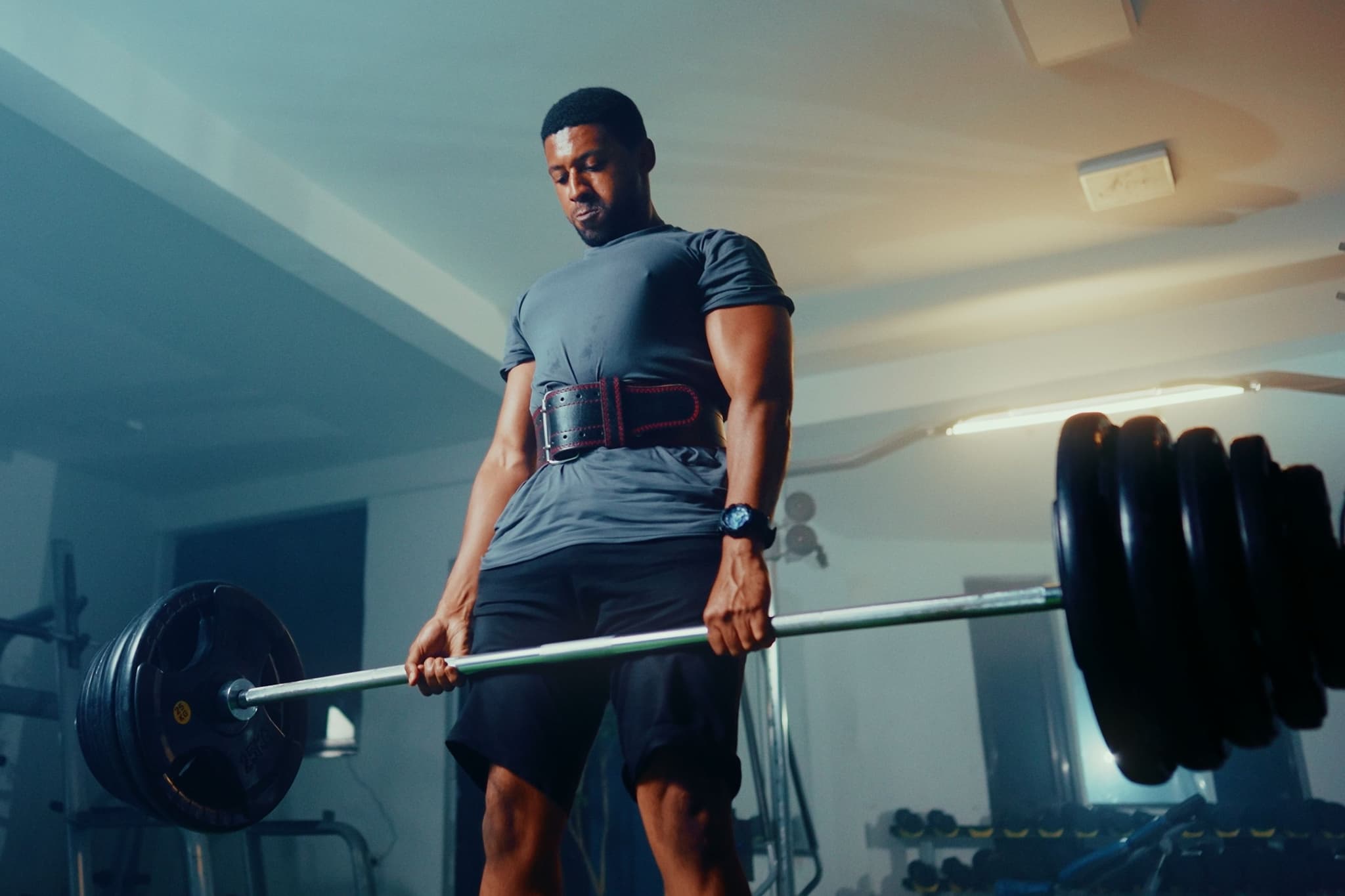
Does core strength prevent deadlift injuries? Not entirely. Core strength matters for deadlifts, but the relationship between core strength and deadlift injury prevention is more complex than most gym advice suggests.
Trained lifters often exhibit natural lumbar flexion during heavy pulls without clear prospective evidence of increased injury risk. That fact alone should challenge the "neutral spine or bust" rule repeated in every core-strength article you've ever read. If spinal rounding were an automatic ticket to a herniated disc, competitive powerlifters would be dropping like flies. They're not. Adaptations in trained lifters likely explain why many powerlifters, weightlifters, and strongman competitors accumulate very large volumes of heavy lifting without incurring spinal injury.
Something else is driving injury risk, and it's not simply how many planks you did last week. Current evidence suggests that rapid changes in training exposure and cumulative load management appear to be more consistent predictors of injury risk than isolated deviations from an externally defined "neutral" alignment. This means weak core deadlift form matters less than how fast you ramp up volume or how poorly you manage total training stress.
This article breaks down what core strength actually does for your spine, where that protection runs out, and what the research says about core strength and deadlift injuries once you strip away the gym folklore.
Does Core Strength Prevent Deadlift Injuries?
No. Core strength alone doesn't prevent deadlift injuries, but it significantly reduces your risk when paired with solid technique and smart load management. Lifters with strong cores still get hurt when they round their backs under heavy weight or jump into loads their bodies aren't ready for.
Core strength deadlift injuries happen because three factors work together to determine safety:
Core stability
: your ability to brace and maintain spinal neutrality under load, not just raw abdominal strength
Technique
: bar path, hip hinge mechanics, and where you initiate the pull from
Load management
: how much weight you're lifting relative to your training history and recovery capacity
Miss one of these and core strength won't protect you. All three working together—not ab strength alone—keeps your spine safe under the bar.
Core Strength vs. Core Stability: The Distinction Most Guides Get Wrong
Most deadlift advice treats "core strength" and "core stability" as the same thing. They're not, and that mix-up is why so many lifters chase the wrong fix.
Core Strength: How Much Force Your Muscles Can Produce
Core strength is a capacity number. It's how much force your rectus abdominis, obliques, and erector spinae can generate when tested in isolation. Do more weighted planks and heavier ab work, and that number goes up. Simple enough.
But strength on its own doesn't tell you what happens when 400 pounds hits the bar and your spine is under load for six straight seconds.
Core Stability: Whether You Can Control That Force Under Load
Deadlift core stability is a different skill entirely. It's your ability to keep your spine in a fixed, neutral position while everything around it—grip, hips, hamstrings—is working to pull you out of that position.
This is where core engagement deadlifts actually live or die. You can have strong abs and still lose stability at rep three because bracing under fatigue is a motor control problem, not a force production problem.
Strength tells you how hard you can push. Stability tells you whether you can hold your position while pushing.
The distinction matters for preventing core strength deadlift injuries. Training for stability means resisting motion at the lumbar spine, while training for strength allows motion through the lumbar spine to work the muscles in isolation. Confuse the two, and you'll train the wrong thing.
Next, the mechanics of what a weak core actually does to your pull.
The Mechanism: How Core Engagement Actually Protects Your Spine
Your spine isn't built to handle heavy load in a rounded position. That's basic tissue mechanics, not opinion. Core engagement deadlifts give your spine a stable column to pull against. Force travels through bone and connective tissue instead of getting absorbed by one overloaded disc. This is one of the primary ways core strength prevents deadlift injuries.
Intra-Abdominal Pressure Explained Simply
Intra-abdominal pressure (IAP—the pressure created when you brace your midsection and trap air and tension in your abdominal cavity) essentially turns your torso into a pressurized cylinder. Think of a soda can. Empty, it crumples under light pressure. Filled and sealed, it can support far more weight than the aluminum alone would suggest. Your bracing does the same job for your spine during a pull.
How Bracing Reinforces Spinal Stability Mid-Lift
ACE Fitness cites research from Hackett and Chow showing that when performing maximal or near-maximal lifts that occur in a single plane of motion, such as the deadlift, bench press or squat, abdominal bracing is a useful way to increase intra-abdominal pressure and reinforce intersegmental stability of the spine (meaning each vertebra stays properly aligned with the ones above and below it). That's the direct mechanism protecting your lower back mid-pull.
But more bracing isn't always better. Elphinston's research points to an alternative approach: rather than treating the torso like a rigid suit of armor, the elastic support strategy allows for unrestricted movement in the limbs and efficient force transmission. Locking into a maximal brace for the entire lift can work against you here, limiting how well force transfers between your lower and upper body.
A review in the MDPI Journal of Functional Morphology and Kinesiology on deadlift injury prevention found that strength training injuries, particularly in the lumbar region, correlate more strongly with workload spikes than with minor technical imperfections. Mechanics matter, but so does how fast you're loading the bar.
What the Research Actually Shows About Core Strength and Deadlift Injury Prevention
Anecdotes about lifters who "always had a strong core" don't count as evidence. Actual outcome data does, and the numbers hold up.
A 12-month intervention study tracked 433 firefighters through a structured core strength and functional movement program. The intervention reduced lost time due to injuries by 62% and the number of injuries by 42% over twelve months compared to a historical control group (Peate et al., Journal of Occupational Medicine and Toxicology). That's an occupational population doing physical labor, not competitive powerlifters. It still tells you something real: when core training gets built into a system, injury rates move.
What the data doesn't show is core strength working in isolation. Research on lumbar strength training consistently ties injury spikes to abrupt jumps in training load, not to small technical flaws in form. A lifter who adds 40 pounds to their deadlift in two weeks is playing a riskier game than one with slightly imperfect bracing.
Bracing still matters mechanically. When performing maximal or near-maximal lifts in a single plane of motion, such as the deadlift, bench press, or squat, abdominal bracing increases intra-abdominal pressure and reinforces intersegmental stability of the spine (Hackett and Chow, 2013, cited by ACE Fitness). It's one variable in a system that includes load management, recovery, and progression rate. Core engagement during deadlifts works as part of that larger picture, not as a standalone injury shield.
Look at injury data as a whole picture, not a single lever you can pull.
Where Core Strength Deadlift Injuries Prevention Breaks Down: Technique and Load
Most lifters obsess over bracing cues and rounded backs while ignoring the variable that actually predicts most injuries: how fast you're adding weight to the bar.
Load Spikes Matter More Than Minor Form Flaws
Weak core deadlift form gets blamed for injuries that had nothing to do with it. A 2024 narrative review in the Journal of Functional Morphology and Kinesiology found that abrupt increases in training load appear to be consistently associated with elevated injury incidence, although relationships remain probabilistic and context-dependent. Lumbar strains track more closely with sudden workload jumps than with minor technical breakdowns in form.
Translation: the guy who added 40 pounds to his pull this week carries more risk than the guy with a slightly rounded upper back who's been progressing steadily for months. Tissues adapt to stress over time. They don't care how tight your abs were if you skip that adaptation window entirely.
The Neutral Spine Myth: What Trained Lifters Actually Do
Coaches preach neutral spine like it's gospel. Film enough experienced lifters under heavy load, though, and you'll see something different.
The same review found that trained lifters often exhibit natural lumbar flexion without clear prospective evidence of increased injury risk. Some round at the bottom of the pull, some through the whole rep. That flexion isn't a sign of damage. It's what strong, adapted tissue looks like moving under a heavy bar.
That doesn't mean chase rounding on purpose. It means the "neutral spine at all costs" rule oversimplifies what actually keeps lifters healthy: gradual loading and deadlift core stability built over time, not a single rigid position.
The Bracing Trade-off: When Core Engagement Can Backfire
Squeeze your abs as hard as possible for the whole set. That's the advice you'll hear in most gyms. It's also incomplete, and treating maximal bracing as a constant setting can work against you—especially when it comes to preventing core strength deadlift injuries.
Overbracing Can Limit Force Transfer
Your body needs to adjust intra-abdominal pressure moment to moment as you pull. Lock everything down at 100 percent and you lose that adjustability.
Continuous abdominal contraction limits your ability to dynamically stabilize and prohibits the transfer of force between the lower and upper extremities, according to Joanne Elphinston, founder of JEMS Movement Systems.
The bracing strategy can diminish your multijoint options for absorbing postural sway and interfere with the calibration of intra-abdominal pressure, a balance between the diaphragm, pelvic floor, and abdominals. If the abdominal wall stays unyielding, the mechanism that adjusts this pressure as needed is lost. In plain terms, a spine braced like a steel rod can't always talk to your hips and shoulders fast enough to keep the bar path clean. Core engagement in deadlifts works best as a skill you adjust rep to rep, not a setting you lock in once.
Bracing vs. Breathing: Finding the Balance
Hard bracing has a respiratory cost too.
A 2023 study found that abdominal bracing performed during a lifting task reduced lung volume despite an increase in diaphragmatic motion. You're stabilizing your spine while making it harder to breathe efficiently, and that tradeoff shows up across multiple reps.
The fix is calibrated bracing, matched to the demand of the rep in front of you.
How to Prevent Deadlift Injuries: A Prioritized Action Plan
Skip the planks-and-hope approach. Here's what actually moves the needle, in order of impact.
Manage your load progression first. Cap weekly load increases and track your training max honestly. This single habit prevents more injuries than any bracing cue ever will.
Get a coach's eyes on your setup, not just your pull. Most technical breakdowns happen before the bar leaves the floor, in the hip hinge and the brace. Video yourself from the side once a week and compare setups.
Train core engagement deadlifts with load-specific drills, not just planks. Loaded carries, front-rack holds, and paused deadlifts at 70-80% teach your core to brace under real pulling tension, which a static plank never replicates.
Practice bracing at variable intensities. Full IAP for your working sets, lighter brace for warm-ups and technique work. Treat bracing as a dial, not a switch.
Fix mobility restrictions that force compensations. Tight hips or ankles will pull your spine out of position no matter how strong your core is. Address the joint before you add another accessory lift.
Build a deload week into every training block. Recovery lets the first five habits actually stick. Skip it and you undo the adaptation you worked for.
Rank these in this order, not the reverse. Lifters who chase core work while ignoring load management and technique are solving the wrong problem first.
Deadlift Core Strength and Injury FAQs
Does core strength prevent deadlift injuries?
No, not by itself. A strong core reduces spinal movement under load and lets you handle heavier weight with more control, but load management and technique matter more for injury risk than raw core strength. Core strength is one piece of injury prevention, not the whole picture.
What is the most common deadlift injury?
Low back strain tops the list. Among weightlifters, the lower back consistently ranks as one of the most common areas of injury, with reports showing it accounts for roughly 23% to 59% of all weightlifting injuries. Hamstring and hip injuries follow, usually from lifters rounding into a stiff-legged pull or yanking the bar off the floor before loading their hips. Most of these trace back to a spike in training load or fatigue, not weak core stability.
Can a weak core cause back pain when deadlifting?
It can contribute, especially if you can't hold a neutral spine under heavy load and start rounding your lower back mid-rep. A weak core is rarely the sole cause, though. Poor bar path and jumping weight too fast usually play a bigger role. See the section on weak core deadlift form for how to spot these issues in your own lift.
What should I do if I feel pain during a deadlift?
Stop the set immediately. Sharp pain, especially anything shooting down a leg, means you rack the bar and check your load, form, or recovery before your next session. Pushing through pain to finish a set turns minor issues into injuries that sideline you for weeks.
Do deadlifts work your core or abs?
Both, but not the way crunches do. Deadlifts train the core to prevent the lower back from arching under load, which is the same stability demand you face in overhead presses and squats. That kind of stability transfers to lifting more than it builds visible ab definition.
What core exercises help with deadlifts?
Planks, dead bugs, and loaded carries build the anti-extension and anti-rotation strength that transfers to bracing under a bar. The dead bug trains anti-extension by holding your lower back flat against the floor, the same position you need to maintain core engagement during a deadlift. The Pallof press trains anti-rotation strength, useful if you deadlift with any bar drift or asymmetry.
The Bottom Line
Core strength helps prevent core strength deadlift injuries, but it's not the whole story. Load management, bracing skill, and honest technique all matter alongside it. Research on deadlift injury patterns points to poor load management and abrupt training spikes as more consistent predictors of injury than core weakness alone.
Lifters get hurt when weight jumps outpace tissue adaptation, or when they treat bracing as a switch instead of a skill. Their abs usually aren't the problem. Building a strong core matters, but it only pays off when paired with progressive loading and a bar path that respects your spine's limits.
Stop chasing more ab work as your injury insurance policy. Track your training max, cap your weekly load increases, and practice bracing under real weight instead of just in warmups.
Apply that on your next training cycle, and your injury rate will drop.
Related Articles
Dumbbell Arm Exercises for Beginners: Why Free Weights Beat Cables
Cables feel safer, but they hide the mistakes that matter most. See why dumbbell arm exercises beginners should master first build real strength, better balance, and honest form fast.
Step-Ups for Hamstrings: Box Height, Stance & Form Guide
Are step-ups actually a hamstring exercise, or just quads in disguise? Here's how box height, stance, and hip hinge decide the answer.

7 Progressive Overload Mistakes Beginners Make (and Fixes)
Stalled lifts? You might be making one of these 7 progressive overload mistakes beginners make without realizing it. Get the symptoms, causes, and exact fixes before it costs you months.