
Close Grip Bench Press vs Skull Crushers: Strength or Size?
Same volume, different arms: the close grip bench press and skull crushers train your triceps in completely different ways. Here's which one to prioritize for strength, size, or both.
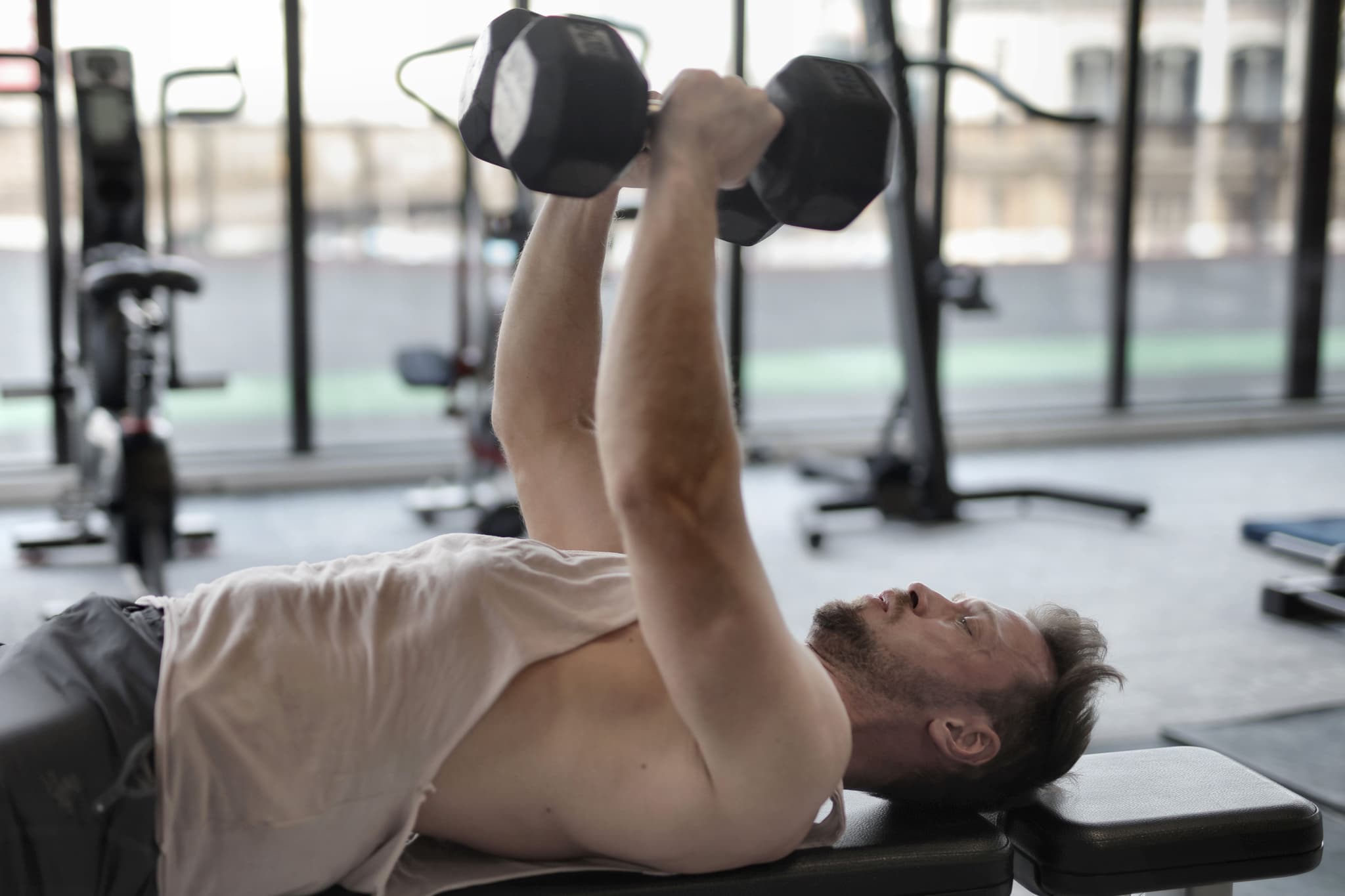
Two lifters can rack up 300 close grip bench presses and 300 skull crusher reps in a month and walk away with completely different arms, even at equal volume. Most people frame the close grip bench press vs skull crushers debate as a contest for "best" exercise. That's the wrong question. The right one is which lift matches what you're actually training for.
Most gym arguments about these two lifts stay stuck on feel. One guy swears skull crushers wreck his elbows. Another insists close grip bench is really just a chest exercise wearing a triceps costume. Neither is wrong, but neither gets at the mechanism that actually matters: any exercise where you hold your arms vertically works the long head of the triceps, and only one of these two lifts keeps your shoulder in that flexed position for the whole set. Skull crushers pin your upper arms overhead throughout the rep, so your shoulder position creates pre-stretch before you even bend the elbow. Close grip bench press, by contrast, moves through shoulder extension as you press, so it never holds that stretched position the way skull crushers do.
That single anatomical detail decides whether you should chase strength or size with each lift. It also explains why skull crushers tend to irritate elbows in a way close grip bench press usually doesn't, and how to pair the two in a program instead of treating them as rivals. Here's where each one actually earns its spot.
Close Grip Bench Press vs Skull Crushers: The Quick Verdict
Close grip bench press and skull crushers target your triceps differently. The close grip bench press lets you load heavy weight and build pressing strength, while skull crushers isolate the triceps directly for better muscle definition and arm growth. Choose the bench press for raw strength. Choose skull crushers for tricep-focused hypertrophy.
Factor | Close Grip Bench Press | Skull Crushers |
Strength | Higher (compound lift, heavier loads) | Lower (isolation limits weight) |
Mass | Good, but shares work with chest and shoulders | Excellent, direct tricep overload |
Joint Stress | Moderate on wrists and shoulders | Higher on elbows if form breaks |
Best For | Building pressing strength, powerlifting carryover | Arm hypertrophy, tricep definition |
Neither move is a bad pick. They answer different training questions. The rest of this breakdown covers exactly when to reach for each one.
The Anatomy Behind the Debate: Long Head Stretch Mechanics
Your triceps aren't one uniform muscle doing one job. All three heads extend the elbow, but the long head has a second function that changes how you should train it.
Why the Long Head Is Different From the Other Two Heads
The lateral and medial heads cross only the elbow joint. Simple, single-purpose muscles. The long head crosses both the elbow and the shoulder, which makes it biarticular. That extra attachment point means shoulder position directly affects how much tension the long head can generate and how far it stretches under load.
This is why close-grip bench press and skull crushers don't hit your triceps the same way, even though both count as tricep exercises on paper.
What "Shoulder Flexion" Actually Means for These Two Lifts
During a skull crusher, your upper arms stay roughly perpendicular to your torso or tip slightly back toward your head. That's shoulder extension, and it shortens the long head at the top of its range before the elbow even starts moving.
Close-grip bench press keeps your upper arms driven down toward your sides throughout the rep, closer to a flexed shoulder position. That posture lengthens the long head at the shoulder joint while it's also stretching at the elbow, creating a longer overall muscle length under load.
A 2023 study by Maeo and colleagues found that performing elbow extension with the shoulder in a flexed, overhead position, which lengthens the long head, led to greater overall triceps hypertrophy (19.9%) than performing the same movement with the shoulder in a neutral position (13.5%). Stronger by Science's coverage of triceps training backs this up: movements with higher shoulder-flexion demands, like overhead triceps extensions, grow the long head more than pure elbow-extension work such as the bench press, since tricep activation of the long head isn't as high until the muscles are near-maximally challenged or fatigued. Shoulder position, not grip width or bar path, decides how much the long head grows.
That mechanical difference is why the same exercise category can produce different training outcomes.
Close Grip Bench Press vs Skull Crushers: Muscle Activation Breakdown
Numbers settle arguments faster than opinions do. Here's what the research actually says about tricep activation on these two lifts, and it doesn't always match what you'd guess from feel alone.
What the EMG Data Actually Shows
Research on the close grip bench press by Lockie and colleagues found that a reduction in grip distance generally results in a decrease in the maximum load that can be lifted, partly due to changes in the mechanical advantage of the muscles about the shoulder and elbow joints. That mechanical shift is part of why the close grip bench press can increase activity in the triceps brachii compared to the traditional bench press. In the same body of research, peak power for the traditional bench press occurred at 50% 1RM, versus 30% 1RM for the close grip version, another sign that the two lifts load the shoulder and elbow differently even when the grip narrows by a small margin. The close grip bench press builds pressing strength well, but the shift in joint mechanics changes how much of that work lands on the triceps.
Skull crushers work differently. EMG and anatomical studies consistently show that elbow extension exercises with minimal shoulder movement strongly activate the lateral and medial heads, while movements that involve shoulder flexion or extension place greater demand on the long head. That's the mechanical reason letting the elbows drift back slightly during the lowering phase changes the exercise: skull crusher variations that increase shoulder flexion or allow the elbows to drift slightly back can be used to strategically target this often undertrained head.
Close Grip Bench Press vs Skull Crushers: Which Delivers Better Tricep Activation?
The answer depends on which head of the triceps you're trying to hit. The close grip bench press excels at building overall pressing strength and activating the lateral and medial heads through a heavy compound movement. Skull crushers, by contrast, isolate the long head more effectively when performed with proper shoulder flexion. For pure tricep activation across all three heads, skull crushers with controlled elbow positioning win. For raw pressing power and multi-joint strength, the close grip bench press takes the edge.
Why Skull Crushers Aren't a 'Pure' Isolation Move
Here's the part most lifters get wrong. A T-Nation coaching contributor pointed out that skull crushers involve more shoulder flexion than people realize, particularly when the bar lowers behind the head rather than straight down to the forehead. The underlying point holds up: lowering the bar toward the top of the head instead of straight down to the forehead adds shoulder flexion to the movement, and that's exactly where the long head gets pulled into the work. Because the long head crosses the shoulder joint, exercises performed with the arms overhead or with increased shoulder flexion tend to activate it more strongly.
That shoulder movement is the mechanism that stretches the long head under load. Load the exercise correctly and tricep activation spikes; turn it into a wrist-only elbow hinge and you lose that stretch.
Get the setup right, and skull crushers hit the long head harder than most lifters expect.
Which Builds More Raw Strength: Close Grip Bench Press vs. Skull Crushers?
Strength and muscle growth are different games. If your goal is moving heavy weight, the close grip bench press wins, and it's not close.
The reason comes down to load. You simply cannot skull crush the way you close grip bench.
Why Absolute Load Favors Close Grip Bench Press
The close grip bench press is a compound lift. Your chest and front delts pitch in, your shoulders and wrists are braced against a bar path you've grooved for years, and your nervous system recruits multiple muscle groups at once to move the weight.
Skull crushers strip almost all of that support away. It's just your elbows, a bar or a pair of dumbbells, and gravity working against a joint with a much smaller strength ceiling than your shoulder complex. You'll bench significantly more than you can skull crush for the same rep range. That's not a knock on skull crushers. It's physics.
Takeaway: if pure strength and loading capacity are your goal, close grip bench press is the clear winner.
The Overlooked Finding: Strength Gains Don't Track Hypertrophy Gains
Research from Maeo and colleagues, published in the European Journal of Sport Science, examined elbow extension training performed in the overhead versus neutral arm position. The study found that triceps hypertrophy, particularly of the long head, was greater in the overhead position due to increased muscle stretch under load. The overhead position mirrors the joint angle you get in a skull crusher.
This matters because it shows that muscle growth depends on factors like stretch and joint angle, not just how much weight you can move.
You can get significantly stronger on a lift without matching muscle growth, and vice versa. Don't assume the exercise that lets you load the most weight is automatically the one building the most tricep tissue. Size and strength are different questions, and it pays to separate them before you build your arm program around either lift.
Which Builds More Tricep Mass: The Hypertrophy Verdict
If growth is the goal, skull crushers win this one, even with lighter weight on the bar.
The triceps long head only stretches fully when your arms go overhead or your elbows sit behind your torso. Skull crushers put your upper arm in that flexed shoulder position for the entire set. Close grip bench press doesn't, since your elbows stay tucked at your sides through the whole rep.
The long head crosses both the elbow and shoulder joint, so it lengthens more in a shoulder-flexed position than in a neutral one. A 2023 study by Maeo and colleagues in the European Journal of Sport Science tested this directly: subjects trained one arm doing cable elbow extensions overhead and the other in a neutral position for 12 weeks. The overhead arm position produced greater growth in all three tricep heads, with the long head growing the most. More stretch under load means more growth signal, and the long head responds to that signal harder than the other two heads.
The lateral and medial heads don't care as much. They grow fine off compound pressing work. The long head is the picky one, and it's also the biggest of the three, so ignoring it costs you real size.
That's why experienced lifters program both movements instead of picking a favorite and sticking with it forever. Close grip bench press builds the base and overloads the whole tricep group. Skull crushers (or any variation like overhead extensions) finish the job on the long head specifically.
For arm workouts built around size instead of just strength numbers, that combination beats either tricep exercise done alone.
Why Skull Crushers Hurt Your Elbows (And How to Fix It)
Your elbows hurt because skull crushers load the joint hardest at the exact point where the elbow has the least mechanical support, full flexion under tension. That's simple joint mechanics, not bad form.
The Real Cause: Elbow Torque at End Range
At the bottom of a skull crusher, your forearm is at roughly 90 degrees to your upper arm, and the bar is closest to your face. That's also where the torque on your elbow joint peaks, because the resistance arm is longest relative to the joint. Skull crushers place the elbow under deep flexion and high triceps demands, which can irritate elbow tendons. The pain reflects a loading problem baked into the exercise, not a technique failure. Add a straight bar that locks your wrists into a fixed pronated position, and you're stacking joint stress on top of joint stress.
Three Fixes That Actually Reduce Joint Stress
Switch to an EZ-curl bar. The angled grip lets your wrists rotate slightly, taking rotational strain off the elbow that a straight bar forces you to absorb.
Adjust your bar path so it travels toward your forehead or slightly behind it, not straight down to your nose. Lowering the bar or dumbbells behind your head rather than to your forehead redistributes the load more evenly across the triceps and shoulders, shifting the resistance vector and reducing shear force at the bottom.
Control your tempo on the eccentric. A two to three second lowering phase gives your tendons time to handle the load instead of absorbing a sudden jolt at end range.
Training through pain isn't the goal. If your elbows still complain after these fixes, drop the skull crusher and pick a different tricep exercise.
How to Program Both Exercises in the Same Arm Workout
You don't have to pick a side here. The close grip bench press vs skull crushers debate ends when you use both in the same session—they hit different targets and work together in a complete arm workout. The smartest approach is sequencing them correctly.
Order Matters: Strength Work First, Stretch-Focused Work Second
Close grip bench goes first because it's a compound press that lets you load heavy. Heavy pressing needs fresh triceps and a stable nervous system, not the leftover fatigue from an isolation move that tanks your numbers and turns a strength lift into a mediocre pump exercise.
Skull crushers come second, once the joint is warm and you're not risking form breakdown under a loaded bar. Your elbows will thank you, and the long head gets its stretch stimulus without competing for energy against a heavier compound lift.
Sample Weekly Split Combining Both Lifts
Try this on your pressing day:
Close Grip Bench Press: 4 sets of 5–6 reps, 2–3 minutes rest Skull Crushers: 3 sets of 10–12 reps, 90 seconds rest Overhead Cable Extension (optional finisher): 2 sets of 15 reps
That's roughly 25–30 minutes of dedicated triceps work, hitting both raw strength and long head hypertrophy without redundant volume. Run it once or twice a week depending on how your elbows recover.
Before you add that skull crusher volume, check whether your elbows are actually ready for it.
The Real Verdict: Strength, Size, or Joint Health, What's Your Priority?
Stop treating this like a debate with no answer. The close grip bench press vs. skull crushers question has three clear answers depending on what you're training for. Pick your goal, then follow the verdict below.
If Your Goal Is Max Bench Strength
Do close grip bench press. Put it early in your session, load it heavy, and treat skull crushers as accessory work afterward if your elbows can handle it.
If Your Goal Is Tricep Size
Do skull crushers, but only if you can keep tension off the joint at the bottom. Use a lighter bar or a partial range if full lockout is angry on your elbows. Recent research on lengthened partials backs this up: lengthened partials produced significantly greater long-head triceps hypertrophy than full range of motion, with both outperforming shortened partials. Bias your reps toward that stretched bottom position instead of chasing more weight on the bar.
If Your Goal Is Training Around Elbow Pain
Skip skull crushers entirely for now. Overhead extensions or rope pushdowns give you the same stretch benefit without slamming your elbow into that vulnerable end range.
Match the goal to the tool, load it, and get to work.
FAQ: Close Grip Bench Press vs Skull Crushers
Are skull crushers better than close grip bench press?
Skull crushers isolate the triceps more directly, while close grip bench press moves more total weight and trains the triceps alongside the chest and shoulders. Neither is objectively better—it depends on your goal. For pure tricep isolation, skull crushers win. For pressing strength, close grip bench press carries over better.
Should I do close grip bench press or skull crushers?
Pick based on your training goal. Close grip bench press builds pressing strength that carries over to other lifts. Skull crushers deliver targeted tricep activation and work well as a secondary exercise after a compound press.
Do skull crushers work the same muscles as close grip bench press?
Both hit the triceps, but that's where the overlap ends. Close grip bench press recruits the pectoralis major and anterior delts as stabilizers. Skull crushers isolate the triceps almost entirely, with minimal shoulder or chest involvement.
Which exercise is better for building tricep mass?
Skull crushers have the edge. A 2023 study in the European Journal of Sport Science found that triceps training performed overhead (where the long head is lengthened) produced substantially greater hypertrophy than training in a neutral arm position, even with lower training loads. Skull crushers, especially variations where the bar travels behind the head into a deeper stretch, place the long head in that lengthened position. Close grip bench press doesn't reach that range.
Can you do both close grip bench press and skull crushers in the same workout?
Yes. Combining a compound press with an isolation movement covers both strength and size without overtraining either. Most solid arm workouts already pair them this way.
Why do skull crushers hurt my elbows?
Poor bar path and weak tricep control at the bottom are the usual culprits. Lowering the bar straight down toward your forehead creates a vertical path that dumps stress on the elbow joint at the deepest point. Bring the bar back slightly toward the top of your head instead of your face to keep tension on the triceps and reduce joint pressure. Tucking your elbows in rather than letting them flare out helps too.
The Bottom Line
The mechanics don't lie. The long head of the triceps gets stretched harder through shoulder flexion, and the more it stretches, the more it fires during elbow extension. Skull crushers with a slight overhead bar path hold that stretched position for the entire set. Close grip bench press can't compete there, but it doesn't need to. It works the upper chest, triceps, and anterior deltoids together, and lets you load far more weight than any isolation move, building real pressing strength without beating up your elbows.
When comparing close grip bench press vs skull crushers, the choice depends on your goal. Skull crushers win for tricep size and long-head activation. Close grip bench wins for strength and loading capacity. That's a trap question, though. Stop trying to crown one permanent winner. Rotate the two every two weeks. Let one lead while the other supports, and let your triceps grow from angles a single exercise could never cover. Program them together this week and feel the difference yourself.
Related Articles
Dumbbell Arm Exercises for Beginners: Why Free Weights Beat Cables
Cables feel safer, but they hide the mistakes that matter most. See why dumbbell arm exercises beginners should master first build real strength, better balance, and honest form fast.
Step-Ups for Hamstrings: Box Height, Stance & Form Guide
Are step-ups actually a hamstring exercise, or just quads in disguise? Here's how box height, stance, and hip hinge decide the answer.

7 Progressive Overload Mistakes Beginners Make (and Fixes)
Stalled lifts? You might be making one of these 7 progressive overload mistakes beginners make without realizing it. Get the symptoms, causes, and exact fixes before it costs you months.