
Chin-Up vs Pull-Up Muscles: Pick the Right Move for Your Goals
Same bar, totally different workout. See exactly how chin-up vs pull-up muscles activate differently so you can train biceps, lats, or grip strength on purpose.
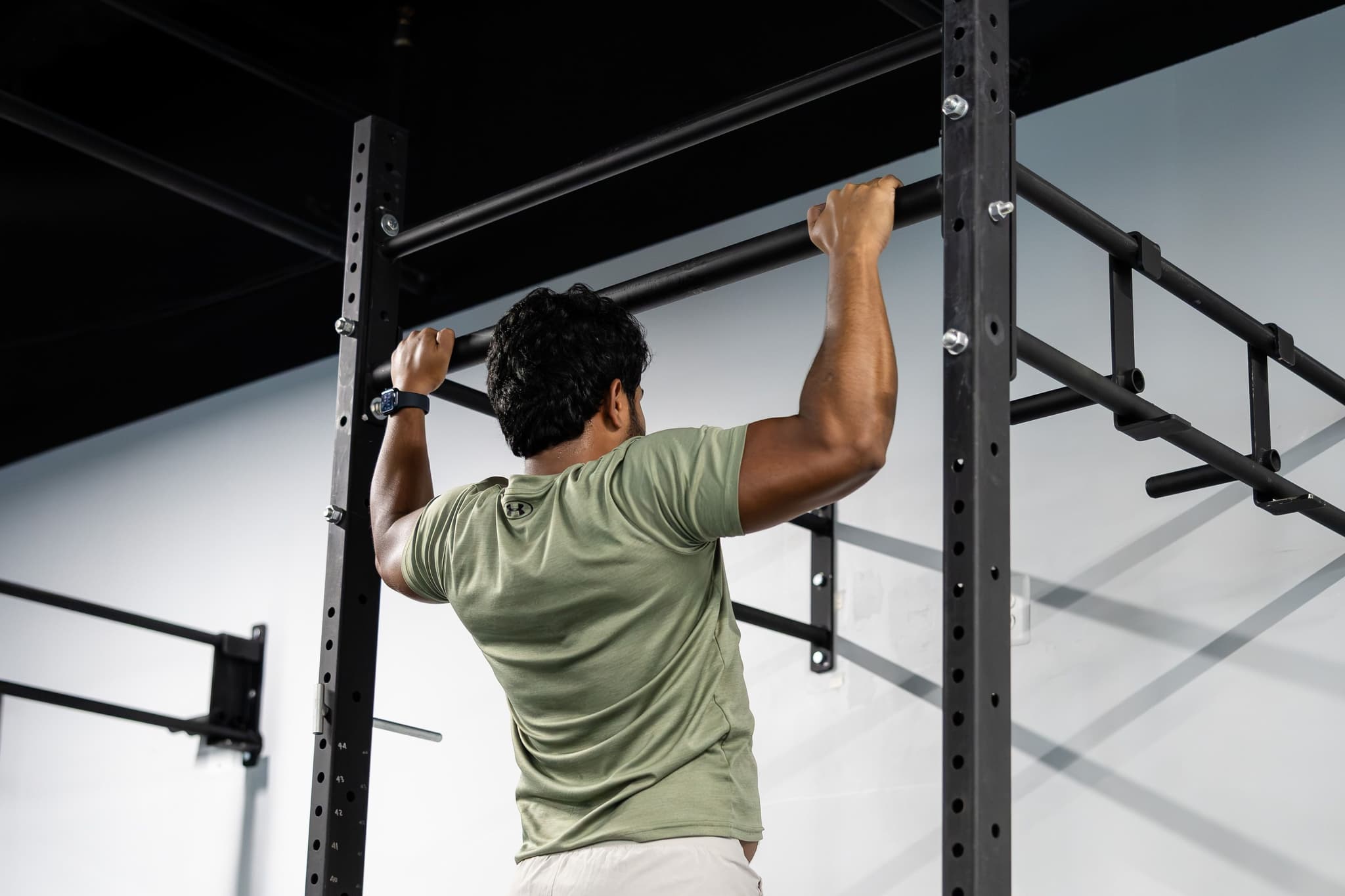
Flip your grip and you change the whole exercise. The muscles recruited during chin-up vs pull-up movements get activated in different ratios, not different categories. That distinction wrecks a lot of training plans built on the assumption that "back exercise is back exercise."
Grab a bar with palms facing you and your biceps step in as a primary mover, not just a helper. Turn your palms away and your lats take over while your arms just hang on for the ride. Same bar, same basic motion, completely different demand on your body.
This breakdown skips the surface-level "it's just grip" answer. You'll get EMG data on actual muscle activation, a joint-by-joint look at what happens at your shoulder during each pull, and a clear answer on which move fits your goal: a wider back, bigger arms, or a stronger grip.
Chin-Up vs Pull-Up Muscles: The Quick Answer
Chin-ups vs pull-up muscles differ primarily by grip: chin-ups use an underhand grip that emphasizes the biceps brachii, while pull-ups use an overhand grip that shifts emphasis to the latissimus dorsi and upper back. Research shows biceps EMG activity runs nearly 30% higher in chin-ups, whereas lat activation peaks during pull-ups. Both exercises recruit your lats, traps, and rear delts, but grip determines which muscle group carries the load.
Now let's break down what's happening at each joint.
The Biomechanics Behind Chin-Up vs Pull-Up Muscles
Grip direction gets all the attention, but the real story happens at the shoulder joint. Pull-ups and chin-ups are multi-joint movements that engage the lats, biceps, shoulders, and upper back. The primary joint action at the glenohumeral joint still shifts with hand position, and that shift decides which muscles do the bulk of the work.
Shoulder Extension and Bicep Emphasis in Chin-Ups
With an underhand grip, your arms move through shoulder extension, pulling your elbows from an overhead position down and back past your torso. This joint action engages the posterior deltoid and teres major while placing the biceps brachii in a strong mechanical position because the supinated forearm keeps the muscle aligned with the pulling force.
A study published in the Journal of Strength and Conditioning Research measured EMG activity across pull-up, chin-up, and rotational grip variations. The pectoralis major and biceps brachii had significantly higher EMG activation during the chin-up than during the pull-up. Forearm supination isn't a stylistic choice. It changes the moment arm at the elbow and gives the biceps more leverage during the pull.
Shoulder Adduction and Lat Emphasis in Pull-Ups
The overhand grip shifts the dominant joint action toward shoulder adduction, bringing your arms down toward your sides in a more vertical path. As this happens, the elbows flex and the shoulders adduct and extend to bring the elbows to the torso. This mechanical setup favors the latissimus dorsi, since the muscle generates force most efficiently when the humerus moves through that adduction path rather than extending straight back.
The same Youdas study found the opposite pattern in the upper back: the lower trapezius was significantly more active during the pull-up than during the chin-up. That's a sign the back muscles pick up more of the load in a pull-up while the biceps contribute less.
Grip direction sets the joint action, and joint action decides which muscles carry the load. Pick the movement based on the pattern you want to train, not habit.
Chin-Up Muscle Activation vs Pull-Up Muscle Groups: Full Comparison Table
Numbers settle arguments better than opinions. To break down chin-up vs pull-up muscles with real precision, combine NASM's primary/stabilizer classifications with the EMG data from Youdas et al., published in the Journal of Strength and Conditioning Research. Here's the breakdown.
Muscle Activation Comparison: Chin-Up vs Pull-Up
Muscle | Chin-Up Role | Pull-Up Role | EMG % (Youdas et al.) |
Latissimus Dorsi | Primary Mover | Primary Mover | 117–130% MVIC |
Biceps Brachii | Primary Mover | Secondary | 78–96% MVIC; higher in chin-up |
Lower Trapezius | Secondary | Primary Mover | 45–56% MVIC; higher in pull-up |
Pectoralis Major | Secondary | Secondary | 44–57% MVIC; higher in chin-up |
Infraspinatus | Stabilizer | Stabilizer | 71–79% MVIC |
Primary Movers
The latissimus dorsi drives both exercises, but the biceps brachii steps up as a stronger primary mover in the chin-up thanks to the supinated grip. In the pull-up, the lower trapezius takes on a larger share of the load. The pectoralis major and biceps brachii showed significantly higher EMG activation during the chin-up than during the pull-up, whereas the lower trapezius was significantly more active during the pull-up.
Secondary and Stabilizer Muscles
The rhomboids, teres major, posterior deltoid, and core musculature stabilize both movements. NASM lists the infraspinatus and rotator cuff group as key stabilizers for shoulder joint control during the pull, regardless of grip.
Why the Grip Makes the Difference
That split comes down to forearm position. Turning the palms toward you shortens the moment arm for the biceps and lets it pull more directly on the bar, so the muscle picks up more of the load. Flip to a pronated grip and that leverage drops, forcing the traps and lats to cover more ground. The underhand vs overhand grip difference explains why chin-ups emphasize bicep activation while pull-ups shift more demand to the lats and traps.
Average EMG values across all three exercises tested (pull-up, chin-up, and a rotational variant) were: latissimus dorsi (117–130%), biceps brachii (78–96%), infraspinatus (71–79%), lower trapezius (45–56%), pectoralis major (44–57%), erector spinae (39–41%), and external oblique (31–35%). The lats showed no significant difference between chin-up and pull-up. The real split appeared in the biceps brachii and pectoralis major, both of which ran significantly higher on the supinated grip.
Bicep vs Lat Emphasis: Why Chin-Ups Feel Easier
Chin-ups feel less brutal because of how your body splits the workload across two joints instead of dumping it all on one.
In a chin-up, your forearm sits supinated, palm facing you. That position gives the biceps brachii a strong mechanical line to pull at the elbow. Since the biceps can generate real force here, they take on a bigger share of the pulling job, and your lats don't have to do everything alone.
Flip to a pronated grip for a pull-up, and the biceps lose that leverage. The forearm bones sit in a weaker position for elbow flexion, so the muscle contributes less force. The lats become the primary driver, but the load distribution shifts. In chin-ups, the underhand grip recruits significant help from the biceps, taking some work off the lats. In pull-ups, the overhand grip places greater demand on the lats with less bicep assistance, making the move feel more challenging.
That's the load-sharing mechanism. Two capable muscle groups splitting the work beats one muscle group carrying most of it, even if total muscle recruitment looks similar on paper.
Youdas and colleagues tested this in a 2010 EMG study published in the Journal of Strength and Conditioning Research. They measured muscle activation during pull-ups, chin-ups, and a rotational variation across a group of men and women. The pectoralis major and biceps brachii showed significantly higher EMG activation during the chin-up than during the pull-up, whereas the lower trapezius was significantly more active during the pull-up.
If your biceps are the limiting factor in your pulling strength, chin-ups will expose that fast, and reward it just as quickly.
Underhand vs Overhand Grip: How It Changes Muscle Recruitment
Grip direction does more than flip your hand position. It changes the length-tension relationship of your forearm flexors and dictates how your grip strength holds up under load. The underhand vs overhand grip choice directly affects which muscles fatigue first during a chin-up or pull-up.
Forearm and Grip Involvement
An underhand grip puts your forearm in supination. When your palms face toward you in a supinated grip, your wrists and forearms align in a way that mechanically supports stronger gripping force. Studies have consistently shown that grip strength is highest in this palm-up position, with pronated (overhand) grip ranking lower in pure grip output.
This matters if grip is your limiting factor. If you're failing a pull-up set because your hands give out before your back does, switching to an underhand grip buys you more reps before your forearms quit.
Wrist Position and Elbow Path
Overhand grip locks your wrist into a neutral-to-extended position, which keeps your elbow path wider and your forearm more passive through the pull. Underhand grip flexes the wrist slightly toward you and narrows the elbow path, pulling your forearm into a more active role from the first inch of the rep.
That narrower elbow track comes from where your radius and ulna sit once you rotate your palm, not from anything happening at the shoulder.
Grip fatigue that keeps cutting your sets short calls for a different grip, not more back work. Pick the grip that matches what you're actually training for that day.
Chin-Up vs Pull-Up Muscles: Which Should You Choose for Your Goal?
Stop asking which exercise is "better" in the abstract. Ask what you're training for, then let the biomechanics answer the question.
For Maximum Lat Width: Pull-Ups
If you want a wide, tapered back, the overhand grip is your tool. The pectoralis major and biceps brachii had significantly higher EMG activation during the chin-up than during the pull-up, whereas the lower trapezius was significantly more active during the pull-up. Latissimus dorsi activation didn't show a significant difference between the two lifts in that same study, so the width advantage of pull-ups comes down to grip width rather than raw lat recruitment. A wider grip increases shoulder adduction torque, the action that builds a wider back. Make pull-ups your primary back-width builder and stop apologizing for finding them harder.
For Bicep Strength and Size: Chin-Ups
Chin-ups load the biceps brachii through a longer range at a more favorable angle. The supinated grip produced significantly higher EMG activation in the pectoralis major and biceps brachii than the pronated grip. If arm size matters to you, or you want pulling strength that carries over to curls and rows, put chin-ups first in your program.
For Grip and Forearm Strength: Pull-Ups
The overhand position forces your forearm flexors and extensors to work harder against a less stable grip. Grip fatigue tends to show up faster in pull-ups than chin-ups for most lifters, since the pronated grip offers less mechanical leverage. If your grip fails before your back does on heavy sets, you already have your answer.
For Beginners Building Base Strength: Chin-Ups
New lifters almost always hit their first bodyweight rep on a chin-up before a pull-up. The added bicep contribution reduces the load on your lats and shoulders, which makes the movement more achievable while you build baseline pulling strength. Start here if you can't do a strict pull-up yet, then work toward the overhand version once your back catches up.
Pick based on the muscle you're actually trying to develop this month, not on which version looks more impressive on Instagram.
Programming Chin-Ups and Pull-Ups Together for Progressive Strength
You don't have to pick a side. Rotating chin-ups and pull-ups across your training week builds a stronger back and stronger arms than committing to one variation forever. Understanding the differences in chin-up vs pull-up muscles helps you use both strategically.
A simple split: chin-ups on your pull day when biceps aren't already smoked, pull-ups on a back-focused day where lat activation matters more than arm fatigue. Alternate week to week if you train pull patterns twice, or run one variation for a month and switch.
Should I Do Chin-Ups or Pull-Ups First in My Workout?
If you're doing both in the same session, do pull-ups first.
The lats are the primary muscle group in pull-ups, while chin-ups recruit significant bicep assistance from the underhand grip. That's why chin-ups feel easier. Fatigue your biceps on chin-ups first and your pull-up sets suffer because the lats won't have fresh arm support to drive the movement.
Grip-dependent work like rows, deadlifts, or farmer's carries later in the session needs fresh forearms and elbow flexors. Burn those out early and everything after it suffers too. For grip strength specifically, research shows the brachioradialis forearm muscle is more active in pull-ups than chin-ups, so pull-ups pull double duty if grip is a goal.
Progression Options if You Can't Do Either Yet
Start with negative reps: jump or step to the top position, lower slowly for 3–5 seconds. Band-assisted reps work too, using a light band under your foot or knee to offset bodyweight until you build enough strength to remove it.
Chin-Up vs Pull-Up Muscles: Common Questions Answered
What are the differences in chin-up vs pull-up muscles?
Chin-ups and pull-ups both target your latissimus dorsi, biceps brachii, rear delts, traps, and core, but the grip changes the load distribution. Chin-ups shift more work to your biceps and brachialis, while pull-ups demand more from your lats and mid-back. The underhand grip of a chin-up makes your arms do more of the pulling; the overhand grip of a pull-up spreads the load across a wider back.
How does chin-up muscle activation compare to pull-ups?
A 2010 study by Youdas and colleagues in the Journal of Strength and Conditioning Research found that pectoralis major and biceps brachii had significantly higher EMG activation during chin-ups than pull-ups, while the lower trapezius was significantly more active during pull-ups. Latissimus dorsi activation didn't differ significantly between the two exercises. Your back works just as hard on chin-ups—it's sharing the job with your arms more than it does on the overhand version.
Which exercise builds a wider back better?
Pull-ups have the edge for width. The overhand grip recruits more lower trapezius, which supports the pulled-back shoulder position that gives your back that wide, tapered look. Chin-ups still build back size (the lats work just as hard) but they lean more on your arms to finish the job. If width is your target, load up your pull-up volume and treat chin-ups as your arm-building complement.
Grip choice changes more than comfort. It changes which muscles absorb the training stimulus, so pick the variation that matches what you're training for.
The Bottom Line
The chin-up vs pull-up muscles question isn't one you need to settle. It's a dial you adjust based on what you're chasing. Want a wider, thicker back? Pull-ups win that trade: research shows the lower trapezius and infraspinatus had greater activation in the pull-up compared to the chin-up. Want your arms to grow alongside your back? Chin-ups pull ahead, since the pectoralis major and biceps brachii had greater activation in the chin-up compared to the pull-up. Want raw grip endurance under load? Overhand grip pull-ups build that faster. Stop treating these as rivals. Treat them as two settings on the same machine.
Pick a 4-6 week block. Alternate chin-ups and pull-ups across your pulling sessions and track total rep volume on each variation week to week. That progression data will tell you more about your weak points than any EMG chart. If you're stuck at the same rep count on both lifts, a structured pull-up progression program will get you moving again.
Related Articles
Dumbbell Arm Exercises for Beginners: Why Free Weights Beat Cables
Cables feel safer, but they hide the mistakes that matter most. See why dumbbell arm exercises beginners should master first build real strength, better balance, and honest form fast.
Step-Ups for Hamstrings: Box Height, Stance & Form Guide
Are step-ups actually a hamstring exercise, or just quads in disguise? Here's how box height, stance, and hip hinge decide the answer.

7 Progressive Overload Mistakes Beginners Make (and Fixes)
Stalled lifts? You might be making one of these 7 progressive overload mistakes beginners make without realizing it. Get the symptoms, causes, and exact fixes before it costs you months.