
Upper Crossed Syndrome Exercises: Fix Rounded Shoulders
Upper crossed syndrome is quietly wrecking your posture and killing your pressing power. Get a self-diagnosis checklist and a 4-week corrective exercise protocol you can run inside your existing training week.
Upper Crossed Syndrome Exercises to Fix Rounded Shoulders
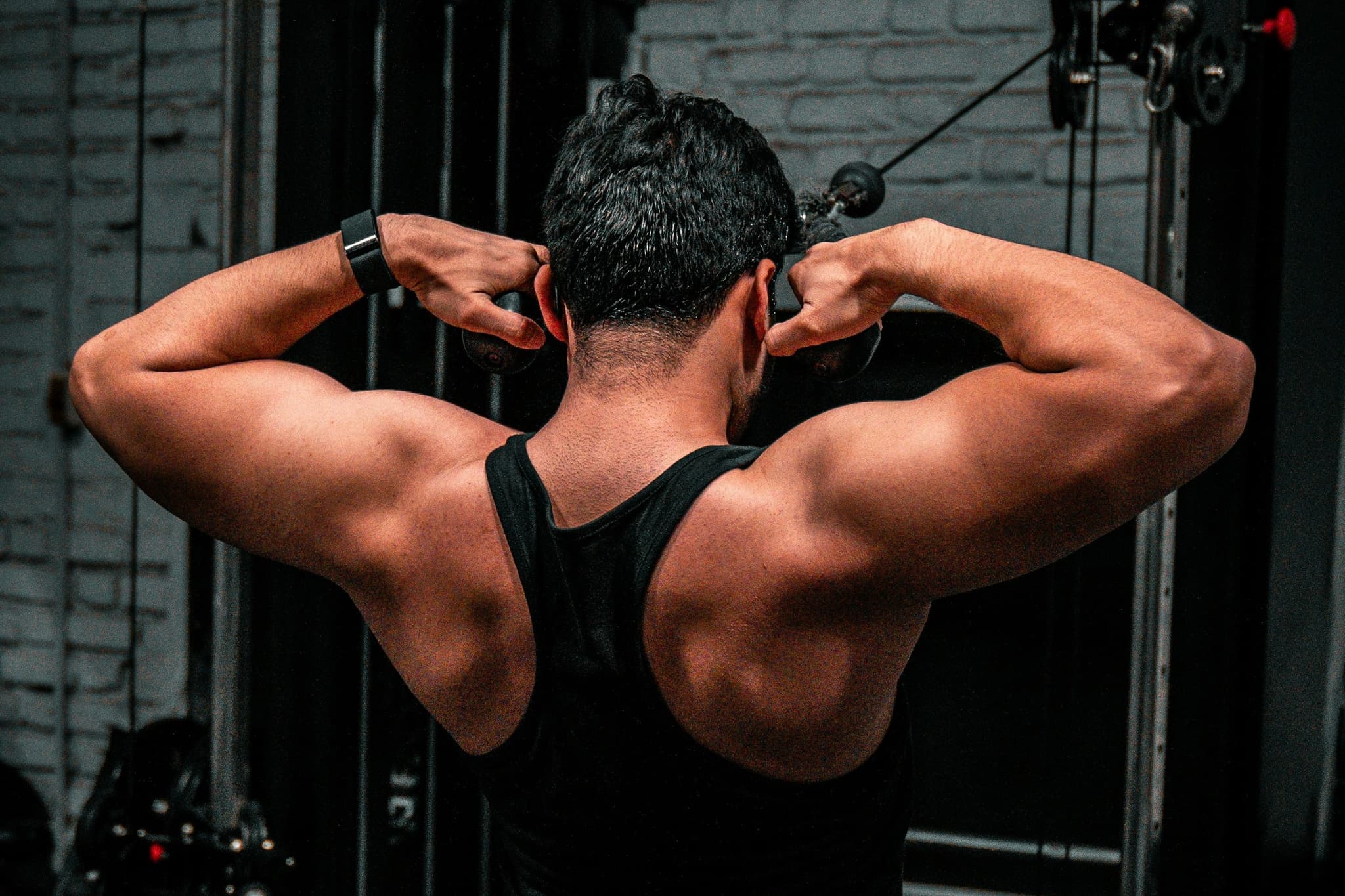
If your bench press has stalled and your shoulders round forward the second you unrack the bar, upper crossed syndrome is probably running the show. Your muscles are firing in the wrong order, pulling your shoulders forward, compressing your thoracic extension, and making your chest and upper back look smaller than they actually are.
A 2024 systematic review and meta-analysis put the pooled prevalence at 35% across populations, with figures climbing to 66.7% in specific high-risk groups. If you lift regularly, you're accelerating that pattern, not escaping it.
Before diving into the upper crossed syndrome exercises that actually fix this, you need to understand what's structurally going wrong and what you may be doing in the gym that's making it worse. This piece gives you a self-diagnosis checklist you can run in under 30 seconds, a breakdown of the movements quietly accelerating the problem, and a 4-week corrective protocol built to run inside your existing training week.
What Upper Crossed Syndrome Is Doing to Your Lifts (And Your Look)
Upper crossed syndrome (UCS) is a predictable pattern of tight and weak muscles across the upper body. The pecs, upper traps, and levator scapulae are overactive and short. The deep neck flexors and lower traps are underactive and lengthened. The result is rounded shoulders, a forward head, and a posture that broadcasts exactly how much time you spend sitting at a screen.
That's the aesthetic cost. The performance cost is worse.
The Muscle Imbalance That Kills Pressing Power
Lifters who bench and push more than they row and pull are building upper crossed syndrome directly into their programming. That anterior-to-posterior muscle imbalance is well-documented, and reduced rotator cuff strength follows almost automatically. Tight pecs pull the shoulder joint forward, compressing the rotator cuff tendons and cutting into the muscles' capacity to produce force.
Scapular dyskinesis comes next. When your lower traps and serratus anterior aren't activating correctly, your scapula can't track properly during any pressing or pulling movement. You lose the stable base that every upper-body lift depends on. A randomized controlled trial of 30 men found that an 8-week corrective program produced measurable improvements in serratus anterior and lower trapezius activation via EMG, along with better scapular movement patterns compared to controls.
The Overhead Press Warning Sign Most Lifters Ignore
If strict overhead lockout turns into a rib flare and a chin jut, that's UCS showing up under load. Research consistently shows that for every inch the head sits forward of the shoulders, cervical muscle stress increases by approximately 10 pounds. Lifters training in a forward head position compound that load on every rep.
Impaired overhead press mechanics won't fix themselves with more volume. A real forward head posture fix requires addressing the underlying muscle imbalances first, and that's exactly what the right corrective exercises target.
The 7 Best Upper Crossed Syndrome Exercises
Upper crossed syndrome is a postural imbalance where tight chest and neck muscles overpower weak mid-back muscles and deep neck flexors, pulling the head forward and rounding the shoulders.
A randomized controlled trial by Seidi et al., published in Scientific Reports, found that a structured corrective exercise program produced measurable improvements in UCS posture, confirming that targeted training works when applied consistently.
Chin Tucks.
Reactivates the deep neck flexors that get switched off by chronic forward head posture. Hold each rep for 5 seconds, 10 to 15 reps daily.
Face Pulls.
Trains the rear delts and external rotators to pull your shoulders back into alignment. Use a cable or band at face height, elbows high, pulling toward your nose.
Band Pull-Aparts.
Builds mid and lower trap strength while opening up the anterior chest. Keep constant tension on the band through the full range of motion.
Doorway Pec Stretch.
Lengthens the shortened pectoralis major and minor that physically drag your shoulders forward. Hold 30 to 60 seconds with your elbow at 90 degrees.
Foam Roller Thoracic Extension.
Restores mobility in the mid-back that stiffens from hours of sitting in flexion. Work one spinal segment at a time, not your whole back at once.
Prone YTW Raises.
Directly targets the lower trapezius and rhomboids using bodyweight. Initiate the movement from your shoulder blade, not your arm.
Wall Slides.
Activates the serratus anterior and trains proper scapular upward rotation under control. Keep your lower back flat against the wall throughout every rep.
Each of these exercises targets a specific failure point in the UCS pattern. The sections below break down exactly how to program them so they actually fix the problem instead of just filling time in your warm-up.
Signs You Have Upper Crossed Syndrome
You don't need a physio appointment to figure out if upper crossed syndrome is your problem. The pattern is predictable enough that you can spot it yourself in about 30 seconds.
Tight Muscles: What's Overworking and Pulling You Forward
These muscles are chronically short and overactive. Sitting for hours every day accelerates exactly this kind of tightening, which is why tech neck exercises and rounded shoulders from sitting are so common in desk workers.
Tight/Overactive:
Pectoralis major and minor (chest)
Upper trapezius (top of the shoulders and neck)
Levator scapulae (back of the neck, runs to the shoulder blade)
Sternocleidomastoid (the thick rope-like muscle on the side of your neck)
Weak Muscles: What's Shut Down and Not Holding You Up
On the opposite side of that cross pattern, these muscles have gone quiet. A systematic review and meta-analysis on physiotherapeutic interventions for upper crossed syndrome confirms this reciprocal inhibition, where overactive muscles neurologically suppress their opposing counterparts.
Weak/Underactive:
Deep cervical flexors (front of the neck, behind the throat)
Lower and middle trapezius (mid-back)
Serratus anterior (alongside the ribcage, under the armpit)
Rhomboids (between the shoulder blades)
The 30-Second Wall Test (Do This Right Now)
Stand with your heels, glutes, and upper back flat against a wall. Try to press the back of your head against it without jutting your chin up.
If your head won't touch without serious effort, or your lower back has a gap big enough to fit your whole forearm through, upper crossed syndrome is almost certainly in play. That forward head position is the most visible sign, and it tells you exactly where the corrective work needs to start.
Why Lifters Develop Upper Crossed Syndrome Faster Than Everyone Else
Most postural dysfunction develops slowly through sedentary habits. Lifters fast-track it by loading the problem with hundreds of pounds and repeating it twice a week.
The Bench Press Tax: What Happens When You Push More Than You Pull
The pecs, anterior deltoids, and upper traps already dominate most people's training. If your weekly pressing volume exceeds your pulling volume, you are actively reinforcing the upper crossed syndrome pattern with every session. Lifters who bench press or do push-ups more than they practice pulling exercises are especially prone to upper crossed syndrome because of the resulting anterior-posterior muscular imbalance. Loading a shortened pec under tension cements that shortened position over time. The muscle adapts to where you put it most often.
Tech Neck Between Sets Is Making It Worse
You rack the bar, sit down, and check your phone. Head drops forward, chin juts out, and you spend three minutes in the exact posture you're supposed to be correcting. For every inch the head moves forward of the shoulders, the stress on the supporting muscles increases by 10 pounds. Scroll through enough rest periods and you've added a second training stimulus that works directly against your corrective work. Tech neck exercises exist precisely because this seated, forward-head position has become its own repetitive stress pattern.
Why Your Training Position Locks In the Problem
Bench pressing puts you in a protracted, internally rotated shoulder position. Seated cable rows, if programmed poorly, don't fully counteract that because the thoracic spine stays flexed throughout. A randomized controlled trial by Seidi et al. (Scientific Reports, n=24) found significant improvements in alignment, muscle activation, and movement patterns after an 8-week corrective exercise program, confirming these patterns are trainable in either direction.
The training environment isn't neutral. Every session either digs the hole deeper or starts filling it back in.
Exercises That Make Upper Crossed Syndrome Worse (Stop These First)
You don't have to stop training. You do need to stop running certain movements without corrective context underneath them first.
The Pressing Overload Problem
Steep incline bench at angles above 60 degrees, Smith machine chest press with zero scapular retraction cuing, and consecutive push days with no horizontal pulling to match them all feed more tension into a pec minor that's already shortened. Volume isn't inherently the problem. Uncontested volume is.
Shrug Variations That Entrench Upper Trap Dominance
Barbell shrugs performed with a forward lean are one of the most reliable ways to dig an upper crossed syndrome pattern deeper. That lean redirects load into a muscle that's already overactive and pulling your shoulders forward. Research shows that 100% of shoulder impingement patients demonstrate scapular dyskinesis, driven by the combination of pec minor tightness, upper trap overactivity, and lower trap weakness. That's the exact muscle profile of upper crossed syndrome. Loading it further without addressing the underlying imbalance just reinforces the dysfunction.
Behind-the-Neck Movements and Why They're a Tax on Broken Mechanics
The Smith machine behind-the-neck press demands shoulder external rotation and cervical neutrality that most lifters with upper crossed syndrome don't have. Behind-the-neck lat pulldowns carry the same problem. Both movements require mechanics you need to rebuild before putting load through them.
Get the corrective work in first. Then revisit these with a different foundation under you.
Upper Crossed Syndrome Exercises: The 4-Week Protocol for Lifters
Upper crossed syndrome (UCS) develops when pressing volume consistently outpaces pulling volume. The result is anterior-posterior imbalance and scapular protraction, a forward shoulder position that narrows the subacromial space and increases impingement risk, which shows up as measurable loss in overhead pressing strength.
This protocol runs inside your training week, not instead of it. Two phases, four weeks, and the goal is simple: correct the dysfunction before it costs you shoulder health and load capacity.
Phase 1 (Weeks 1–2): Release the tight side. Soft tissue work and targeted stretching for the pecs, upper traps, and levator scapulae before every upper body session.
Phase 2 (Weeks 3–4): Load the weak side. Progressive resistance on corrective pulls, with form cues prioritized over weight.
Research confirms that a structured 8-week corrective program produces significant EMG-measured improvements in scapular and neck muscle activity in UCS subjects. Four weeks gets you moving in the right direction.
For a fully guided version with muscle target plans built in, open the SHRED app and select a corrective programme matched to your needs.
How Long Does It Take to Fix Upper Crossed Syndrome? Real Milestones by Week
You're not going to fix years of anterior dominance in a weekend. But the timeline is shorter than most people expect, provided you're consistent with the right upper crossed syndrome exercises.
Week 1–2: What Changes First (and What Still Feels Stuck)
Neural changes happen before structural ones. By the end of week two, you should notice scapular stability improving during rows, less upper trap firing on lateral raises, and a cleaner setup position before your pull sessions. The actual shortness in your pecs and anterior deltoids is still there. That takes longer.
Week 3–4: When Strength and Posture Start to Merge
This is where the training payoff becomes measurable. A randomized controlled trial of 22 men on an 8-week corrective program found significant improvements in trapezius and serratus anterior activation via EMG, alongside better scapular movement patterns, compared to controls. By week four, you should be pulling with actual lat engagement rather than compensating with your upper traps.
Scapular protraction decreases the width of the subacromial space and reduces supraspinatus strength potential compared to a more retracted position. Fix the position and your overhead numbers follow.
Beyond 4 Weeks: Maintenance Programming to Keep It Fixed
The imbalance that built upper crossed syndrome, pressing more than pulling, will rebuild it if you revert. Lifters who bench press or push without matching pull volume are the highest-risk group for recurrence. Treat a 1:1 push-to-pull ratio as a floor, not a target.
Frequently Asked Questions About Upper Crossed Syndrome
Can You Still Work Out With Upper Crossed Syndrome?
Yes. Stopping training isn't the answer. Shift your training balance toward pulling over pressing, add corrective work to your warm-up, and avoid movements that load the dysfunction until your positioning can actually support them.
Is Upper Crossed Syndrome Serious?
Ignored long enough, UCS progresses into scapular dyskinesis, shoulder impingement, and chronic neck tension that limits your training capacity. Altered patterns of scapular kinematics can cause or exacerbate rotator cuff pathology, and research confirms the link is real, not theoretical. It won't sideline you in a week, but it will cost you shoulder health and load capacity across a training career.
What Muscles Are Weak in Upper Crossed Syndrome?
The primary underactive muscles are the deep cervical flexors, lower trapezius, serratus anterior, and rhomboids. These are the stabilizers responsible for scapular control and neutral head position. When they go offline, the pecs, upper traps, and levator scapulae compensate, and the whole pattern locks in.
Do I Need to See a Physio, or Can I Fix Upper Crossed Syndrome Myself?
Most people with mild to moderate upper crossed syndrome can address it through consistent corrective training. Postural variables including craniovertebral angle, kyphotic angle, and rounded shoulders showed significant improvement with structured exercise programs compared to no-treatment controls in a 2023 systematic review and meta-analysis. If you have nerve symptoms, sharp shoulder pain, or no change after six weeks of targeted work, get it assessed.
This content is educational, not medical advice. If you're managing acute pain or injury, consult a qualified professional before training through it.
The Bottom Line
Upper crossed syndrome isn't a medical condition you manage. It's a structural inefficiency you fix, and when you fix it, your lifts feel it first. Stronger lockout on the overhead press, cleaner scapular control in your rows, fuller chest recruitment on flat bench. That's not theory. That's what happens when the right muscles finally do their job.
The upper crossed syndrome exercises in this protocol won't pull you from your training. They'll run alongside it. Four weeks is your starting point, not your finish line, but most lifters notice real shifts in positioning and performance before week three.
Your next move: run through our push/pull ratio calculator to see exactly where your training balance stands before you start week one. Know your numbers going in, and you'll know exactly what to fix first. The SHRED app can build workouts around your specific muscle imbalances so the corrective work is already baked into your programming.
Corrective work is the part most people skip that separates lifters who plateau from lifters who keep loading the bar.
Related Articles
Dumbbell Arm Exercises for Beginners: Why Free Weights Beat Cables
Cables feel safer, but they hide the mistakes that matter most. See why dumbbell arm exercises beginners should master first build real strength, better balance, and honest form fast.
Step-Ups for Hamstrings: Box Height, Stance & Form Guide
Are step-ups actually a hamstring exercise, or just quads in disguise? Here's how box height, stance, and hip hinge decide the answer.

7 Progressive Overload Mistakes Beginners Make (and Fixes)
Stalled lifts? You might be making one of these 7 progressive overload mistakes beginners make without realizing it. Get the symptoms, causes, and exact fixes before it costs you months.