
Single Leg Glute Exercises: Which Muscles Each Move Targets
Not all single-leg glute exercises hit the same muscles. This guide maps eight unilateral moves to the exact glutes they train so you stop guessing and start building.
Most people doing single-leg glute exercises are training hard without training smart. Unilateral glute training fixes imbalances and exposes weaknesses your bilateral lifts hide, but only if you know which muscle you're actually targeting and how each exercise is set up to hit it.
That comes down to two systems. The gluteus maximus drives hip extension and absorbs load. The gluteus medius and minimus stabilize the hip, pelvis, and femur in the frontal plane, keeping the pelvis level every time you load one leg. These muscles respond to different mechanics and loading angles. Treat them the same and you'll train both poorly.
This article maps each major single-leg move to the muscle it primarily trains, then explains the setup cues that determine whether your glutes are working or your quads are picking up the slack. Torso angle, foot position, and rear leg placement are the real differentiators. Most guides skip them entirely.
What Are the Best Single-Leg Glute Exercises?
Single-leg glute exercises force each side of your body to work independently, which builds balanced strength and exposes weaknesses your double-leg lifts tend to hide. These eight moves cover the full gluteal complex and represent the most effective single-leg glute exercises for building strength and correcting imbalances.
Bulgarian split squat
: gluteus maximus, as the primary driver through hip extension
Reverse lunge
: gluteus maximus with notable glute medius demand at the hip
Single-leg Romanian deadlift
: gluteus maximus and biceps femoris via hip hinge
Lateral lunge
: gluteus medius and gluteus minimus
Single-leg hip thrust
: gluteus maximus, with peak contraction at full hip extension
Curtsy lunge
: gluteus medius, loaded through an adduction pattern
Step-up
: gluteus maximus and gluteus medius for hip stability
Single-leg cable kickback
: gluteus maximus in relative isolation
Research shows the Bulgarian split squat produces greater gluteus maximus activation than the back squat. Both unilateral and bilateral training improve lower-limb strength, but unilateral training shows a more pronounced effect on multidirectional speed and is associated with greater activation of the gluteus medius. That alone justifies their place in any serious program.
The Two Parts of the Glute You're Actually Training (And Why It Changes Everything)
Gluteus Maximus: The Hip Extension Engine
The gluteus maximus is your primary hip extensor, and it responds most to two things: load and hip extension range. Your trunk position directly controls how hard it works. A forward trunk lean during a lunge significantly increases gluteus maximus and biceps femoris EMG compared to an upright position, with no corresponding change in vastus lateralis activation (Farrokhi et al., cited in PMC, 2018). The same principle holds for the Bulgarian split squat, where trunk flexion produces significantly greater gluteus maximus and biceps femoris activation than a neutral trunk position (Aygun-Polat et al., BMC Sports Science, Medicine and Rehabilitation, 2025). Your torso angle is a programming variable, not just a form cue.
Gluteus Medius and Minimus: The Pelvic Stabilizers
The glute med and glute min don't extend the hip. They control pelvic stability in the frontal and transverse planes, keeping your pelvis level every time you're on a single leg. Weakness here carries real consequences. Reduced anticipatory glute med activation is linked to compromised pelvic and knee stability during dynamic movement (ScienceDirect, 2015), and single-leg stance research confirms the pattern (Journal of Sport Rehabilitation, 2005). This is why glute imbalance correction almost always traces back to the glute med being the weaker link. The rear-foot-elevated split squat produces greater glute med EMG than a bilateral back squat at matched relative loads (PMC, 2016), which is why the single leg glute exercises below are selected specifically for what they each target.
The Hip-Dominant Setup Cues That Most Single-Leg Glute Exercise Guides Skip
Most guides tell you which exercises to do. Few explain how three specific setup variables determine whether a split squat or lunge becomes a glute exercise or a quad exercise in disguise. Get these wrong and the muscle you're trying to train stays largely passive.
Torso Lean: How Far Forward Is Enough?
How do I make a Bulgarian split squat more glute-dominant? Start with your torso. A forward lean of roughly 15 to 30 degrees at the hip, not a rounding at the lower back, shifts the demand from the knee extensors to the hip extensors.
Aygun-Polat et al. (BMC Sports Science, Medicine and Rehabilitation, 2025) confirmed this directly: trunk flexion increased activation in the gluteus maximus, biceps femoris, and rectus femoris compared to a neutral trunk position. A separate EMG analysis (PMC, 2018) found the same pattern in standard lunges: a forward trunk lean significantly increased gluteus maximus and biceps femoris activation, while vastus lateralis recruitment was not significantly different between conditions.
The quads don't go away. The glutes just get a seat at the table.
The cue matters: the lean initiates at the hip joint. If your lower back rounds to get there, you've lost the position and the benefit.
Foot Position and Step Length: Moving the Hip Into the Work
Step length controls how much hip range of motion you're working through. A step that's too short keeps the torso upright by default and loads the knee. A longer step puts the front hip into deeper flexion at the bottom, which is exactly where the glute needs to work.
At the bottom of a lunge or split squat, your front shin should be close to vertical. If your heel is lifting to reach depth, step further forward.
Deficit Depth: Why Dropping Lower Doesn't Always Mean More Glute
Rear-foot elevation and front-foot deficits increase range of motion, but additional depth only benefits the glute if the forward torso lean is maintained throughout. Load a poorly set-up position through a greater range and you're just accumulating more quad-dominant reps.
Depth amplifies good positioning. It doesn't correct bad positioning. Set the lean and step length first, then consider adding deficit work.
Apply these three variables to any single leg glute exercise in the sections below and you'll feel the difference immediately.
Single-Leg Glute Exercises That Prioritize the Gluteus Maximus
The three exercises below are ordered by the stability demand they place on you, starting with the most accessible. Each one drives hip extension under load, which is the primary mechanical stimulus for gluteus maximus growth.
Deficit Reverse Lunge: The Entry Point for Hip-Extension Emphasis
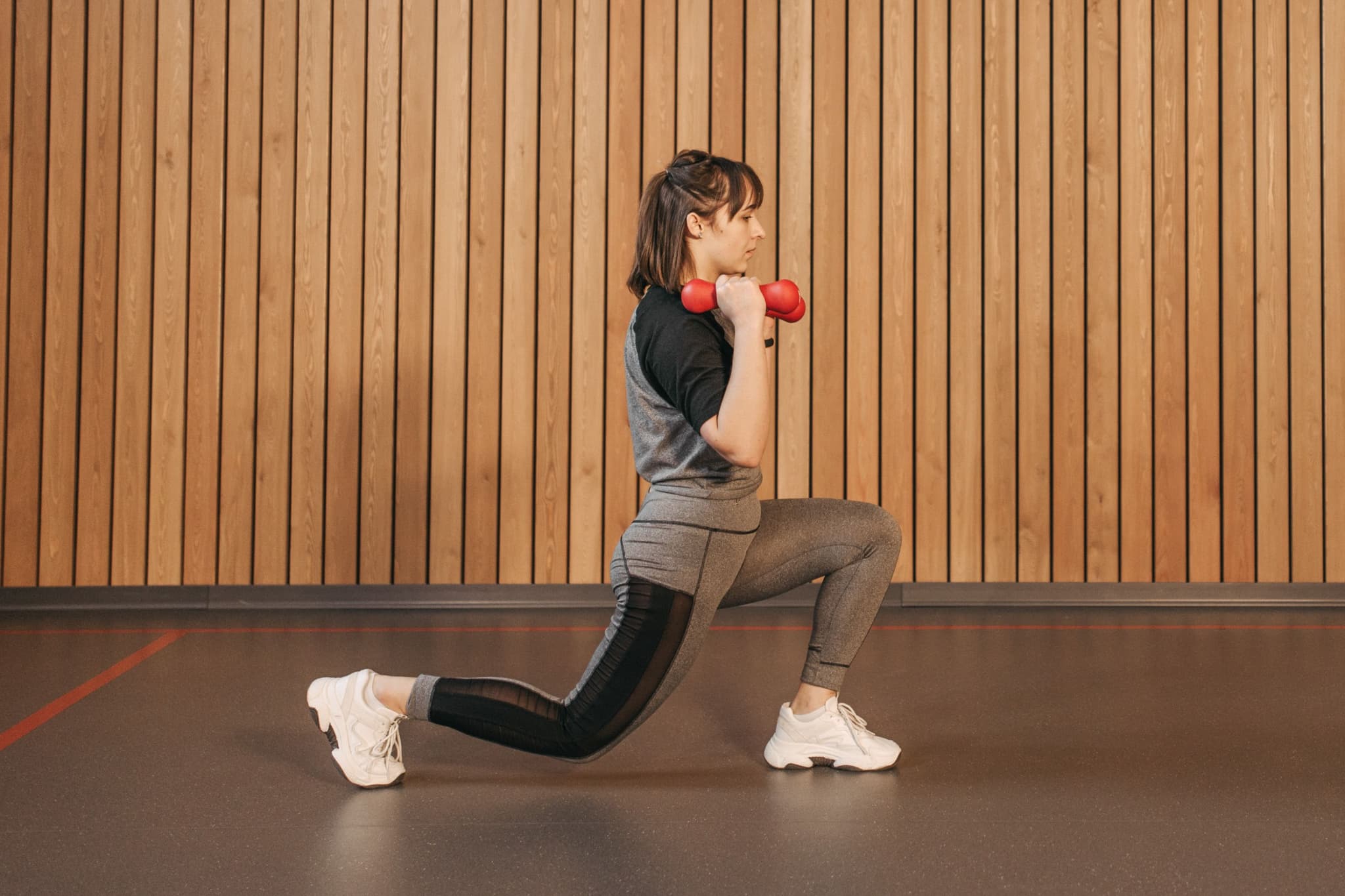
Stand on a 2–4 inch platform and step one foot back into a lunge. The elevated front foot increases front-hip range of motion at the bottom of the rep, which is exactly where gluteus maximus tension peaks.
This is the most forgiving starting point for lunges for glute strength because the rear foot returns to the floor each rep, eliminating the fixed-stance balance demand. You can concentrate entirely on driving through the front heel to stand. Use the forward trunk lean and long step length from the setup section.
Research shows a forward lean significantly increases gluteus maximus and biceps femoris EMG compared to an upright position, with no significant difference in quad activation (Farrokhi et al., cited in PMC, 2018).
Load and reps: 3–4 sets of 8–12 reps per leg. Start with dumbbells at your sides. Once form is consistent, move to a barbell or heavier goblet hold.
Bulgarian Split Squat: Maximum Glute Load With Unilateral Stability Demand
The Bulgarian split squat fixes your rear foot on a bench 12–18 inches behind you, locking you into a single-leg stance for the entire set. That fixed position supports heavier loading than a lunge while keeping the front leg as the primary driver.
Bulgarian split squat glutes development is well-supported by research. A 2010 study by McCurdy et al. found the rear-foot-elevated split squat produces greater gluteus medius and biceps femoris EMG activity than the back squat, which makes sense given the unilateral design's increased demand on the gluteus medius in the frontal and transverse planes. The difference between a lunge and a Bulgarian split squat comes down to rear foot position: a lunge resets each rep, while the BSS keeps the rear foot planted, which increases front-leg demand and allows a more consistent forward lean without losing balance.
That lean is critical. Aygun-Polat et al. (2025) found that a forward trunk during the Bulgarian split squat significantly increased activation in the gluteus maximus, biceps femoris, and rectus femoris muscles (BMC Sports Science, Medicine and Rehabilitation). Upright posture shifts the load toward your quads.
Load and reps: 3–4 sets of 6–10 reps per leg. This exercise responds well to progressive loading over time, and velocity-based loading research on the BSS supports load progression as a primary driver of adaptation (PMC, 2023).
Single-Leg Romanian Deadlift: Hip Hinge Isolation for Glute Max and Hamstring Co-Activation
The single-leg RDL removes the split stance entirely. You hinge at the hip on one leg while the other trails behind, keeping your spine neutral throughout. Unlike the lunge-pattern exercises above, the glute max works through a lengthened position during the hinge rather than a shortened one at lockout, producing a distinct training stimulus. The hamstrings co-activate heavily, making this the most posterior-chain-dominant option of the three.
Hold a dumbbell or kettlebell on the opposite side to your working leg. Contralateral loading increases hip rotation demand and improves balance at the bottom position. Hinge until your torso is roughly parallel to the floor, then drive the hip to return.
Load and reps: 3–4 sets of 8–12 reps per leg. Keep the load moderate. Form breakdown here means losing the hinge pattern and shifting stress to your lower back.
If you're working around a glute imbalance, the deficit reverse lunge gives you the hip-extension stimulus with the least coordination overhead. Build your competency there before adding the stability demand of the Bulgarian split squat.
Single-Leg Glute Exercises That Build Gluteus Medius Strength and Pelvic Stability
A complete single leg glute exercises program doesn't stop at the gluteus maximus. The glute med sits on the outer surface of the ilium and does a different job entirely: it controls femoral alignment and keeps your pelvis level every time you load one leg. Unilateral glute training that addresses both the glute max and glute med is what prevents injury and builds real stability.
Weakness in or injury to the gluteus medius is associated with iliotibial band friction syndrome, SI joint pain, and low back pain. The moves in this section carry real injury-prevention value, not just aesthetic ones.
Lateral Lunge: Frontal-Plane Loading for the Glute Med
Most single-leg exercises operate in the sagittal plane, hip flexion and extension. The lateral lunge shifts demand into the frontal plane, which is exactly where the glute med does its primary work.
Step wide to one side, keeping your trailing leg straight and your stance foot flat. As you sit into the working hip, the glute med of the loaded leg has to resist adductor-driven collapse and hold the pelvis square. Push through the heel of the working leg to return. The deeper you sit into the hip, the more range the glute med and minimus work through.
Lateral Step-Up: Pelvic Control Under Load
The lateral step-up is where pelvic drop becomes visible and correctable. Stand beside a box, step the near foot onto the surface, and drive through that leg to lift your body. The cue that changes everything: hold the top position for two full seconds with your pelvis level before stepping back down.
Pelvic drop on the non-stance side is one of the clearest visible signs of glute imbalance correction in action. A 2015 study published in PM&R found that the magnitude of anticipatory gluteus medius activity was significantly correlated with the knee abduction moment and pelvic obliquity, whereas gluteus medius onset was not significantly correlated with either. The amount of gluteus medius activity is more important for controlling knee and pelvic stability in the frontal plane than the onset of activation. Training the magnitude means using deliberate control cues, not just moving through the pattern.
Cable Hip Abduction in Single-Leg Stance: Isolated Glute Med Strength
Attach a low cable or band to your working ankle, stand on the opposite leg, and abduct against the resistance while keeping your stance hip level. This is the most direct loading pattern for the glute med because no other muscle can take over the job.
The single-leg stance requirement adds a second layer: the standing leg's glute med has to stabilize against a lateral pull while the working leg drives abduction. The knee abduction moment in a weight-bearing limb is a documented risk factor for patellofemoral pain and knee osteoarthritis, and excessive pelvic drop in single-leg stance can increase that moment. Control the pelvis first, add resistance second.
If you're only training hip extension patterns, you're building half of what the glute complex actually does.
Beginner to Advanced: A Progression Ladder for Single Leg Glute Exercises
If you're here to fix a glute imbalance, a random list of exercises won't get you there. You need a structure that builds the right qualities in the right order. This ladder is performance-based, not time-based. You advance when your movement earns it.
Tier 1 — Stability First: Establishing Pelvic Control
Before you load anything, you need to prove you can hold your pelvis level under single-leg demand.
Exercises: Lateral lunge, bodyweight step-up
Move up when you can:
Hold a level pelvis through the full range of motion (no hip drop on the stance side)
Control the descent without knee caving
Complete 10 clean reps per side with zero compensations
Tier 2 — Load the Pattern: Hip-Dominant Split Squat Variations
Add external load and sharpen your hip-dominant setup. A slight forward lean at the torso shifts demand toward the glutes and away from the quads.
Exercises: Dumbbell split squat, forward-lean reverse lunge
Move up when you can:
Maintain consistent torso angle across all reps
Control the knee position without active concentration
Hit 8 reps per side at a load that genuinely challenges the final two reps
Tier 3 — Increase Demand: Deficit Work and Trunk Lean
This is where the Bulgarian split squat earns its place for unilateral glute training. Research by Aygun-Polat et al. (BMC Sports Science, Medicine and Rehabilitation, 2025) examined how trunk position influences muscle activation during the Bulgarian split squat and found that trunk flexion increased activation in the gluteus maximus, biceps femoris, and rectus femoris compared to a neutral spine position. A separate line of EMG research has found that the Bulgarian split squat elicits greater gluteus medius and biceps femoris activity than the back squat at matched relative loads.
Exercises: Bulgarian split squat with forward lean, deficit reverse lunge
Move up when you can:
Load the Bulgarian split squat with at least 50% of your bodyweight externally
Maintain positional integrity under that load for 6 or more reps
Show zero lateral trunk shift during the concentric phase
Tier 4 — Advanced Unilateral Strength: Single-Leg RDL and Loaded Stance Variations
At this tier, you're training the glute under conditions of genuine instability and fatigue. The single-leg RDL demands eccentric control through a long hip extension range. Loaded single-leg stance variations, like a contralateral-loaded carry or single-leg press, extend that demand further.
Exercises: Single-leg RDL (barbell or dumbbell), single-leg stance carry variations
Move up or maintain when you can:
Complete a loaded single-leg RDL without a balance check on landing
Hold form integrity in the final two reps of a set taken close to failure
Perform both sides with matched load and equal rep quality
The goal across all four tiers is the same: build enough unilateral capacity that your stronger side stops compensating for your weaker one. That's how glute imbalances actually get corrected.
Your Questions Answered
What Are the Best Single-Leg Glute Exercises?
The Bulgarian split squat produces greater glute activation than standard split squats and back squats, making it a top choice for single-leg glute exercises. The rear foot elevation removes balance support from your front leg and increases hip flexor stretch on the rear side, which tilts the pelvis forward and drives stronger gluteus maximus recruitment. If you can only do one single-leg glute exercise, build your program around this one.
What Is the Difference Between a Lunge and a Bulgarian Split Squat?
In a standard lunge, both feet stay on the same surface and your rear foot provides active balance support throughout the movement. In a Bulgarian split squat, your rear foot is elevated, which removes that support and forces your front leg to absorb nearly all of the load. The elevated rear foot also increases hip flexor stretch on that side, tilting the pelvis forward on the working hip and increasing glute engagement. Lunges for glute strength are more forgiving; the Bulgarian split squat is more demanding.
How Many Single-Leg Exercises Should I Do Per Workout?
Do 1 to 2 single-leg glute exercises per session, with 3 to 4 sets per side for each. That gives you enough volume to drive adaptation without accumulating the kind of unilateral fatigue that compromises form on later sets. Pairing one gluteus maximus-focused movement with one gluteus medius movement covers both functions without overloading your session.
The Bottom Line
The exercise you choose matters less than most people think. What actually determines whether a single leg glute exercise delivers is how you set it up. Torso lean, foot position, and deficit depth shift load between your quads and your glutes. Get those wrong and it doesn't matter whether you're doing a Bulgarian split squat or a lateral band walk — the target muscle stays underworked.
The two-category framework exists for a reason. The gluteus maximus drives hip extension. The gluteus medius stabilizes the pelvis. Training one doesn't cover the other.
Pick one exercise from the glute max category and one from the glute med category. In your next session, apply a single cue change to each: a forward lean on the split squat, or a deliberate hip hike on the single-leg deadlift. One cue, two exercises. That's where the adaptation starts.
Related Articles
Dumbbell Arm Exercises for Beginners: Why Free Weights Beat Cables
Cables feel safer, but they hide the mistakes that matter most. See why dumbbell arm exercises beginners should master first build real strength, better balance, and honest form fast.
Step-Ups for Hamstrings: Box Height, Stance & Form Guide
Are step-ups actually a hamstring exercise, or just quads in disguise? Here's how box height, stance, and hip hinge decide the answer.
7 Progressive Overload Mistakes Beginners Make (and Fixes)
Stalled lifts? You might be making one of these 7 progressive overload mistakes beginners make without realizing it. Get the symptoms, causes, and exact fixes before it costs you months.