
Hip Thrust vs Squat for Glutes: What the Research Says
Hip thrusts fire twice the glute activation of squats, but the hypertrophy data tells a different story. Here's what the research actually means for how you should train.
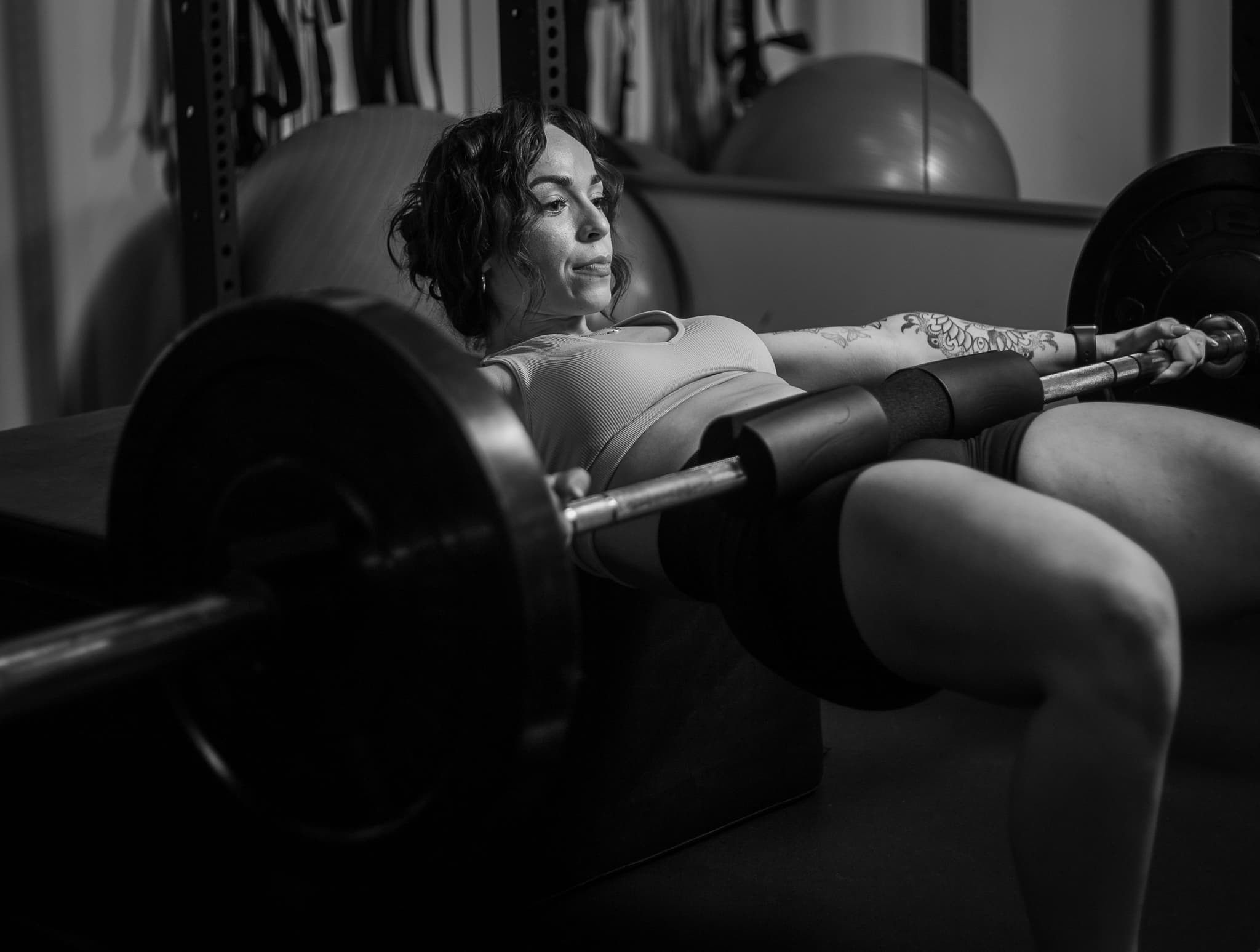
Hip thrusts produce roughly twice the glute EMG activation of squats, and that fact gets repeated constantly in the hip thrust vs squat glutes debate. But the Plotkin et al. 2023 randomized controlled trial used MRI to measure gluteus maximus, medius, and minimus muscle hypertrophy after nine weeks of equated training, and squat and hip thrust training elicited similar gluteal hypertrophy. The activation gap is real. The growth gap isn't. That contradiction is worth sitting with.
This piece doesn't declare a winner. It answers a more useful question: which exercise fits your specific goal. The answer shifts based on what you're training for, and the data supports a clearer position than most coverage of this topic suggests. You'll get the full breakdown of the research, what it actually means for programming, and where each exercise has a genuine edge.
The Quick Answer: Hip Thrust vs Squat for Glutes
The hip thrust and back squat produce comparable glute hypertrophy when training volume is equated. A 2023 MRI study by Plotkin et al. found that nine weeks of matched-set training delivered similar growth across the upper, middle, and lower gluteus maximus, and the gluteus medius and minimus, for both exercises. The difference shows up in activation, not size: Contreras et al. recorded mean upper gluteus maximus EMG of 69.5% for the hip thrust versus 29.4% for the squat, with peak values at 172% and 84.9% respectively. Both exercises build muscle effectively, but the hip thrust drives significantly more direct glute stimulus per rep. What separates them is how that plays out across different training goals.
What the Research Actually Shows
Most coverage of this topic picks one data set and runs with it. The problem is that two separate lines of evidence point in different directions, and ignoring either one produces a bad conclusion.
The EMG Case for Hip Thrusts
The activation numbers for hip thrusts are hard to dismiss. A study by Contreras et al., published in the Journal of Applied Biomechanics, found that the hip thrust elicited significantly greater mean upper gluteus maximus EMG (69.5% vs. 29.4%) and peak upper gluteus maximus EMG (172% vs. 84.9%) compared to the back squat. Every measured gluteal site showed higher mean sEMG amplitudes during the hip thrust.
If you're judging hip thrusts for glute strength based on how hard those muscles are working during a set, the signal looks clear. The glutes fire harder and at a higher peak during the hip thrust.
Why Activation Data Doesn't Predict Hypertrophy Here
This is where most articles stop, and stopping there leads you to the wrong answer.
Plotkin et al. (2023), published in Frontiers in Physiology, ran a nine-week randomized controlled trial with set-volume-equated training and used MRI to measure actual muscle growth. The result: similar gluteus maximus hypertrophy across both exercises. The same study captured sEMG data during the first training session and confirmed the activation differences, so both findings exist inside the same research design.
The core error in most coverage is treating EMG as a proxy for hypertrophy. Higher activation does not reliably predict greater growth. Muscle growth depends on mechanical tension and the demands placed on a muscle across its range of motion. A movement that fires the glutes intensely in a shortened position may not accumulate the same growth stimulus as one that loads them across a larger range, even if the numbers on the EMG chart look less impressive.
The data here isn't contradictory. When comparing squat vs hip thrust for actual muscle gain, activation and adaptation are different questions.
Why the Squat Can Still Match Hip Thrusts for Glute Growth
The activation gap between hip thrusts and squats is real. What makes the Plotkin et al. data striking is that nine weeks of squat versus hip thrust training elicited similar gluteal hypertrophy, despite that gap. EMG during a set is not a reliable predictor of long-term muscle hypertrophy.
This finding reshapes how you should think about hip thrust vs squat for glute development. High muscle activation during a set does not guarantee better muscle growth over time.
The Long-Muscle-Length Advantage
The leading hypothesis centers on where in a movement a muscle is most mechanically challenged. At the bottom of a squat, your hips are deeply flexed and your glutes are stretched near their longest point. Current evidence suggests that training at long muscle lengths may augment hypertrophic outcomes, likely because of greater mechanical tension on muscle fibers in that stretched state.
The hip thrust loads the glutes heavily at peak contraction, a shortened position, which produces the high activation numbers. Research distinguishes between shortened partials, where the muscle is in a contracted position, and lengthened partials, where it is in a stretched position. The two are not interchangeable: lengthened partials produce more hypertrophy than shortened partials, and in some studies, more hypertrophy than full range of motion. High activation at a shortened length and high tension at a lengthened length appear to be distinct stimuli that can converge on similar hypertrophy outcomes, at least over the training durations studied so far.
That distinction has real implications for how you structure a glute training program.
Hip Thrust vs Squat Glutes: Which One Fits Your Actual Goal?
The research gives you permission to use either exercise. What it doesn't do is tell you which one to prioritize for your specific situation. That part requires a more honest look at what you're actually trying to accomplish.
If Your Primary Goal Is Glute Hypertrophy
Run both. The Plotkin et al. data is clear: nine weeks of volume-equated training produces similar gluteal hypertrophy from either exercise. No single best glute exercise exists here, because the outcome is essentially tied. If you're going to specialize, the squat has a steeper hip extension resistance curve with greater emphasis in hip flexion, which may confer a more potent gluteal training stimulus — though that advantage didn't show up as a measurable difference in the study's growth data. That's not a reason to drop hip thrusts. It's a reason to keep squats in the rotation rather than swapping them out.
If You're Quad-Dominant and Can't Feel Squats in Your Glutes
This is a motor pattern issue, not a programming one. Adding more squat volume won't fix it. Hip thrusts are the more practical entry point because the movement pattern is simpler, the glute is the primary mover by design, and the exercise isolates the glutes without significant involvement of the quadriceps. Use hip thrusts to build the mind-muscle connection and accumulate glute volume. Then reintroduce squats with deliberate cues, a wider stance, and controlled depth once you actually know what glute engagement feels like under load.
If You Want Overall Lower-Body Development, Not Just Glutes
Squats are the better anchor for your program. Plotkin et al. found that thigh cross-sectional area changes were greater in the squat group for both the quadriceps and adductors, while glute outcomes stayed comparable between the two. If you're training for balanced lower-body size or athletic performance, hip thrusts leave too much on the table for the anterior and medial thigh. Squat variations carry more of the load here, with hip thrusts as a supplementary movement rather than a primary one.
If You're a Beginner Building Your First Program
Pick one and get good at it before stacking both. The squat has a steeper learning curve but builds more transferable strength across the lower body. Start there. Once your squat mechanics are reliable and you're adding load consistently, hip thrusts make sense as a second glute-focused exercise. Loading two technically demanding movements at the same time as a beginner spreads your attention too thin and slows progress on both.
Your goal determines the hierarchy. The research supports using both exercises, but how much emphasis each one gets should come from what you're actually trying to build, not from a default "include everything" approach.
For Athletes: The Sprint vs Jump Trade-Off
If you're training for sport performance, the hip thrust vs squat question has a cleaner answer than it does for hypertrophy. The research splits neatly along movement type.
A 6-week randomized controlled trial by Contreras et al., published in the Journal of Strength and Conditioning Research, tested both exercises on adolescent male athletes, measuring vertical jump height, horizontal jump distance, and 10m and 20m sprint times, among other variables. The front squat produced potentially beneficial effects for vertical jump height. The hip thrust produced better acceleration improvements at 10m and 20m sprint distances. Same training period, different outcomes, different exercises driving them.
The mechanical logic tracks. Sprinting demands horizontal force production, which is exactly the position the hip thrust loads. Jumping requires the kind of vertical force output that squats train directly.
That means your sport should steer this decision. Soccer players, wide receivers, and track sprinters have a clear case for prioritizing hip thrusts for glute strength in their program. Basketball and volleyball players, whose performance hinges on jump height, should build their lower body work around squat variations.
Most athletes don't sit cleanly in one category, which means you probably run both. But if your sport punishes you for a slow first step more than a short vertical, the hip thrust earns more of your training time.
How to Program Both Without Wasting Sets
Most "combine both" advice stops before the part that actually matters: how many sets, how often, and which exercise earns top billing on a given training day. Here's the structure.
When to Make Hip Thrusts Your Primary Glute Move
If your primary goal is glute hypertrophy with minimal quad development, lead with hip thrusts. Place them first in your session when you're fresh, and treat squats as an accessory.
For glute growth, perform 3 to 4 sets of hip thrusts per session, twice a week, at 8 to 12 reps per set. That puts you in the 12 to 16 weekly sets range for the glutes, which is consistent with the volume used in the Plotkin et al. research that measured comparable gluteus maximus hypertrophy between hip thrusts and squats after 9 weeks. Add squats as a secondary movement, 2 to 3 sets, to cover posterior chain variety without inflating quad volume unnecessarily.
Technique matters here. A poor hip thrust setup — bar position, foot placement, pelvic tilt — bleeds stimulus away from the glutes fast. If you're new to the lift, get your form dialed before loading it.
When Squats Should Lead and Hip Thrusts Support
If you want balanced lower body development, strength carry-over to athletic movements, or you're running a program where quad and adductor growth is also a goal, squats belong at the top of the session. The Plotkin et al. data showed squats produced significantly greater quadriceps and adductor hypertrophy than hip thrusts, which makes them the more efficient choice when you're training the full leg, not just the glutes.
In this structure, 3 to 4 sets of squats plus 2 to 3 sets of hip thrusts covers both bases without redundancy. Keep total weekly glute-focused volume across both lifts in the 10 to 16 set range and adjust based on recovery.
Frequently Asked Questions
Are hip thrusts or squats better for glute growth?
Neither exercise has a clear advantage for hip thrust vs squat glutes development. A 2023 randomized controlled trial compared hip thrusts to back squats over nine weeks in untrained university-aged men and women, using MRI to measure gluteal hypertrophy.
Hip thrusts and squats produced similar muscle growth across all four assessed glute regions: upper, middle, and lower gluteus maximus, plus gluteus medius and minimus combined. If isolated glute growth is your goal, both exercises deliver the same result.
Can hip thrusts replace squats?
Not without a trade-off. The squat group experienced significantly more hypertrophy in the quadriceps and adductors than the hip thrust group. Dropping squats entirely costs you meaningful thigh development. For a practical framework on running both, refer to the programming section above.
Why don't I feel squats in my glutes?
Hip anatomy is usually the reason. Your hip socket depth and femoral angle affect how much range your glutes work through, and a narrow stance often shifts more load to the quads. A wider stance with toes turned out tends to increase glute demand for most people, though stance is only one variable.
Do hip thrusts build more glutes than squats?
The MRI data says no. Despite sEMG differences indicating more gluteus muscle excitation during hip thrusts for glute strength, both exercises produced similar growth outcomes. Muscle activity during a set is not a reliable proxy for hypertrophy over a training cycle.
Your goal, not the exercise, should drive the decision.
Make the Call
Which of these profiles is yours? If pure glute hypertrophy is the goal, the debate is less settled than it appears. When sets are equated, squat and hip thrust training produce similar gluteal hypertrophy, though the squat also drives greater quad and adductor growth. The choice between hip thrust vs squat glutes depends on your secondary goals. Load whichever movement you'll actually recover from and stay consistent with. If sprint performance matters, the hip thrust has shown potentially beneficial effects over the squat in 10- and 20-meter sprint times. If vertical jump height is the priority, the squat earns the primary slot. If you're building glutes with minimal quad involvement, the choice answers itself.
The real mistake isn't picking the wrong exercise. It's defaulting to one movement and never questioning whether it's still serving your actual goal. That question is worth revisiting every time you plan a new training block.
Related Articles
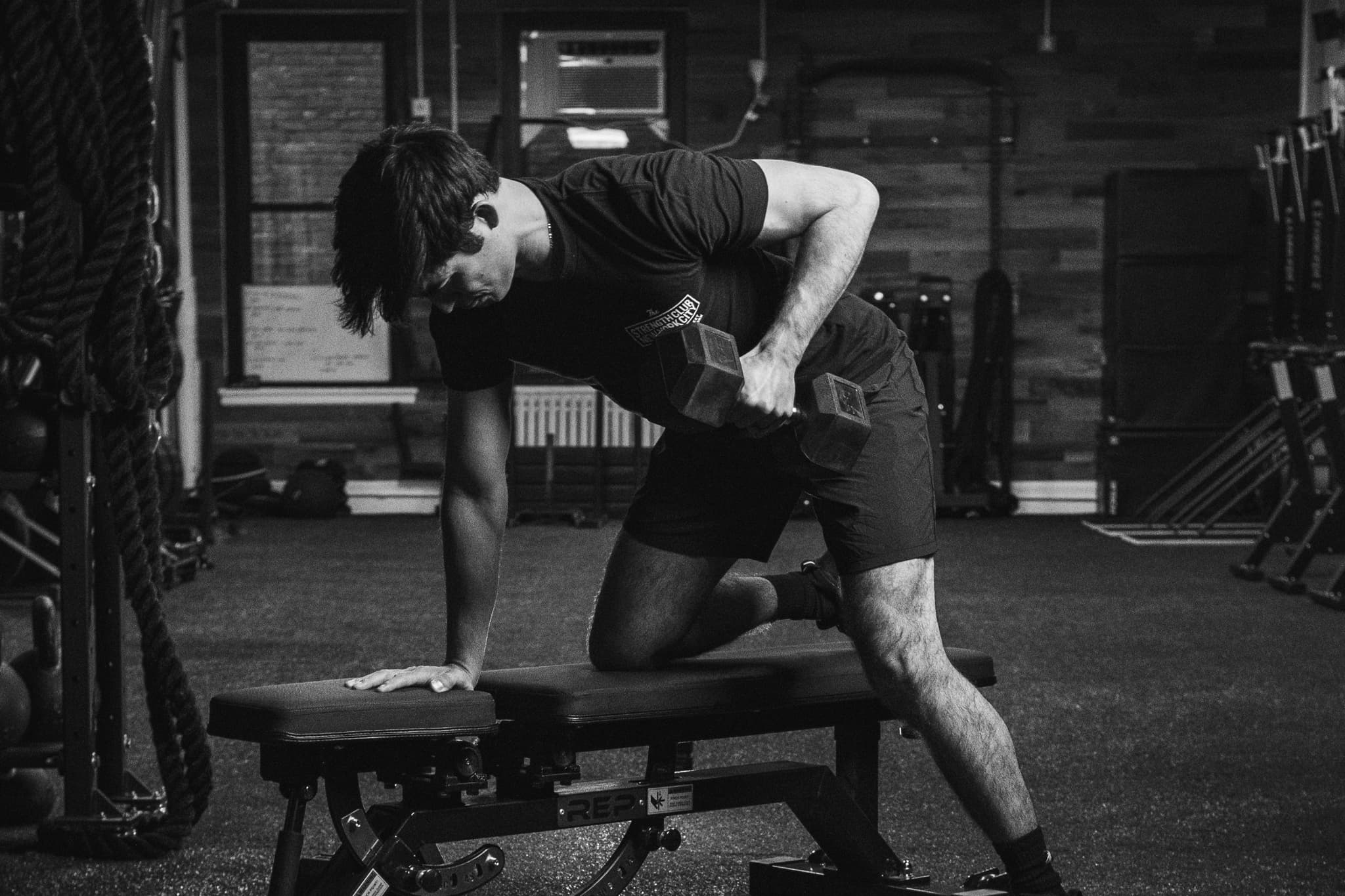
Dumbbell Arm Exercises for Beginners: Why Free Weights Beat Cables
Cables feel safer, but they hide the mistakes that matter most. See why dumbbell arm exercises beginners should master first build real strength, better balance, and honest form fast.
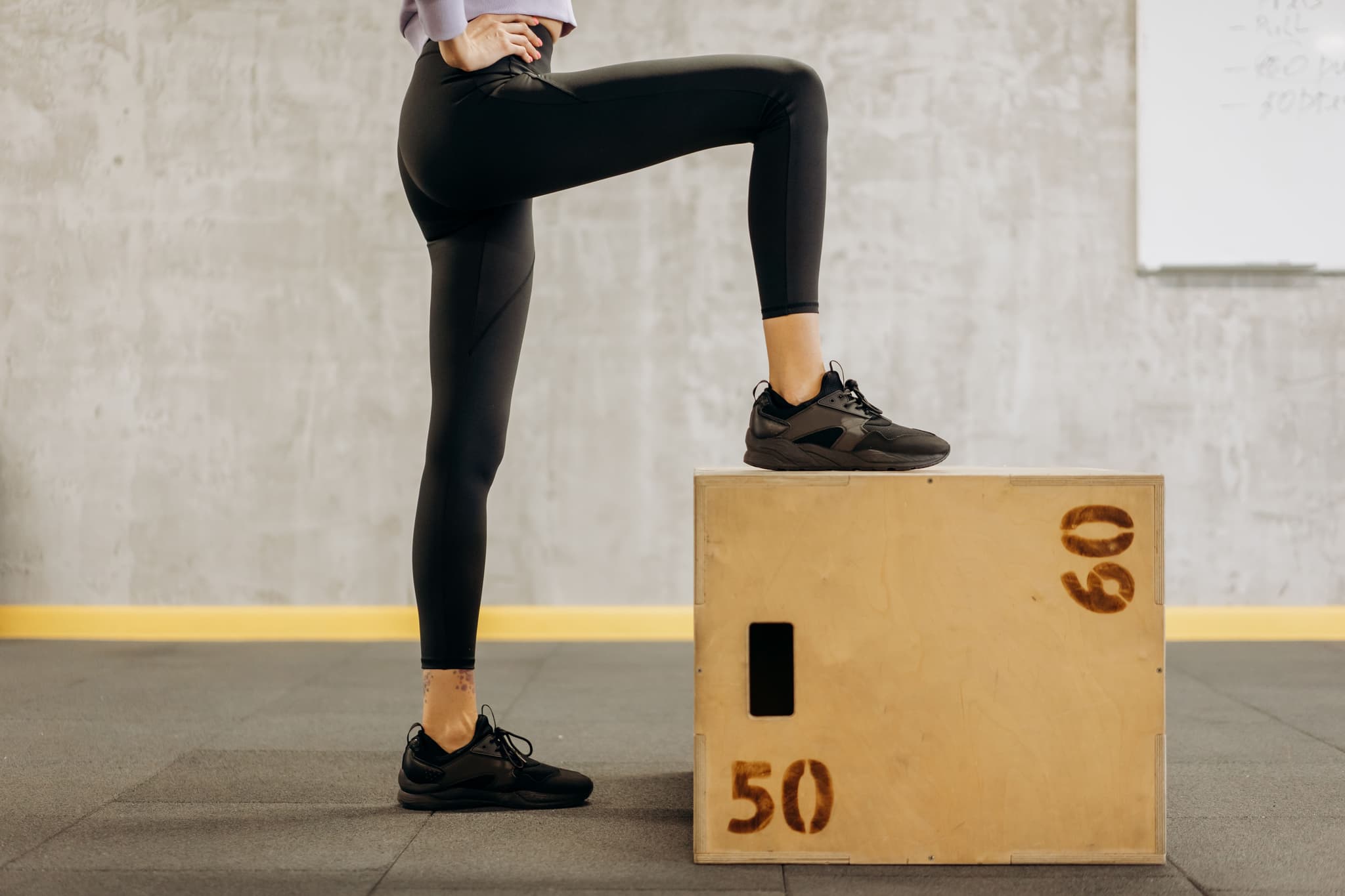
Step-Ups for Hamstrings: Box Height, Stance & Form Guide
Are step-ups actually a hamstring exercise, or just quads in disguise? Here's how box height, stance, and hip hinge decide the answer.
7 Progressive Overload Mistakes Beginners Make (and Fixes)
Stalled lifts? You might be making one of these 7 progressive overload mistakes beginners make without realizing it. Get the symptoms, causes, and exact fixes before it costs you months.