
Barbell Squat vs Leg Press Glutes: A Biomechanics Breakdown
Barbell squat vs leg press for glutes. Find out which exercise wins for glute development and why the biomechanics make it clear.
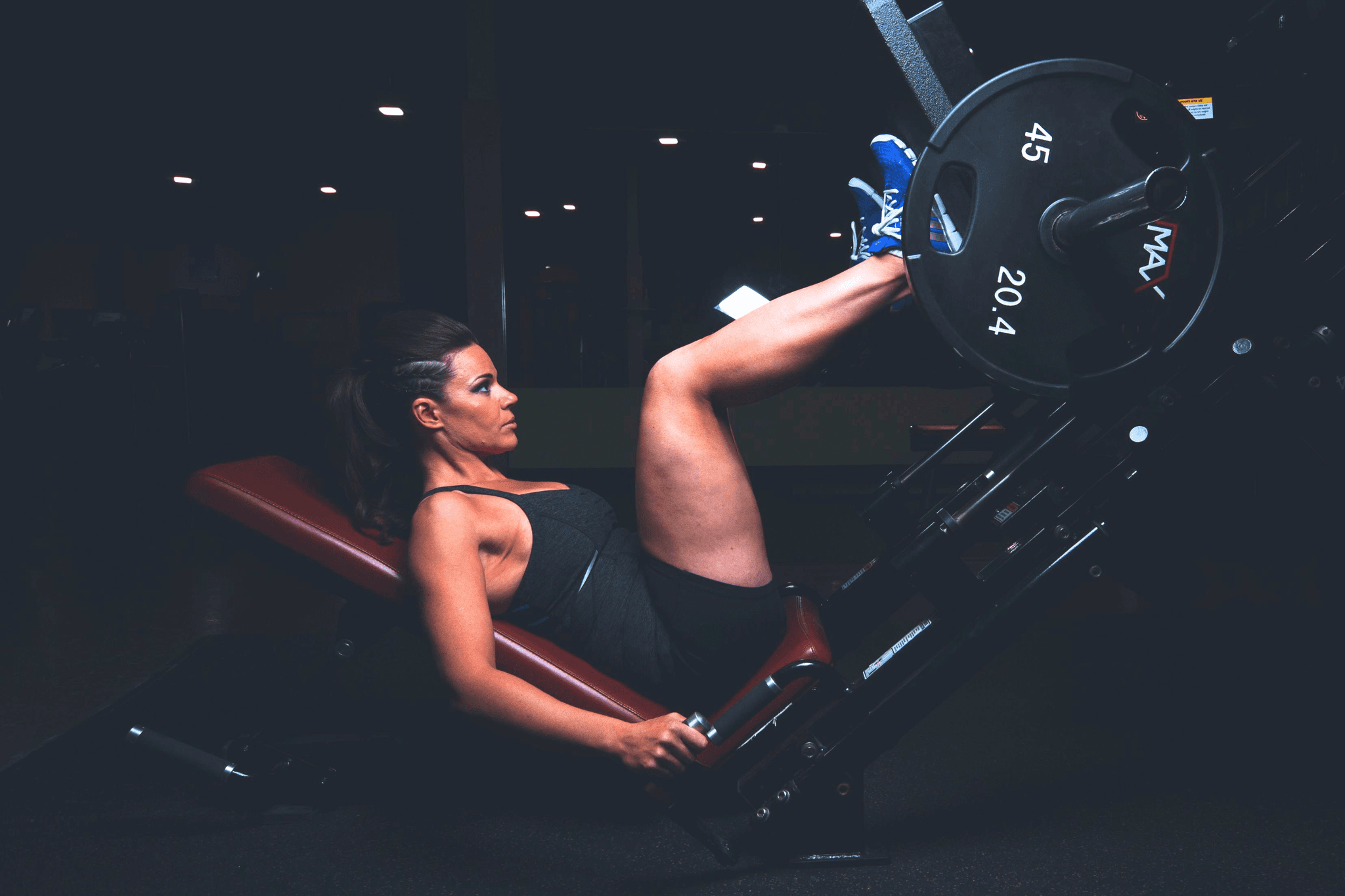
If you've searched barbell squat vs leg press glutes, you've probably landed on the same non-answer: "it depends on your goals." That's not useful, and this article isn't going to give you that. The goal here is glute development specifically. Not quad size. Not general leg strength. Glutes.
The barbell squat wins for glute development. Squats demand greater glute activation across the full range of motion, especially at deeper depths where the glutes contribute 35% of the concentric force compared to the leg press's minimal posterior chain engagement. The squat also requires stabilization and balance, recruiting more total muscle fibers. The leg press keeps you seated and supported, limiting glute demand and stabilizer involvement.
The biomechanics point to a clear winner, and this article names it. It covers what the glutes actually need at a muscular level to grow, why squat depth changes the recruitment picture significantly, and where the leg press genuinely falls short versus where it still earns a place in a well-built program. You'll leave with a verdict backed by real research and a clear picture of how to build your training around what actually drives glute growth.
Barbell Squat vs Leg Press for Glutes: The Short Answer
The barbell squat wins for glute development because it demands greater hip flexion depth and places higher posterior chain demand on the gluteus maximus. During a squat, your glutes work alongside the hamstrings and adductor magnus while your core and lower back stabilize the load—activation that scales directly with how deep you go and how you position your torso (Escamilla, 2001). The leg press, locked into a fixed path, shifts most of the work to your quads under heavy loads. Bryanton et al. (2012) measured hip extensor effort across squat depths and loads from 50 to 90% of 1RM, showing that posterior chain demand climbs as you descend deeper. The leg press never reaches that range of hip motion. For building glutes, the squat is the stronger choice.
What Your Glutes Actually Need to Grow
The Gluteus Maximus as a Hip Extensor: Why Load Angle Matters
The gluteus maximus is primarily a hip extensor. Its job is to drive the femur backward relative to the pelvis, and it grows when you load that function specifically. Not every leg exercise that involves hip extension actually challenges the glute in a meaningful way, because the angle at which force is applied changes how much of that force the glute has to produce.
Bryanton et al. (2012) showed that deeper squats produce higher gluteus maximus activation than shallow squats. The glute isn't working at the same intensity across the full range of motion. Load position relative to the muscle's length determines how hard it's actually being trained.
Stretch-Shortening Cycle and Why Depth Is Not Optional
Muscle tissue produces more force when it's pre-stretched before contracting. For the gluteus maximus, that stretch occurs at the bottom of a deep hip flexion movement, at or below parallel. Cutting the range short reduces the stretch stimulus and, with it, the hypertrophic signal.
Barbell Squat vs. Leg Press: Which Is Best for Glutes
The barbell squat wins for glute development because peak load occurs when the hip is maximally flexed, placing the glute in a lengthened position where it can produce the most force. The leg press loads the glute in a shortened position, reducing activation and growth stimulus. This load-angle principle determines glute recruitment far more than exercise category alone.
Contreras et al. (2015) tested 13 trained women at estimated 10RM loads and found the barbell hip thrust produced significantly greater mean upper gluteus maximus EMG (69.5% vs. 29.4%) and mean lower gluteus maximus EMG (86.8% vs. 45.4%) compared to the back squat. The squat scored lower on raw EMG across both regions. The variable driving the difference was where peak load occurred relative to the muscle's length, not the exercise category itself.
That principle is exactly what separates the squat from the leg press in a glute-specific context.
Why the Barbell Squat Wins for Barbell Squat vs Leg Press Glutes
Depth Mechanics: The EMG Case for Going Below Parallel
Glute activation isn't constant across a squat rep. It scales with depth. Bryanton et al. (2012) measured relative muscular effort in the gluteus maximus across multiple squat depths and found that effort increased significantly as knee flexion angle deepened. The deeper you go, the greater the hip flexion, and the more the glute is loaded through a stretched, high-tension position before driving into full hip extension.
The leg press physically prevents this. The fixed sled path and padded seat cap the hip flexion range you can actually achieve, regardless of foot placement. Less hip flexion depth means a shorter range of tension on the glute, which means a smaller stimulus per rep.
Posterior Chain Co-Activation: Hamstrings and Glutes as Synergists
Among compound leg exercises, the barbell squat stands out because the hamstrings and glutes are loaded as synergists rather than in isolation. Research on squat biomechanics, including Escamilla (2001), documents meaningful hamstring activation during squatting, particularly through the ascent phase when hip extension demand peaks. When the hamstrings are under active tension, they influence pelvic position in a way that drives the glutes into fuller contraction.
The leg press doesn't replicate this. With the torso and pelvis pinned against a fixed pad, the posterior chain can't function as a coordinated unit. Hamstring involvement drops, the glutes lose that synergistic reinforcement, and the movement shifts toward quad-dominant output. That structural difference directly reduces total glute work.
Hormonal Response: Does Free-Weight Loading Change the Equation?
Free-weight squats recruit substantially more total muscle mass than machine pressing variations. That broader systemic demand produces a larger acute hormonal response, specifically in testosterone and growth hormone. Shaner et al. (2014) found that squats produced significantly greater immediate post-exercise elevations in both hormones compared to the leg press, performed at the same relative intensity. The acute difference is real. Whether it compounds meaningfully into greater long-term muscle protein synthesis is less clear — research has not established that the transient hormonal spike reliably translates to chronically elevated anabolic output.
The leg press keeps loading stress confined to the lower limbs. The trunk, spinal erectors, and stabilizing musculature contribute nothing. That limits total mechanical stress on the body and reduces the acute hormonal response accordingly.
Each of these advantages compounds. Taken together, they explain why squat-based training produces better glute development over time, not just better numbers on a single EMG readout.
What the Leg Press Actually Does, and Doesn't Do, for Your Glutes
The leg press isn't a weak exercise. It's a mechanically different one, and that distinction matters when you're specifically targeting glutes. Understanding the difference between a barbell squat vs leg press glutes comes down to how each machine loads your hip extension.
The machine is built for controlled, high-load knee extension in a reclined position. That setup is genuinely effective for quad volume. But the fixed sled path and pinned pelvis change what your hips are actually required to do.
Why the Machine's Fixed Path Limits Hip Extension Demand
Your torso doesn't move on a leg press. The pelvis stays planted against the pad, and the range of motion follows the machine's track. That removes the need for your gluteus maximus to control a loaded hip descent and drive extension back to standing, the exact demand that builds it.
Without the need to stabilize the spine or coordinate hip and knee extension simultaneously, the leg press defaults to quad dominance, and that tendency compounds as load increases.
Quad Dominance Under Load: What the EMG Data Shows
For glute development, the barbell squat wins because it demands hip extension control throughout the movement, while the leg press's fixed path allows quad dominance. Escamilla et al. (2001) found that both narrow and wide stance squats activated more rectus femoris, vastus lateralis, vastus medialis, lateral hamstring, medial hamstring, and gastrocnemius than equivalent leg press variations. Separate research by James et al. found the same squat advantage extended to gluteus maximus, a gap that holds across multiple loading conditions.
Foot placement does shift that picture. A high foot position on the sled increases gluteus maximus EMG activation compared to low placement, while low placement elicits greater rectus femoris activity. Stance width also matters: gluteus maximus activation increases as stance width widens, raising hip extension demand during the press.
Glute recruitment on the leg press isn't zero. But under default conditions—low narrow stance and heavy load—the quads absorb most of the work. The machine allows it, and most lifters don't fight it.
The leg press earns its place for isolated quad overload, high-volume loading without spinal compression, and training around injury. Those are legitimate advantages. Glute development just isn't the primary return unless you're deliberate about your setup, which is exactly where most people leave results on the table.
How to Actually Target Your Glutes on the Leg Press
The barbell squat vs leg press debate usually ends with the squat winning for glute development, and that's accurate. But if the leg press is in your program, foot placement and execution can shift more work to your glutes than most people achieve. A glute activation comparison shows the squat recruits more total glute muscle, yet the leg press can still deliver meaningful stimulus when configured correctly.
High and Wide Foot Placement: The EMG-Backed Setup
Place your feet in the upper half of the platform, roughly shoulder-width or wider. A systematic review by Martín-Fuentes et al. (2020) found that high foot placement on the leg press elicits greater gluteus maximus EMG activation compared to a low position, and a wider stance increases glute recruitment further by demanding more hip extension through the movement. Low and narrow positions shift the load toward the quads. If you want glutes, move your feet up and out.
Your toes can angle out slightly, 15 to 30 degrees, to allow the hips to track naturally through the range.
Heel Drive and Full Range of Motion: Completing the Hip Extension
Foot position only sets the conditions. How you push determines whether the glutes actually do the work. Drive through your heels rather than the balls of your feet. That cue shifts force demand up the posterior chain.
Lower the sled until your hips reach full depth without your lower back peeling off the pad. Cutting the range short is where most of the glute stimulus gets lost. The hip has to flex fully before it can extend fully, and that extension is what loads the gluteus maximus.
Control the descent. Press with intent. Those two habits will get more out of the leg press than any foot position adjustment alone.
Building Your Glutes: Which Exercise Deserves Priority in Your Program
If Glute Hypertrophy Is Your Primary Goal: The Evidence-Based Hierarchy
The barbell squat beats the leg press for glute development. That comparison is settled. But if you're asking which single exercise should anchor your glute training, the honest answer isn't the squat either.
For glute activation, hip-dominant movements outperform both the squat and leg press. Contreras et al. (2015) measured glute EMG in 13 trained women during back squats and barbell hip thrusts at matched loads. The hip thrust produced mean upper glute activation of 69.5% versus 29.4% for the squat, and lower glute activation of 86.8% versus 45.4%. The squat is a strong compound leg exercise with real glute contribution, but hip-dominant exercises consistently load the gluteus maximus at longer muscle lengths and through a range of motion that directly mirrors its function.
So the hierarchy, grounded in the available evidence, looks like this: hip-dominant movements first, deep squats second, and the leg press third. If you train without limitations, structure your program around hip thrusts or Romanian deadlifts as your primary glute stimulus, and treat the squat as a complementary movement that builds glutes alongside quads and the posterior chain. That combination will outperform any single-exercise approach for overall glute development.
When the Leg Press Earns Its Place: Injury, Load Management, and Volume
If you're managing a lower back injury, early-stage knee rehabilitation, or a mobility restriction that prevents safe full-depth squatting, the leg press is a legitimate training tool. High foot placement positions the toes at the top of the leg press sled, which necessitates more hip extension and increases stretch and stimulation of the hamstrings and glutes while reducing the range of motion around the knees.
Research by Paoli et al. found that wider stance increases gluteus maximus EMG activity in back squats, a principle that applies to foot positioning on the leg press as well.
The leg press also works as an accessory volume tool late in a session, after your primary hip-dominant work is done. Its value isn't in replacing the squat. It adds mechanical load to the legs with minimal spinal compression, making it useful when the spine has already absorbed enough for the day.
If you can squat and hip thrust without restriction, both belong in your program. The leg press doesn't.
Frequently Asked Questions
Is the barbell squat or leg press better for building glutes?
The barbell squat. Free barbell squatting places the hip in deep flexion under load, creating a longer glute moment arm and demanding full hip extension to complete each rep. Escamilla (2001) confirmed squats generate higher activation across the posterior chain, including the glutes, compared to the leg press, giving you more mechanical stimulus per set where glute development is the goal.
Does the leg press work glutes as much as squats?
No. The reclined position reduces the hip flexion moment compared to a standing squat, shifting primary demand toward the quads. Even with an elevated foot placement, the glute activation gap between these two exercises doesn't fully close. Leg press contributes to lower body volume, but it doesn't replicate squat-level glute stimulus.
Do squats grow glutes faster than leg press?
The data supports it. Research has shown that full-depth squats produce greater glute hypertrophy than partial-range work. Glute growth requires both high activation and mechanical tension through full range, and the leg press restricts that structurally. Over a training block, deep squats accumulate more total glute stimulus.
Is the barbell squat the best compound leg exercise for glutes?
Strong, but not the top option. Contreras et al. (2015) compared EMG activity of the upper and lower gluteus maximus between the back squat and barbell hip thrust in 13 trained women performing estimated 10RM loads, finding the hip thrust elicited significantly greater mean and peak gluteus maximus activation than the back squat. The squat builds glutes effectively, especially through full depth, but if peak glute loading is the priority, it ranks below the hip thrust.
What foot placement on the leg press targets glutes?
Place your feet in the upper third of the footplate, shoulder-width apart, with toes angled out 20 to 30 degrees. This increases hip flexion depth at the bottom and requires more glute drive through the extension phase. A low, narrow foot position shifts emphasis toward the quads instead.
How do I target my glutes more on the leg press?
Control the descent. Lowering the sled over three to four seconds and pausing briefly at maximal hip flexion increases time under tension at the position where glute demand is highest. That eccentric focus also reduces reliance on the stretch reflex at the bottom, which is where most people unintentionally offload the glutes.
The Bottom Line
The barbell squat wins for glute development in the barbell squat vs leg press comparison on every meaningful metric: deeper hip flexion, a longer glute moment arm, and posterior chain co-activation no machine can replicate. That makes it the higher-ROI movement for combined glute and lower-body hypertrophy. The leg press earns its place as an accessory, and configured correctly (feet placed high and wide), it contributes more glute work than most people get from it. For peak glute isolation, though, neither exercise leads the field.
Contreras et al. (2015) compared gluteus maximus, biceps femoris, and vastus lateralis EMG activity in the back squat and barbell hip thrust, and the barbell hip thrust elicited significantly greater mean and peak upper gluteus maximus activation than the back squat. The leg press was not part of that study. Build your program around squats for foundational strength and hypertrophy, use the leg press to add quad volume, and include hip thrusts when maximizing glute development is the priority. That's a complete training model, not a compromise. To go deeper on programming these movements together, explore the rest of our strength training guides.
Related Articles
Dumbbell Arm Exercises for Beginners: Why Free Weights Beat Cables
Cables feel safer, but they hide the mistakes that matter most. See why dumbbell arm exercises beginners should master first build real strength, better balance, and honest form fast.
Step-Ups for Hamstrings: Box Height, Stance & Form Guide
Are step-ups actually a hamstring exercise, or just quads in disguise? Here's how box height, stance, and hip hinge decide the answer.
7 Progressive Overload Mistakes Beginners Make (and Fixes)
Stalled lifts? You might be making one of these 7 progressive overload mistakes beginners make without realizing it. Get the symptoms, causes, and exact fixes before it costs you months.