

Yoga vs Stretching for Strength Training: What Lifters Need
Yoga and static stretching aren't interchangeable, and mixing them up in your program can quietly sabotage your lifts. Here's the research-backed breakdown lifters actually need.
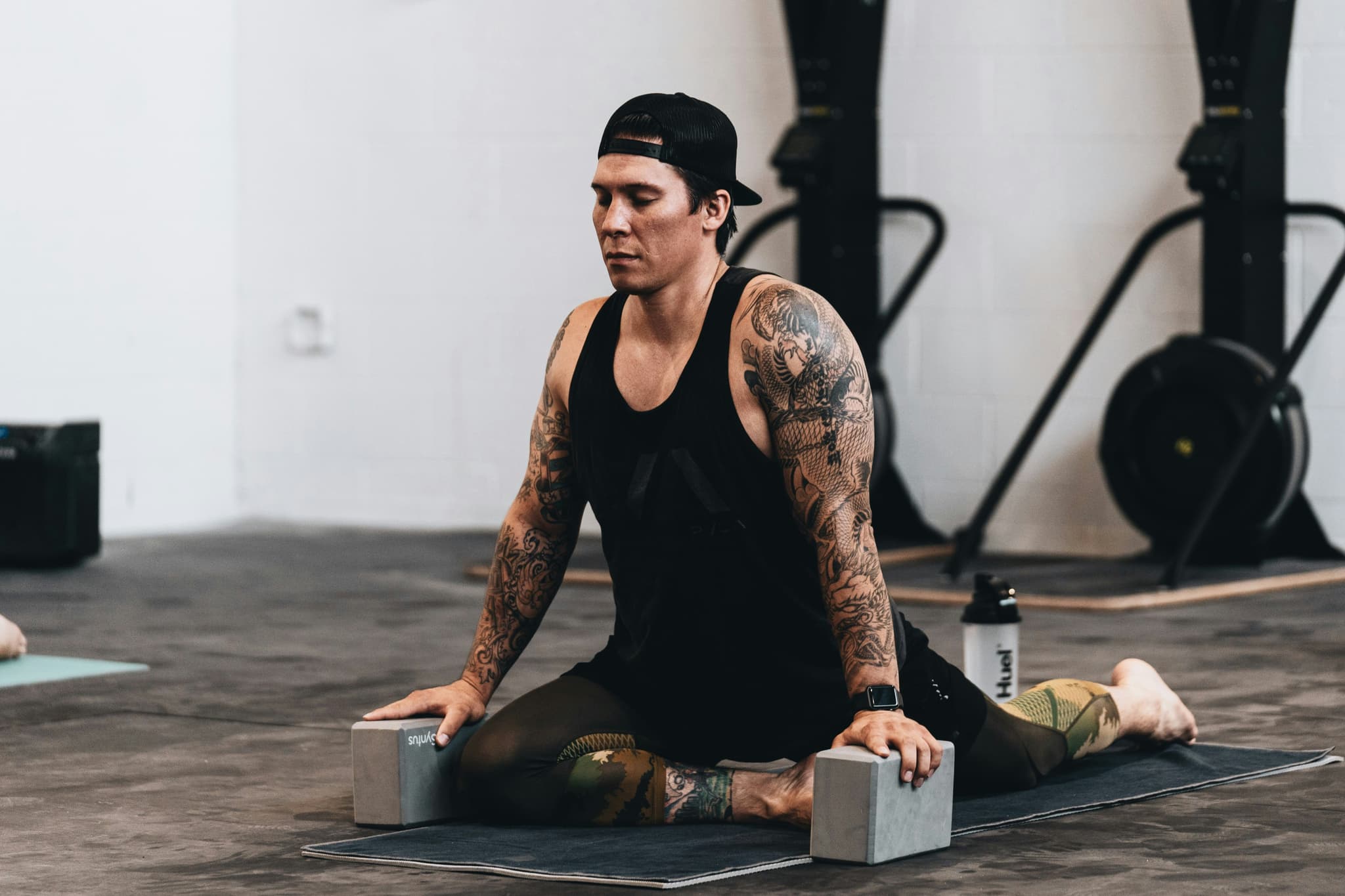
Static stretching and yoga get lumped together constantly, but under a barbell, that mix-up costs you. Yoga vs. stretching for strength training isn't a wellness debate. It's a programming decision, and getting it wrong quietly drains strength you worked hard to build.
Most advice on this topic comes from running blogs and retiree fitness guides. None of it accounts for what happens when you're trying to add plates to the bar. Yoga trains full-body control through movement. Static stretching isolates one muscle and holds it still. Confuse the two, or schedule them at the wrong point in your week, and you'll feel it on your next heavy set.
This article breaks down what the research actually says, why yoga and stretching affect your muscles and nervous system differently, and exactly when each one belongs in your training week. You'll get a real programming template, not vague suggestions to move more.
Yoga vs Stretching for Strength Training: The Quick Answer
Yoga builds full-body control, balance, and mobility through active movement sequences. Static stretching isolates a single muscle and holds it still to increase passive range of motion. The key difference: yoga trains stability and movement quality across multiple joints, while stretching targets one muscle group at a time.
Both have a place in a lifter's week, but they don't do the same job. Timing matters more than most lifters realize.
Yoga | Static Stretching | |
Goal | Full-body mobility, balance, control | Isolated flexibility in one muscle group |
Best Timing | Off days or post-workout | After training, not before or between sets |
Primary Benefit | Joint stability and movement quality | Passive range of motion |
Timing gets its own row for a reason.
A 10-week study on 30 recreationally trained volunteers tested static stretching performed as a warm-up before training, static stretching performed between sets, and no stretching at all.
The group that trained without stretching saw significantly greater strength gains than the other two groups (Journal of Strength & Conditioning Research, 2013).
A systematic review of 35 studies covering 1,179 participants backs this up with more nuance. Static stretching programs showed a significant small effect on improving dynamic strength but not isometric strength.
Duration matters too. Research found holds under 60 seconds per muscle group didn't hurt performance, while longer holds caused measurable force deficits.
Next: what each method actually trains, and when to use it.
The Research Behind Yoga and Stretching, and Its Limits for Lifters
The most-cited study on this topic ran in the Journals of Gerontology: Series A. Sedentary healthy adults (N = 118; mean age 62.0) took part in an 8-week randomized controlled trial, three times a week for an hour, split into a Hatha yoga group and a stretching-strengthening exercise group. Yoga performed just as well as the stretching-strengthening program for improving functional fitness.
That sounds like solid backing for yoga. Look at who was tested, and the picture changes.
Why an 8-Week Study on Sedentary Adults Isn't a Strength-Training Verdict
The participants averaged 62 years old. They had to be sedentary for at least the previous six months, meaning fewer than two days a week of structured physical activity, with no regular ongoing yoga practice. The intervention ran 8 weeks, 3 sessions per week.
Standardized functional fitness tests assessed balance, strength, flexibility, and mobility at baseline and after the intervention. That means things like getting up from a chair and basic movement for daily life. It has nothing to do with squatting 1.5 times bodyweight or adding plates to your bench.
This is a study about aging adults reclaiming baseline movement quality. It's not a study about flexibility training for athletes chasing a new deadlift max or trying to pack on muscle.
Lifters aren't sedentary. Your joints already move through load. Your baseline sits well beyond what this study measured.
The research isn't useless. It confirms yoga can build general movement competency in untrained populations. But when comparing yoga versus static stretching for strength training, treating yoga as a replacement for targeted mobility work for a 300-pound squatter is a stretch the data doesn't support.
If you're chasing strength and size, look for evidence built on lifters, not retirees easing into movement for the first time.
Yoga vs Stretching for Strength Training: Mechanism-by-Mechanism Comparison
Yoga and static stretching do different things to your body. To see why, look at what's actually happening in your muscles, joints, and nervous system.
Yoga Versus Static Stretching: What Each Actually Trains
Yoga poses load your muscles isometrically. Holding a warrior II or a plank forces your stabilizers to fire under tension, often at end-range positions your regular lifts never touch. That's a strength stimulus, not just a stretch.
Static stretching works differently. You lengthen a muscle and hold it there, passively, with no contraction involved. You're training tissue tolerance to length, not the ability to produce force in that position.
The strength research backs this up. A 10-week study found that although all three experimental groups improved their strength, the group that trained without stretching experienced significantly better results. The study involved recreationally trained volunteers who followed static stretching exercises carried out before and during a strength training program over 10 weeks. Stretch, then lift, and you're working against yourself.
Zoom out to chronic effects and the picture shifts. A meta-analysis of 35 studies with 1,179 subjects found a significant small effect of static stretching on improving dynamic strength, but no significant effect on isometric strength.
Duration matters too. Holds under 60 seconds per muscle group don't hurt performance, while longer holds produce measurable force deficits.
Mechanism | Yoga | Static Stretching |
Isometric strength/holds | Trains it directly through weight-bearing poses | No contraction involved, no strength stimulus |
Balance and interoception | Builds both through multi-joint, unstable positions | Minimal effect, single-muscle focus |
Tissue length changes | Improves range of motion through active movement | Improves passive range of motion directly |
Timing and dose separate what helps from what backfires. That's the next thing to get right.
How Static Stretching Affects Your Lifts: Timing, Dose, and Technique
Timing changes everything with static stretching. Do it at the wrong moment and you leave strength on the table. Do it right, and it barely costs you anything.
Should I Do Yoga or Stretching Before Weight Training?
Keep your hold times short before you lift. Research has proposed a threshold where short stretching durations under 45 seconds and moderate durations of 60 seconds or more have different effects on subsequent multi-joint performance, like jumping. In one controlled comparison, 60-second static stretches led to lower jump height and lower average and peak power output compared to no stretching, while 30-second stretches showed no difference from the other conditions.
So a 20-second hamstring stretch before squats won't tank your numbers. Five sets of 90-second holds might. Keep pre-lift stretching brief, or save it for later.
Stretching Between Sets: Helpful or Harmful?
Skip it.
A 10-week study on recreationally trained volunteers, published in the Journal of Strength & Conditioning Research, tested static stretching performed before training sessions against stretching performed between sets during a strength program covering eight exercises. All three groups improved their strength over the 10 weeks, but the group that trained without any stretching gained significantly more strength than either stretching group. Neither form of stretching, whether done up front or worked in between sets, beat the other. Both cut into strength gains compared to training without stretching.
Your muscles need to stay primed between sets, not relaxed. Stretching pulls you out of that state right when you need tension the most. Rest, breathe, and get back under the bar.
The Antagonist-Stretch Trick
There's one exception worth knowing. Research on antagonist stretching shows that stretching the muscle opposite the one you just trained, done between sets, can support performance rather than hurt it.
Stretch your chest between sets of rows. Stretch your quads between sets of hamstring curls. You're not touching the muscle doing the work, so you avoid the force deficit while picking up a small mobility benefit.
Should I Do Yoga or Stretching After Weight Training?
Save the longer holds for after your workout. A meta-analysis of 35 studies covering 1,179 participants found that chronic static stretching produces a small but real improvement in dynamic strength. Isometric strength doesn't benefit the same way, but for lifters chasing dynamic power output, that's a real edge.
Research on the dose-response relationship between stretching and resistance training found the least interference with strength adaptation when the stretching happens after training rather than before or during. Your muscles have already done their job by then, so stretching afterward doesn't compete with your lifts.
Save your stretching for after the work is done, or aim it at muscles you aren't actively training that day.
Where Yoga for Athletes Earns Its Place in a Lifting Program
Can yoga replace strength training? No. Does it count as strength training? No, but it reinforces it. Yoga's value for lifters comes down to mechanics. Unlike static stretching, yoga builds strength at end-range positions while stretching relaxes muscles instead of loading them.
Isometric Holds Build Positional Strength
A deep warrior II or a chair pose held for 30 seconds trains your muscles to produce force without moving. That's the same demand your body faces in a paused squat or a bottom-position deadlift.
Static stretching doesn't build this. It relaxes the muscle instead of loading it. Yoga's isometric component gives you strength at end-range positions you actually train through, something stretching can't do.
Balance and Interoception Reduce Injury Risk
Yoga demands constant balance corrections. Tree pose, single-leg forward folds, and side plank variations force your stabilizers and proprioceptive system to work overtime. That improved body awareness carries over to barbell work, where knowing where your joints are under load prevents the kind of breakdown that causes injury.
Why Yoga Can Ease DOMS Without Blunting Adaptation
Static stretching before or during resistance training has a real cost. A 10-week study published in the Journal of Strength & Conditioning Research found that recreationally trained lifters who stretched before or between sets gained significantly less strength than those who trained without stretching at all.
Yoga sidesteps that problem. Practiced on rest days or after training, it increases blood flow and eases soreness without interrupting the loading patterns that drive adaptation. That makes it a useful recovery tool, not a warm-up substitute.
Use yoga to build control and resilience between sessions. Save your strength work for the barbell.
Mobility Work for Lifters: A Weekly Programming Template
Enough theory. Here's how to actually schedule yoga versus static stretching around a real lifting week.
Where Dynamic Stretching Fits (Pre-Lift Warm-Up)
Dynamic stretching goes before you lift. Leg swings, walking lunges, band pull-aparts. Five to eight minutes, targeting whatever you're about to train.
This primes the joints and raises core temperature without the force deficits tied to long static holds. Save the static stretching for later.
Where Yoga and Static Stretching Fit (Off Days and Post-Lift)
Static stretching belongs after your session or on off days, not stacked between working sets. A 10-week study assigned thirty recreationally trained volunteers to three groups: one that stretched statically before each session, one that stretched between sets, and one that lifted with no stretching at all.
The group that trained without any stretching saw significantly greater strength gains than the other two groups (Journal of Strength & Conditioning Research, 2013).
If you do stretch mid-session for some reason, keep holds under 60 seconds per muscle group. Research generally shows holds under that threshold cause only minor performance drops, while longer holds cause bigger ones.
Yoga works best as its own session on recovery days. A 20 to 40 minute practice hits mobility, isometric control, and breathing work in one shot.
How Often Should Strength Athletes Do Yoga? A Sample Week
Here's a template built around an upper/lower split with two full recovery days.
Day | Lift Focus | Mobility Add-On |
Monday | Upper body (push) | Dynamic warm-up pre-lift, 5 min |
Tuesday | Lower body (squat pattern) | Dynamic warm-up pre-lift, 5 min |
Wednesday | Off | 30-min yoga session |
Thursday | Upper body (pull) | Dynamic warm-up pre-lift, 5 min |
Friday | Lower body (hinge pattern) | Dynamic warm-up pre-lift, 5 min |
Saturday | Off | Static stretching, 15-20 min, major muscle groups |
Sunday | Off | Yoga or full rest |
This puts static stretching where it can't touch your working sets and gives yoga two dedicated slots a week. A systematic review and meta-analysis screened three databases for randomized controlled trials lasting two weeks or longer and identified 42 studies covering 1,318 participants, finding that chronic static stretching can produce meaningful gains in strength and muscle size, largely tied to stretching volume and frequency (Sports Medicine - Open, 2024). That gain shows up over weeks of consistent practice, not from one stretch session before a max attempt.
Adjust the days to match your split, but keep the sequencing rule fixed: dynamic before you lift, static and yoga after or on off days.
Yoga vs Stretching for Strength Training: Your Questions Answered
Still have specific questions about yoga vs stretching for strength training? Here are the straight answers.
Is yoga as effective as stretching?
Yoga and static stretching serve different purposes in a strength program. A meta-analysis found static stretching programs produced a significant small effect on improving dynamic strength but not isometric strength. Yoga builds that isometric strength through its own holds, making the two complementary rather than interchangeable.
Should I do yoga or stretching after weight training?
Static stretching after lifting is fine and often useful for cooling down. Save yoga for a separate session or a rest day. A full flow right after heavy squats or deadlifts asks your body to do more work when it needs to recover instead.
Can yoga replace strength training?
No. Yoga builds isometric strength and control, but it doesn't overload your muscles the way progressive resistance training does. You won't build the same raw strength or muscle mass from sun salutations that you build from barbell work.
Does yoga count as strength training?
Not in the traditional sense. Holding a warrior II or a plank trains your stabilizers under tension, similar to an isometric hold in a strength program. Treat it as supplemental strength work, not a replacement for your main lifts.
A 10-week study in the Journal of Strength & Conditioning Research found that the group training without stretching gained significantly more strength than groups that stretched before or between sets. That's a strong argument for keeping your stretching and your heavy lifting separated by time, not just by type.
The Bottom Line
Yoga versus stretching for strength training isn't a contest with one winner. They solve different problems on different timelines. Static stretching works like a scalpel: short holds after training, aimed at whatever's tight, done in a few minutes. Yoga works more like a weekly tune-up.
Yoga builds strength through isometric contractions, muscles held in a static position, and strengthens joints with minimal stress on them. A consistent yoga practice builds balance by strengthening and bringing awareness to the muscles around joints such as the ankle, knee, and hip. That carryover shows up in heavier lifts and fewer nagging injuries. Neither tool moves your squat numbers by itself, and neither replaces the work you do under a bar.
The lifters who get this right don't guess session to session. They do dynamic movement before lifting, brief static holds after, and fit one or two yoga sessions into the week for the broader payoff. That's the system.
Pull up the weekly template from this article and slot it into your training split. Your recovery and range of motion will tell you if it's working.