
Your Training Split While Traveling: From PPL to Full-Body
PPL falls apart on the road, but your gains don't have to. Here's how to restructure your training split while traveling so you keep muscle without a full rack.

Your push/pull/legs split doesn't survive first contact with a 400-square-foot hotel gym, and that's fine. Most guides get this wrong: they hand you a list of dumbbell substitutes and call it a plan, as if the problem is exercise selection. The real problem is structural. Push, pull, and legs assumes three separate days, a full rack, and a recovery schedule that disappears the moment you're living out of a suitcase.
This piece breaks down how to adjust your training split while traveling by collapsing whatever split you run—PPL, upper/lower, bro split—into a version that matches your trip length and whatever equipment you find on the ground. It covers the research on how little volume you actually need to hold onto muscle for two or three weeks. Research on detrained athletes has found no muscle mass lost during a three-week break from training, and other studies back a similar window before real losses set in. Then it covers exactly how to rebuild once you're back home. No guesswork, no vague reassurance about "staying active."
Why Your Training Split While Traveling Falls Apart (And Why That Doesn't Matter as Much as You Think)
A 5-6 day push/pull/legs split depends on one thing: consistent access to the same equipment, the same days off, and the same recovery windows. Travel removes all three at once. You lose the gym, the schedule shifts, and your ability to maintain muscle while traveling becomes the real problem—not the split itself.
Here's what most people don't know. Strength doesn't fall off a cliff just because volume drops.
Bickel and colleagues found that after 16 weeks of resistance training, muscle mass and strength could be maintained and even improved with training volume reduced to as little as one-third or one-ninth of the original amount. That held true across both younger and older trainees in the study, though the exact volume threshold varied by group.
A Sports Medicine review on minimal-dose training backs this up: recommending a minimum of 4 weekly sets per muscle group in the 6-15 rep range to maintain both strength and hypertrophy under time constraints, and that a single session of 3-4 sets per exercise can maintain strength for a period of time.
A 2024 study by Halonen and colleagues, published in the Scandinavian Journal of Medicine & Science in Sports, put this to the test directly. One group trained continuously for 20 weeks. Another trained for 10 weeks, took a full 10-week break, then trained again for 10 weeks. Strength and size that dropped during the detraining period came back quickly during retraining, and the researchers concluded that trainees shouldn't worry too much about occasional short-term breaks in their routine. By the end of the study, both groups landed in roughly the same place.
You have more room than panic suggests. The question is what you do with it.
How to Modify Your Workout Split While Traveling: A 3-Step Conversion Framework
Forget rebuilding your whole program from scratch. To modify your workout split while traveling, run it through three quick checks before you pack a single resistance band.
Assess trip length. A 2-day trip and a 3-week trip call for completely different strategies. Short trips mean you can skip a session or compress your split. Anything past 7 days means you need a real plan, not just "I'll wing it."
ID equipment tier. Full commercial gym, hotel gym with a few dumbbells and a treadmill, or nothing but your bodyweight and floor space. This determines what's even possible before you think about sets and reps.
Convert your split. Once you know the timeline and the tools, translate your current split (PPL, upper/lower, bro split, whatever) into a version that fits the constraints instead of fighting them.
Run these three in order, every time. Skip a step and you'll either overpack gear you can't use or underplan a trip long enough to actually cost you muscle. The rest of this guide walks through each equipment tier and split type in detail.
Step 1: Match Your Training Split While Traveling to Trip Length
Trip length decides how much you actually need to change. Not the hotel gym, not your mood, not how "off" your schedule feels. Length.
Short Trips (1-4 Days): Skip One Split Cycle, Don't Restructure
A 3-day trip means you miss one, maybe two sessions. That's it.
Don't touch your split. Don't try to cram push, pull, and legs into a single hotel workout out of guilt. Pick up where you left off when you're back, or shift one session to bodyweight work if a gym's nearby. Rebuilding a whole program for four missed days wastes more energy than the trip itself costs you.
Medium Trips (5-14 Days): Collapse to a Flexible Workout Routine for Travel
A week or two away is long enough that skipping training will cost you real strength and size, but too unpredictable for a rigid 5-day split. This is where a flexible workout routine travel-friendly approach pays off.
Collapse everything into 3-4 full-body sessions hitting every major muscle group each time. Squat pattern, hinge pattern, push, pull, done. Volume takes a hit, but you keep enough tension on the muscle to hold your ground until you're home.
Long Trips (15+ Days): Rebuild a Real Split On the Road
Fifteen-plus days is a training block. Once you're settled in one location with repeatable gym access, rebuild a split. Even a scaled-down 4-day upper/lower routine works better than full-body at this length.
Step 2: Identify Your Equipment Tier Before You Pick Exercises
Before you touch a conversion table, figure out what you're actually working with. Every location falls into one of three tiers, and that tier decides your exercise options more than your split does. Knowing your equipment tier is the first step to building a flexible workout routine travel that works.
Tier 1: Full Gym Access
Barbells, dumbbells up to 100+ pounds, cable stacks, machines. If your hotel partners with a real gym or you're staying somewhere with a proper fitness center, treat this trip like a normal training week. Run your split as written.
Tier 2: Hotel Gym or Limited Equipment
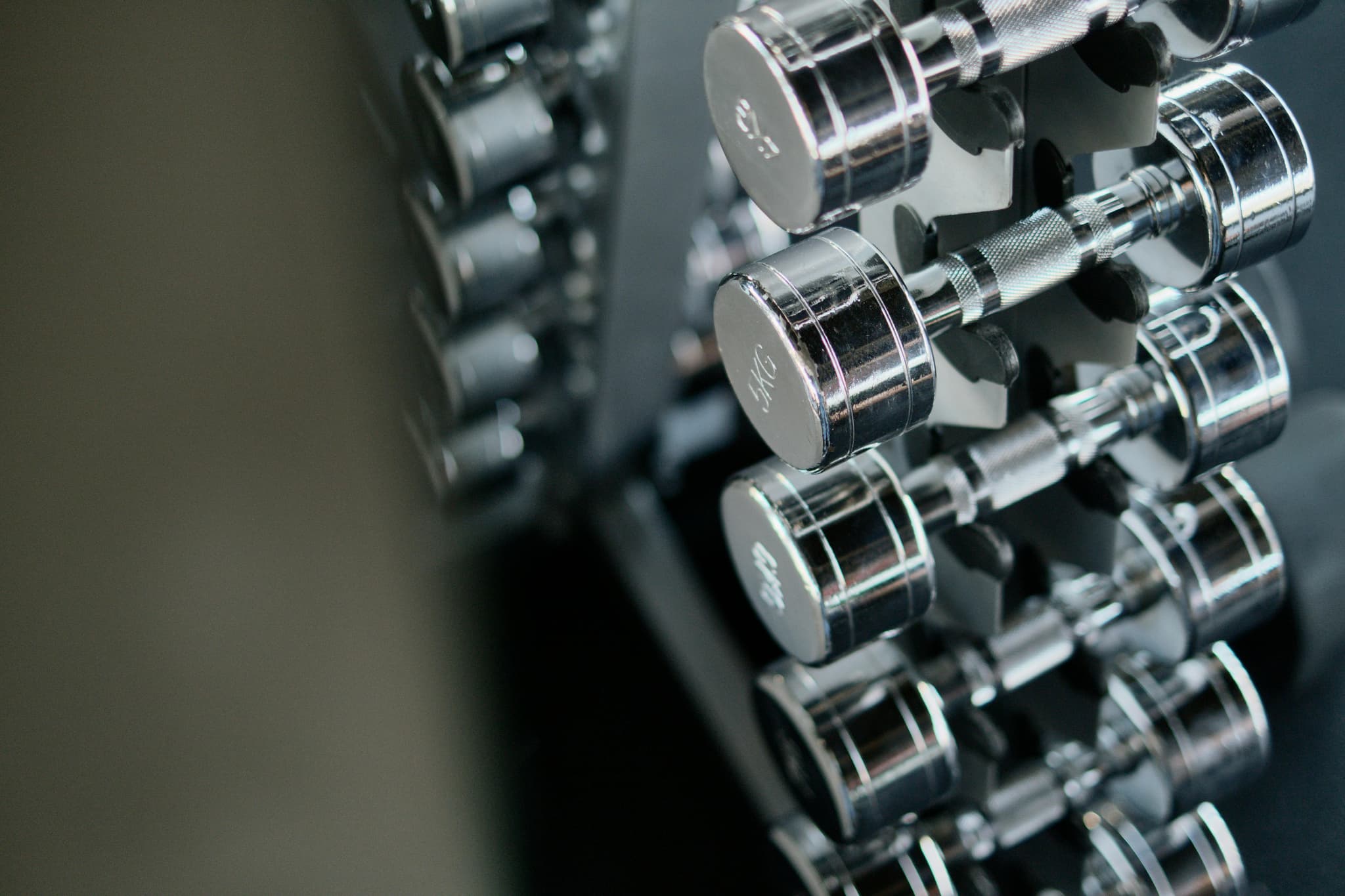
This is the usual scenario: a rack of dumbbells that tops out at 50 pounds, one cable machine, maybe a barbell with two plates. In this tier, you trade load for mechanics. Slow the eccentric down, add pauses, or switch to single-limb work to raise the demand without adding weight. This approach to resistance training traveling keeps tension high even when external load is capped.
Tier 3: Bodyweight-Only
No equipment, a room, maybe a resistance band you packed. Everything comes down to leverage, tempo, and volume instead of external load.
Once you know your tier, converting your training split while traveling takes a few simple swaps.
Converting PPL, Upper/Lower, and Bro-Splits Into a Travel-Ready Version
Every split collapses in the same direction under travel constraints: fewer sessions, more muscle groups per session, less isolation work. The conversion logic changes depending on what you're starting from. How you adjust your training split while traveling depends on which structure you're currently running.
PPL → Travel Conversion: 2 Full-Body Days or 1 Push-Pull Hybrid
A push/pull/legs split has a built-in problem on the road. Three distinct sessions require three separate blocks of recovery you don't have time for on a 4-day trip.
The fix is collapsing all three days into two full-body sessions. Day one: squat pattern, horizontal push, horizontal pull. Day two: hinge pattern, vertical push, vertical pull. That covers every movement pattern from all three PPL days in two sessions.
If you're stuck with a hotel gym that only has dumbbells and a bench, run a push-pull hybrid instead. Superset a chest press with a row, a shoulder press with a lat pulldown or band pulldown, and finish with whatever leg work the equipment allows. One hybrid session won't match three days of volume, but it covers every muscle group you'd normally hit across a full week.
Upper/Lower → Travel Conversion: Merge Into a Single Full-Body Circuit
Upper/lower splits convert easier than PPL because they're already grouped by half the body, not by movement type. Merging them just means running one upper exercise, one lower exercise, back and forth, for the whole session.
Take your upper day bench press and your lower day squat. Alternate them for 4 rounds. Then do the same with your row and your Romanian deadlift. You've built a full-body session using the exact exercises you already program, just reordered.
This is the fastest conversion of the three because you're not choosing new movements. You're resequencing ones you already trust.
Bro-Split → Travel Conversion: Cut to Priority Muscle Groups Only
Bro-splits (chest day, back day, arm day, leg day) don't survive travel intact, and trying to preserve them wastes time you don't have. A 5-day split covering five muscle groups doesn't fit into a 3-day trip with a hotel gym.
Instead, rank your muscle groups by priority (whichever ones you're actively trying to grow) and cut everything else. If legs and back are your focus, spend your two travel sessions on those and let chest, shoulders, and arms sit for a week. One missed arm day changes nothing measurably.
This split takes the most mental adjustment, because bro-split lifters are used to hitting everything weekly. Maintaining muscle while traveling means accepting that priority muscles get the attention and everything else gets maintenance volume at best.
Once you know which conversion applies to your split, the next question is how to fill each session with the right exercises for your equipment tier.
The Minimum Effective Volume to Maintain Muscle While Traveling
The stripped-down training split while traveling isn't a downgrade. Research on training volume and detraining backs it up, and the number required to hold onto muscle is lower than most lifters expect.
How many days can you go without lifting before losing muscle? Studies show you can maintain strength for weeks on minimal volume—far longer than most athletes realize.
In a study by Bickel and colleagues, lifters trained hard for 16 weeks, then moved into a 32-week maintenance phase. Young and middle-aged participants cut their volume down to just 1/9th of what they were doing before, and still held onto their strength. Older lifters, ages 60 to 75, needed more: they maintained their strength with 1/3 of their original training volume. That's eight months of near-full strength retention on a fraction of the original work, not a three-week window.
A 2019 systematic review in Sports Medicine by Androulakis-Korakakis and colleagues looked at the flip side: how little volume it takes to keep building strength, not just hold steady. Performing a single set of 6–12 repetitions with loads ranging from approximately 70–85% 1RM 2–3 times per week with high intensity of effort for 8–12 weeks can produce suboptimal, yet significant increases in SQ and BP 1RM strength in resistance-trained men. The gains were modest, but they were still gains. If that little training can push strength up, holding steady takes less.
A follow-up paper by the same research group, published in Frontiers in Sports and Active Living, applied this minimum-dose approach to competitive powerlifters specifically.
Put those together and the travel math is simple: two full-body sessions on a 4-day trip, with two or three hard sets per major muscle group each session, covers more volume than the research says you need just to hold onto your gains.
That's the number worth remembering next time you're deciding whether a hotel gym session is worth skipping.
The Re-Entry Protocol: Rebuilding Your Full Split When You Get Home
Getting home is where most lifters blow it. They walk back into the gym, load the bar to where it was two weeks ago, and wonder why their shoulder is barking by set two.
Coming back from a trip takes the same discipline you used to strip the program down in the first place. Ramp back up in stages, not in one session. Returning from your training split while traveling requires a structured re-entry plan to avoid injury and regain strength safely.
Week 1 Back: Return at 70-80% of Pre-Trip Volume
Run your full split again, but cut sets by 20-30% across the board. If you were doing 4 sets of bench, do 3. Your recovery capacity took a hit even if your strength didn't drop much. Respect that gap.
Week 2: Restore Full Split Frequency
Bring back your normal session count and muscle group frequency. Keep the loads exactly where they were in Week 1. This is a volume restoration week, not a loading week. Pushing both variables at once is how people get hurt.
When to Push Loads Again vs. When to Hold
If Week 2 felt manageable, no unusual soreness, no joint noise, push loads back to pre-trip numbers in Week 3. If anything felt off, hold another week. This staged approach mirrors a deload and progressive overload cycle, just run in reverse. If you haven't built a systematic deload into your program, fix that before your next trip.
Common Questions on Training and Traveling
How do I maintain my training split while traveling?
Pick your minimum, not your maximum. Decide before you leave which lifts you'll keep (usually a squat pattern, a hinge pattern, a push, and a pull) and commit to those regardless of what equipment shows up. The routine only survives if you stop treating it as fixed and start treating it as a floor.
Should I do a full-body workout while traveling?
Yes, in most cases. Full-body sessions let you hit every muscle group two or three times a week even if you only get to a gym twice, which matters more than which split looks best on paper. A split built around three separate body-part days falls apart the moment one travel day gets eaten by a flight delay.
How many days can you go without lifting before losing muscle?
Longer than most people think. A 2024 study in the Scandinavian Journal of Medicine & Science in Sports followed healthy, untrained adults through a full 10-week break from training. 1RM in leg press and biceps curl, muscle cross-sectional area, and jump height all decreased during that detraining period. But the strength and size lost during the break came back quickly once training resumed, and the group that took the break ended up matching the group that trained straight through. Other research cited in that same paper points to short-term breaks under four weeks as the point where losses start becoming measurable. A missed week here and there isn't the threat, months of total shutdown is.
What is the best flexible workout routine for travel?
A rotating full-body or upper/lower split with 2-3 sessions a week beats any split that depends on hitting five specific days in a row. Frequent travelers need a template that survives being compressed into whatever three days actually have gym access, not one that assumes a stable schedule.
Can you build muscle with just bodyweight exercises while traveling?
You can maintain muscle with bodyweight work, and even build a little if you're relatively untrained or add tempo and pause reps to increase difficulty. A 2011 study by Bickel and colleagues, published in Medicine & Science in Sports & Exercise, found that after 16 weeks of resistance training, cutting the training volume down to as little as one-third or even one-ninth still maintained or improved participants' strength and muscle mass. Bodyweight circuits can hit that kind of reduced volume easily. Building new size on bodyweight alone gets harder once you're already fairly strong.
How do I adjust my workout when I don't have access to a gym?
Drop to a per-exercise minimum. Related research on minimum-dose training, published in the Journal of Strength and Conditioning Research, backs the general idea that a sharply reduced volume can preserve strength for a stretch of time. Build your no-gym day around bodyweight or band versions of your main patterns and hit a solid set count for each pattern before you worry about anything else.
The Bottom Line
A training split while traveling doesn't mean your program is falling apart. It means you converted it on purpose, using trip length and equipment tier as your inputs. Lifters who stay consistent on the road aren't improvising in a hotel gym at 6 a.m. They decided their conversion before they packed a bag.
So do that now. Pull up your next trip. How many days? What equipment tier are you walking into? Which four lifts are your non-negotiable floor? Answer that before you leave, not after you're standing in front of a dumbbell rack that tops out at 50 pounds.
Then plan the part most people skip: re-entry. Ramp load back up over your first week or two home instead of loading the bar where you left it. Surviving the trip is the easy part. The real skill is coming home without setting yourself back further than the travel already did.