
Romanian Deadlift Glute Strength: 4-Week Program
Most lifters never feel RDLs in their glutes — and it's not a weight problem. Learn the mechanics fix, the science behind glute activation, and a 4-week program built for real posterior chain results.
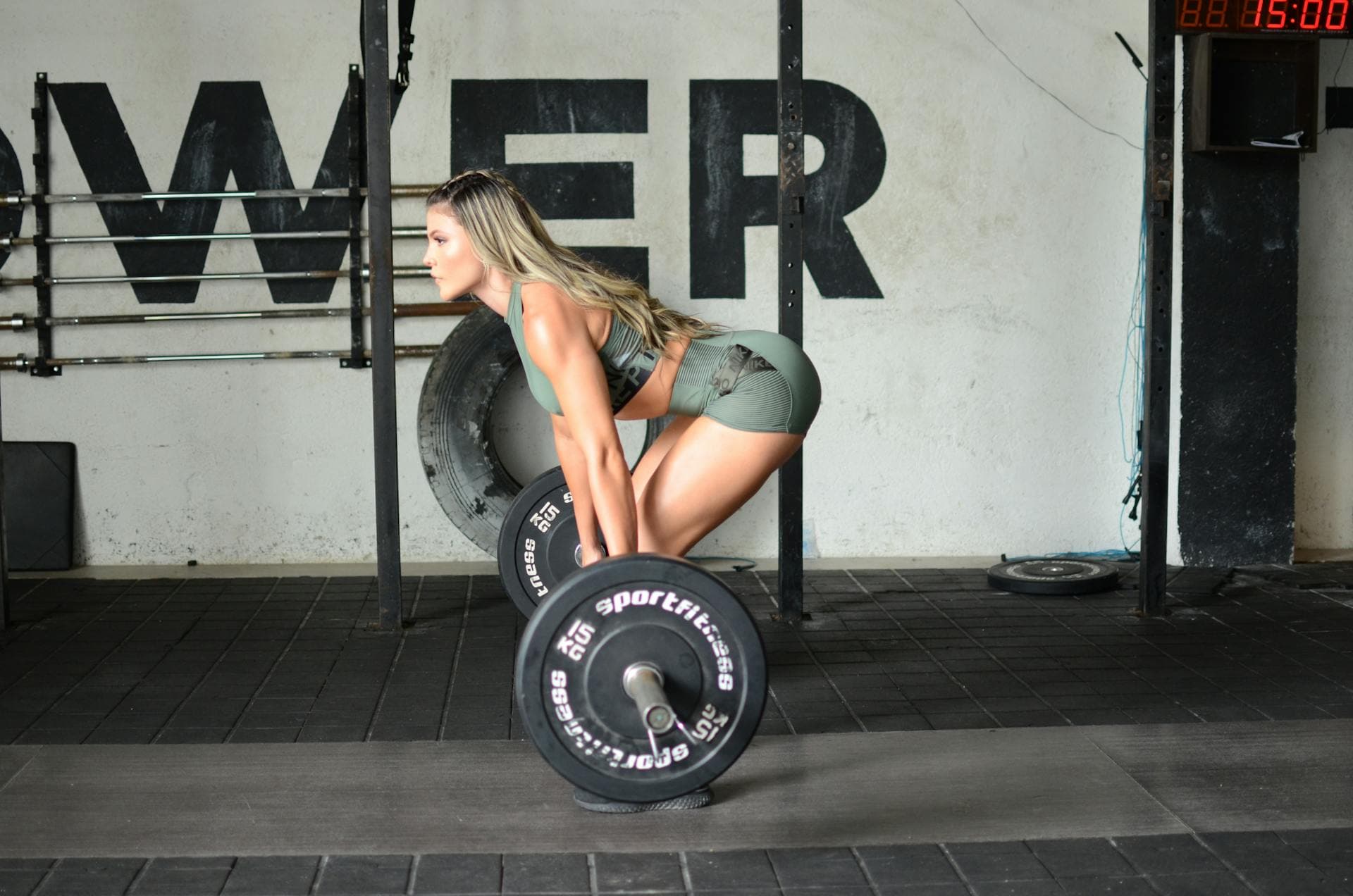
The Romanian deadlift is an effective tool for posterior chain development, but only if you're loading the right muscles. Most lifters include RDLs in their program and walk away feeling it entirely in their hamstrings or lower back. That's not a form failure. It's a mechanics misunderstanding, and it comes down to two variables: pelvic position and hip push-back depth.
This program is built around Romanian deadlift glute strength, not general posterior chain fatigue. Those two things are not the same, and training them as if they are is exactly why most RDL programs underdeliver on glute development.
What follows is the mechanical fix, a technique upgrade backed by EMG research, and a concrete 4-week progressive program designed to shift load where it belongs. You'll understand why the RDL so often misses the glutes, what the science says about posterior chain activation, and how to correct it with precision, not guesswork.
Why You're Not Building Romanian Deadlift Glute Strength the Way You Should
If you've ever walked away from a set of RDLs feeling it entirely in your hamstrings or lower back, you're not alone. That's not a load problem or a volume problem. It's a mechanics problem, and it starts before the bar even moves.
Pelvic Position Dictates Which Muscle Gets Loaded
Most lifters wondering why they don't feel RDLs in their glutes are unknowingly performing the movement in posterior pelvic tilt. When your pelvis tucks under as you hinge, the glutes lose their stretch-tension relationship, and the hamstrings take over as the primary mover.
Glute-focused deadlifts require an anteriorly tilted pelvis throughout the entire range of motion. That means maintaining a neutral to slightly arched lumbar spine, not a flattened one. Research supports this: a 2020 systematic review by Martín-Fuentes et al., published in PLOS ONE, analyzed EMG activity across deadlift variations and found that technique and exercise selection both determine which muscles are most activated, with erector spinae and quadriceps generally outpacing gluteus maximus and biceps femoris across deadlift styles.
The Hip Push-Back Mechanic Most Lifters Skip
The second breakdown happens at the initiation of the hinge. Most people begin the Romanian deadlift by bending forward at the waist rather than driving the hips backward. That distinction changes everything.
When you initiate by pushing your hips back toward the wall behind you, you load the posterior chain from the hip joint outward. The glutes and hamstrings lengthen under tension simultaneously, but the glutes carry a greater share of that eccentric load when the pelvis stays neutral and the hips lead the movement.
Get both of these right, and the RDL stops being a hamstring stretch with a barbell and becomes a legitimate tool for building posterior chain strength from the hip down.
What the Science Says About Romanian Deadlift Glute Strength and Posterior Chain Activation
The RDL Is Hamstring-Dominant — Here's What That Means for Glute Training
EMG research confirms what most experienced lifters already suspect. A 2020 systematic review by Martín-Fuentes et al. found that the Romanian deadlift produces greater biceps femoris and semitendinosus activation than other deadlift variants, with gluteus maximus playing a supporting rather than primary role. That's not a design flaw. It's a variable you can engineer around once you understand it.
The glutes do contribute, particularly at hip lockout. But without intentional cues, load management, and setup adjustments, the hamstrings will absorb the majority of the stimulus. Romanian deadlift glute strength development is achievable, just not automatic.
How to Feel Romanian Deadlifts More in Your Glutes
To maximize glute-focused deadlifts and shift activation toward the gluteus maximus:
Elevate your torso angle
— Start with a higher hip position (knees slightly bent) to reduce hamstring pre-stretch and bias the glutes at lockout
Cue hip drive, not knee extension
— Think "push hips forward" rather than "stand up" to prioritize glute recruitment over hamstring dominance
Pause at lockout
— A 1–2 second hold forces sustained glute maximus contraction when the hip extensors are fully shortened
Load the eccentric
— Control the descent over 3–4 seconds to extend time under tension in the posterior chain, a key driver of hypertrophy
RDL vs. Conventional Deadlift: Glute Activation at a Glance
The conventional deadlift recruits the gluteus maximus more aggressively, largely because the hip angle at the start of the pull demands greater extensor force to break the bar from the floor. Research comparing the two movements found significantly greater normalized gluteus maximus activation in the conventional deadlift, supporting its advantage for direct glute training.
Where the RDL earns its place is in eccentric loading and time under tension through the posterior chain, qualities that matter for hypertrophy when the program is structured correctly.
That distinction shapes everything about the four-week approach ahead, specifically which variables get manipulated and why.
How do I feel Romanian deadlifts more in my glutes?
To maximize glute activation during Romanian deadlift glute strength work, you need to shift movement intent and execution, not just load. Small cue adjustments can shift gluteus maximus recruitment significantly—the difference between a hamstring-dominant pull and a genuinely glute-focused RDL comes down to how you position your hips and manage the eccentric phase.
Push the floor away at the top.
Drive through your heels and squeeze your glutes hard at lockout on every rep.
Hinge deeper through the hips.
Let your hips travel back first, not down—this maximizes posterior chain engagement.
Slow the eccentric down.
A 3-second lowering phase increases time under tension in the stretched position where glutes are loaded.
Keep the bar close.
Drifting the bar forward shifts load off your posterior chain entirely.
Think "spread the floor" with your feet.
This external rotation cue pre-activates glute max before the pull begins.
Apply these cues before adding load to your RDL glutes work.
How to Do Romanian Deadlifts: Three Form Cues That Shift Load to the Glutes
Most lifters trying to figure out how to do Romanian deadlifts correctly end up buried in a 10-step checklist that addresses everything except what actually matters. Three precise adjustments will do more for your RDL glutes than a perfect setup ritual ever will.
Cue 1: Push the Floor Away, Not the Bar Down
On the concentric, think about driving the floor away from you rather than pulling upright. This subtle shift keeps your posterior chain loaded instead of letting your quads take over as your torso rises. Your glutes have to work harder to extend the hip when the intent is grounded through the feet.
Cue 2: Find Your Neutral Pelvis Before You Hinge
Before any descent, set your pelvis. A slight anterior tilt, not an exaggerated arch, positions the glutes for maximal stretch and loading. If you hinge from a posteriorly tilted pelvis, the glutes are already shortened and passive before the movement begins.
Cue 3: Control the Eccentric — Don't Just Reach
Lowering with control forces the glutes to resist hip flexion rather than simply yield to gravity. Most lifters rush the descent, which converts an active glute stretch into a passive hamstring hang. A 3-to-4-count eccentric changes what you feel within the first rep.
Execute all three together and the Romanian deadlift becomes a completely different exercise for building glute strength. That's when the glute work becomes undeniable.
The Technique Upgrade: Deficit RDLs for Greater Glute Activation
By Weeks 3 and 4, standard RDL glutes work should feel controlled and deliberate. That's when a deficit variation earns its place in the program.
Why More Range of Motion Changes the Glute Stimulus
Standing on a 2–4 inch platform allows a deeper hip hinge before the bar reaches the floor, extending the range of motion and placing the glutes under load at a longer muscle length. This extended loading pattern is a key driver of glute-focused deadlifts and posterior chain exercises that demand strength through a full range.
Dr. Jordan Shallow's work on pelvic positioning adds nuance here. A neutral pelvis preferentially recruits the glutes. A subtle anterior tilt shifts emphasis toward the hamstrings. A greater anterior tilt loads the adductors. More range of motion only pays off if pelvic control holds throughout the deeper descent.
How to Set Up a Deficit RDL Safely
Use a weight plate or a low, stable platform. Keep the setup identical to your standard RDL: soft knee bend, neutral spine, bar staying close to the body. The deficit increases demand on hip mobility, so reduce load by 10–15% when you first introduce it.
If your lower back rounds at the bottom, the deficit is too deep. Reduce platform height before adding load back in.
The 4-Week Romanian Deadlift Glute Strength Program
Program Structure and Training Frequency
This block runs two RDL sessions per week, separated by at least 48 hours. Session A is your primary strength session. Session B uses lighter load and higher reps to build work capacity and reinforce movement quality. Total weekly RDL volume starts at 6 working sets in Week 1 and peaks at 10 sets in Week 3.
Use a controlled tempo throughout: 3 seconds down, a 1-second pause at the bottom, 1 second up. The eccentric is where glute length tension is highest. Own it.
Week 1: Establish Mechanics and Baseline Activation
Purpose: Build a repeatable pattern and set your baseline load.
Session | Sets x Reps | Load | Tempo |
A | 3 x 8 | 60-65% 1RM | 3-1-1 |
B | 3 x 10 | 55% 1RM | 3-1-1 |
Pelvic position is your most important variable this week. A neutral pelvis preferentially recruits the glutes during a hip hinge, a subtle anterior tilt shifts emphasis to the hamstrings, and a greater anterior tilt loads the adductors. Decide which position you're training from and stay consistent. Everything else in this block builds on that decision.
Week 2: Volume Accumulation, More Reps, Same Load
Purpose: Increase time under tension without adding weight.
Session | Sets x Reps | Load | Tempo |
A | 3 x 10 | Same as Week 1A | 3-1-1 |
B | 4 x 10 | Same as Week 1B | 3-1-1 |
Plotkin et al. (PeerJ, 2022) found that progressive overload through rep increases produces comparable hypertrophy to load-based progression, which makes this week's approach scientifically sound, not just convenient. Add no weight. The increased volume is the stimulus, and it's enough.
Week 3: Introduce the Deficit RDL
Purpose: Extend range of motion and increase glute length tension.
Session | Sets x Reps | Load | Tempo |
A (deficit) | 3 x 8 | Same as Week 1A | 3-2-1 |
B (standard) | 4 x 10 | Same as Week 1B | 3-1-1 |
Stand on a 2–4 inch platform for Session A and add a second to the bottom pause. Keep your pelvic position locked to the same neutral you established in Week 1. The added range is the training variable here, not a new technique.
Week 4: Load Intensification and Peak Week
Purpose: Drive strength adaptation with heavier loads and reduced volume.
Session | Sets x Reps | Load | Tempo |
A | 4 x 5 | 75-80% 1RM | 3-1-1 |
B | 3 x 6 | 70% 1RM | 3-1-1 |
Mechanical load is a primary driver of posterior chain hypertrophy. This week applies that directly. Reps are lower, weight is heavier, and the quality standard stays exactly the same.
How to Progress After the Block Ends
Take a deload week at 50% volume and reduced load before restarting. Begin the second cycle with Week 1 loads increased by 5–10 pounds. Across multiple four-week cycles, that simple structure compounds into meaningful Romanian deadlift glute strength without accumulating the kind of fatigue that derails progress.
Where the RDL Fits in a Complete Glute Training Stack
The debate over which exercise is "best" for glutes misses the point. The RDL, hip thrusts, and squats each stress the gluteus maximus differently, and a well-designed program uses those differences rather than picking a winner.
Are Romanian Deadlifts Better Than Hip Thrusts for Glutes?
The RDL loads the glute in a lengthened position under tension. Hip thrusts produce peak contraction force at full hip extension. These complementary loading patterns mean both exercises drive glute hypertrophy through different mechanisms: the RDL creates a stretch-mediated stimulus in the bottom position, while hip thrusts maximize force production at lockout. Run both in the same program for complete posterior chain development.
Are Romanian Deadlifts Better Than Squats for Building Glute Muscles?
Squats train the glutes, but the knee-dominant mechanics reduce the hip hinge contribution that makes posterior chain exercises like the RDL precise for glute targeting. Quad demand is high, and the glutes work in a supporting role rather than as the primary driver. The squat earns its place in a complete lower-body program, but it won't replace what the RDL does in the lengthened range.
Frequently Asked Questions
Are Romanian deadlifts good for glutes?
Yes. The Romanian deadlift is an effective glute-focused deadlift that activates the gluteus maximus, particularly as the muscle lengthens under load. A 2020 systematic review by Martín-Fuentes et al. (PLOS ONE) confirmed gluteus maximus activation during the Romanian deadlift, and that combination of length and tension is a primary driver of glute hypertrophy.
How do I feel Romanian deadlifts more in my glutes?
To maximize glute activation during Romanian deadlifts:
Hinge at the hips first.
Lead the movement with your hips moving backward, not your knees bending forward.
Maintain a neutral spine.
Keep your chest up and core braced throughout the lift.
Lower with control.
Slow the eccentric (lowering) phase to increase time under tension in the stretched position.
Feel the stretch.
Stop when you feel a strong stretch in your hamstrings and glutes—you don't need to touch the floor.
How many sets and reps should I do for Romanian deadlifts?
For strength, 3–5 sets of 4–6 reps at higher loads is appropriate. For hypertrophy, shift to 3–4 sets of 8–12 reps with deliberate eccentric control. Match the rep range to your goal, and make sure load selection actually challenges you within that range.
Can I do Romanian deadlifts every day?
No. The RDL generates significant eccentric stress on the posterior chain, and that demands real recovery time between sessions. Pushing frequency beyond three sessions per week will accumulate fatigue faster than your body can absorb and adapt to it.
The Bottom Line
Glute activation during the RDL isn't something that happens by accident, and it isn't locked to your anatomy. It's the product of correct pelvic position, deliberate movement intent, and progressive loading applied consistently over time. That's trainable. That's programmable.
Romanian deadlift glute strength doesn't come from lifting heavier or adding more sets before the mechanics are solid. It comes from making a few precise adjustments and repeating them until they become automatic.
Start Week 1 with a lighter load than feels necessary. Own your hip hinge, lock in your pelvic position, and build from there. Four weeks from now, you won't be guessing whether your glutes are working. You'll know, because you'll feel the difference between an RDL that builds posterior chain strength and one that only fatigues your hamstrings.
The adjustments are small. The consistency is what makes them matter. Start the program.
Related Articles
Dumbbell Arm Exercises for Beginners: Why Free Weights Beat Cables
Cables feel safer, but they hide the mistakes that matter most. See why dumbbell arm exercises beginners should master first build real strength, better balance, and honest form fast.
Step-Ups for Hamstrings: Box Height, Stance & Form Guide
Are step-ups actually a hamstring exercise, or just quads in disguise? Here's how box height, stance, and hip hinge decide the answer.
7 Progressive Overload Mistakes Beginners Make (and Fixes)
Stalled lifts? You might be making one of these 7 progressive overload mistakes beginners make without realizing it. Get the symptoms, causes, and exact fixes before it costs you months.