
Best Portable Gym Equipment for Travelers (With Workout Plans)
Stop guessing which gear survives a carry-on. This coach-built ranking of portable gym equipment for travelers includes weight, cost, and real workout plans for every pick.
Most portable gym equipment for travelers gets ranked by a blogger who packed a bag once and called it research. That's why your resistance bands have been sitting in your suitcase since March, unused, while you skip workouts on every trip and blame the hotel gym.
This guide ranks gear the way a coach would: by what builds strength and holds muscle when you're stuck in a hotel room with 300 square feet and zero equipment. Every pick comes with the numbers that matter: weight, cost, packed size, and what it trains, plus a real periodized plan built around it. Not a stock photo of a resistance band with "great for travel!" slapped underneath.
You'll get a full comparison table, sample workouts scaled to a weekend trip or a three-week one, and answers to the questions that determine whether this gear works or gathers dust. Here's the criteria that separates useful travel fitness equipment from expensive dead weight in your carry-on.
What Actually Makes Portable Gym Equipment Worth Packing
Most gear lists rank portable gym equipment for travelers by what fits in a suitcase. That's lazy. Weight and packability matter, sure, but if the gear doesn't produce results, you're just hauling dead space through airport security.
Here's the criteria I actually use before recommending anything.
Weight. Under 2 pounds or it doesn't make the cut. A suspension trainer or a set of bands shouldn't cost you your carry-on allowance.
Packability. Does it roll up, fold flat, or stuff into a shoe? If you need a separate bag for it, it's not travel gear. It's gym equipment you're dragging along.
Versatility. One tool, multiple muscle groups, multiple rep ranges. Gear that only trains one movement pattern isn't worth the space in your bag.
Proven training effect. This is where most lists fall apart. Anyone can photograph a resistance band on a hotel balcony. Few bother checking if the thing actually builds strength.
Take resistance bands. Dr. Jim Stoppani has written about a study, published in a 2011 issue of the Journal of Strength and Conditioning Research, in which lifters who combined elastic bands with free weights on the bench press increased their bench press strength by an average of 22 pounds over three weeks, compared with lifters using free weights alone, who increased their bench press strength by an average of 17 pounds. Five extra pounds of strength gain from adding a $15 band isn't nothing.
TRX suspension trainers have similar backing. An ACE-sponsored study set out to quantify the acute cardiovascular and metabolic responses to a single session of TRX Suspension Training, and to determine the effectiveness of an eight-week TRX Suspension Training program at improving cardiorespiratory, muscular, neuromotor and flexibility fitness, as well as positively modifying cardiometabolic risk factors. Researchers found significant increases in the 1-RM leg press, 1-RM bench press and the curl-up and push-up tests, indicating a positive effect on muscular strength and endurance, along with significant decreases in waist circumference, body-fat percentage and resting diastolic and systolic blood pressure after the eight weeks.
No product below skips that filter. The lightweight gym gear and travel fitness equipment that follow all meet these standards.
Best Portable Gym Equipment for Travelers: The Ranked List
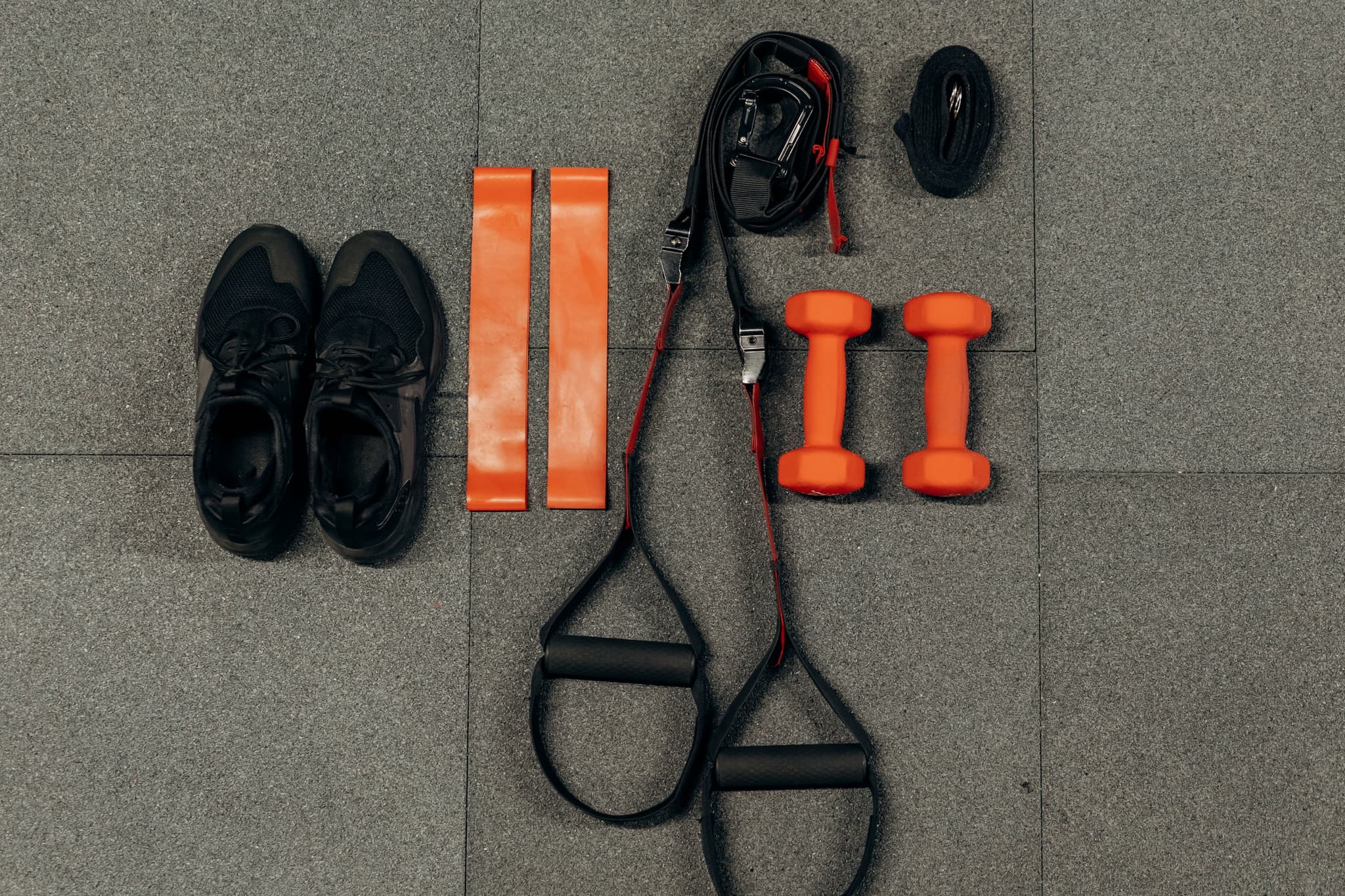
Resistance bands: Full-body strength training that weighs less than your phone charger. No gym, no dumbbells required.
Suspension trainer (think TRX): Loop it over a door, a tree branch, or a stair railing, and your own bodyweight becomes the resistance. Works pulls, presses, and core in one setup.
Collapsible jump rope: The fastest way to spike your heart rate in a hotel room, minus the noise complaints from downstairs.
Compact ab wheel or slider set: Small enough to pack inside a shoe, brutal enough to wreck your core in under 10 minutes.
Massage ball or mini foam roller: Keeps your muscles working after a 12-hour flight or three days of hiking. Fits in a jacket pocket.
Portable pull-up bar: Mounts in a doorframe with no drilling, and turns any Airbnb into a back-and-biceps station.
That's the list. Now let's get into why each one earned its spot, and what it doesn't do well.
Portable Gym Equipment Comparison Table
Reading gear reviews one at a time is slow. If you just want to know what to pack for your next trip, this table lays out the best portable gym equipment for travelers side by side: weight, cost, packed size, and what it actually trains. Use it to make a call in under a minute.
Equipment | Weight | Price Range | Packed Size | Best Trip Type | Muscle Groups Trained |
Resistance bands | 4-8 oz | $15-$40 | Fits in a shoe | Any trip, carry-on only | Full body |
Suspension trainer | 1-2 lbs | $30-$150 | Small stuff sack | Business trips with hotel gyms nearby | Full body, core-heavy |
Adjustable ankle/wrist weights | 1-3 lbs each | $20-$50 | Rolls into a duffel | Long-term travel, digital nomad setups | Legs, glutes, arms |
Jump rope | 6-10 oz | $10-$25 | Fits in a pocket | Short trips, quick cardio needs | Cardio, calves, shoulders |
Portable pull-up bar | 2-5 lbs | $30-$80 | Fits in a backpack | Road trips, extended stays | Back, biceps, grip |
Once you see the trade-offs laid out like this, the next question is which piece fits your itinerary and your goals.
Resistance Bands: The Backbone of Travel Fitness Equipment
Bands earn the top spot because they solve the actual problem, not the packing problem. You need progressive resistance to build or keep strength, and bands deliver it in a coil that fits in a jacket pocket. Everything else on this list is a specialty tool. Bands are the foundation of resistance bands travel kits.
What to buy: loop vs. tube bands
Loop bands (the flat rubber circles) work best for lower body exercises like glute bridges, lateral walks, and squats. Tube bands with handles work better for upper body pulls and presses because the handles let you grip through a full range of motion without the band digging into your palm. If you're only packing one, grab a set of loop bands in three resistance levels. They weigh almost nothing and cover more exercises per ounce than tubes do.
What the research actually says
Bands aren't a fallback option for when you can't get to a gym. The American College of Sports Medicine's position stand on resistance training, authored by Brad Currier and colleagues, confirms that load progression, not load source, drives strength and hypertrophy gains. A band that gets harder to stretch does the same job as a heavier dumbbell, provided you're tracking tension and progressing it over time.
Cleveland Clinic backs this up on the strength-training side. Stretching those bands works your muscles just like using free weights or weightlifting machines and offers similar strength gains while being easier on your joints. That matters for anyone training solo in a hotel room with no spotter.
Resistance band travel kits that include a door anchor turn this into a full gym. Once you've got bands sorted, the next question is what fills the gaps they leave. That's where a suspension trainer earns its spot.
TRX and Suspension Trainers: Is the Extra Weight Worth It?
Yes, if you actually use it and have a real anchor point. A suspension trainer earns its 2 pounds because training that uses your own body weight at an angle produces real strength and core stability gains that resistance bands alone don't match. For travelers, suspension trainers rank among the best portable gym equipment options when anchor points are available.
The research backs this up. ACE Fitness commissioned Dr. Lance Dalleck's team at Western Colorado University to test an eight-week TRX Suspension Training program. Participants completed three 60-minute sessions per week, for a total of 24 sessions.
The results showed significant increases in the 1-RM leg press, 1-RM bench press, and curl-up and push-up tests, indicating a positive effect on muscular strength and endurance. A separate controlled clinical trial on elderly men with sarcopenia found similar payoffs after eight weeks of TRX training. The training had a significant effect on functional tests, improving gait speed, chair stand, and timed up-and-go performance, as well as handgrip strength. These aren't infomercial claims. They're peer-reviewed results from a strap you can stuff in a duffel bag.
Here's the tradeoff nobody mentions in the glowing reviews. Setup takes time, usually 2 to 3 minutes if you've done it before, longer if you're fumbling with a door anchor in a hotel room with hollow-core doors that won't hold weight. You need a real anchor point. Bands work anywhere. A TRX needs a solid door frame, a pull-up bar, a tree branch, or a stair railing rated for your body weight. Miss that requirement and you've packed dead weight.
Who Should Pack a Suspension Trainer
Pack a suspension trainer if your trips involve hotels with sturdy doors or destinations with trees and railings, and if you're training for strength and stability rather than just maintenance. Skip it for weekend trips or anywhere you're unsure about anchor access; a hostel bunk room won't cut it. If you're already running a band-based routine and want to add pulling and core work without adding much pack weight, this is the one specialty tool worth the extra ounces.
The Supporting Cast: Jump Ropes, Sliders, and Recovery Tools
Bands and a suspension trainer cover strength. They don't touch conditioning, rotational core work, or getting your muscles to actually recover after three flights in a week. This portable workout equipment fills those real gaps instead of just padding your bag.
When a jump rope earns its space in your bag
A jump rope is the only piece of gear here that trains your heart and lungs, not just your muscles. Ten minutes of intervals can push your heart rate into zone 4, roughly 80 to 90 percent of max heart rate, faster than any bodyweight circuit you can run in a hotel room.
Ceiling height and floor surface are the real limits. Carpet kills the bounce, and a room with a 7-foot ceiling will clip the fixtures if you're turning a rope at any real speed; most jump rope brands recommend at least 8 to 9 feet of clearance. Pack a speed rope, not a weighted one. It packs down to nothing, and the extra rotational speed matters more than added resistance when your goal is heart rate, not arm fatigue.
Sliders: cheap core and glute work with zero setup
Sliders solve a problem bands can't: frictionless, multi-planar core and glute work. Mountain climbers, curtsy lunges, and hamstring curls on sliders hit stabilizer muscles that a resistance band curl never touches.
They weigh almost nothing and cost less than a hotel breakfast. Two furniture coasters or a pair of socks on hardwood do the job in a pinch, so don't overpay for branded ones.
Foam roller vs. massage ball for recovery on the road
Skip the full-size foam roller. A mini roller or a lacrosse ball gets into the same tissue with a fraction of the packed volume. For most travelers, a $6 ball outperforms a bulky roller on hip flexors and feet after a long flight.
None of this replaces the bands or the suspension trainer that build strength. It handles the cardio, rotational core work, and recovery those tools skip.
From Gear to Program: Turning Portable Gym Equipment Into Real Training
Buying a set of bands and a suspension trainer doesn't make you a stronger lifter. It makes you someone with bands and a suspension trainer sitting in a hotel drawer. The gap between owning gear and getting results is a plan. That's the missing piece in most portable gym equipment for travelers: gear with no plan attached.
Dr. Jim Stoppani's review of the research found that athletes who included elastic-resistance bench-press training in their regimens had a significantly greater increase in bench-press strength and power on average compared to those who only utilized free-weight training. A separate study on beginner lifters found similar results: subjects who added bands to their bench press increased their strength gains by 5 pounds more than when they used free weights alone, a difference of 30%.
That's a real result. But it only shows up when tension increases week to week, not when you loop a band around a doorframe and bang out random reps until your flight boards.
Why Band Tension Makes Progress Tracking Harder
Dumbbells tell you exactly what you lifted. A band tells you nothing unless you're tracking anchor point, stretch length, and band color changes over time. Most travelers skip this entirely, which is why band-only routines stall out after a few weeks. You need a system logging that tension, not guesswork.
How Periodized Programming Solves the "No Progressive Overload" Problem
An eight-week ACE-sponsored study led by Dr. Lance Dalleck set out to determine the effectiveness of an 8-week TRX Suspension Training program at improving cardiorespiratory, muscular, neuromotor, and flexibility fitness and positively modifying cardiometabolic risk factors.
The study found significant increases in the 1-RM leg press, 1-RM bench press and the curl-up and push-up tests, indicating a positive effect on muscular strength and endurance.
Participants also saw significant decreases in waist circumference, body-fat percentage, and resting diastolic and systolic blood pressure, all from suspension work alone.
This study worked because the training was periodized, not improvised. That structure is what SHRED's app builds around your lightweight gym gear automatically.
Sample Travel Workout Plans by Trip Length
A plan tells you what to do on day three when the hotel gym is a treadmill and a broken rowing machine. Here's how to scale your portable gym equipment for travelers to your actual trip length.
Weekend trip (2-3 days): band-only full-body circuit
Two days doesn't justify unpacking a suspension trainer. Grab your resistance bands travel gear and run this circuit three rounds, with minimal rest between exercises and 60 seconds between rounds:
Band squats (15 reps), band rows (12 reps), band chest press (12 reps), band deadlifts (15 reps), band pallof press (10 reps per side). Twenty-five minutes, done. Do it once on arrival day to shake off the flight, once before you leave.
One-week business trip: band + TRX 4-day split
A week gives you room for an actual split. Upper body pull and push on Monday and Wednesday, lower body and core on Tuesday and Thursday, using bands for loaded work and the TRX for rows, presses, and single-leg stability drills. Four sessions of 35-40 minutes beat one heroic two-hour gym crawl that wrecks your schedule for the rest of the trip.
Keep sets in the 8-15 rep range and add a band or shorten the strap for progression since you can't add plates.
Extended travel (2+ weeks): progressive periodized plan with tracking
Two weeks or more means you need periodization, not repetition. Week one, build volume with higher reps and shorter rest. Week two, shift toward strength with fewer reps, harder band tension, and longer rest between sets. If you're gone a month, cycle in a deload week where you cut volume by 30 percent to avoid burning out on a trip that already has enough stress in it.
Log every session in a training app so you know what band tension you used last Tuesday and whether your TRX rows actually got harder. Skip the log and you're just moving through the motions without any way to tell if it's working. Use an app-based tracker to record your workouts, band resistance levels, and progression—this keeps you accountable and shows whether your lightweight gym gear is actually delivering results across your trip.
How to Stay Fit While Traveling Without a Gym
Skip the hunt for a hotel gym with two treadmills and a dusty kettlebell. Consistency beats access every time. Twenty minutes in your room beats a 45-minute trip to a gym you'll skip after day two.
Set a floor you'll actually hit, not a fantasy routine you'll abandon by Wednesday. On travel days themselves, drop the workout entirely rather than squeezing it in at 11 p.m. after a delayed flight.
Pick a minimum dose (15–20 minutes, 3–4 times a week) and protect it like a meeting
Train in whatever space exists: foot of the bed, hallway, hotel courtyard
Adjust for time zones by training in the morning before your schedule fills up
Treat travel days as rest days, not missed workouts
The gear matters less than the habit around it. Portable gym equipment for travelers works best when you commit to a routine first, then choose your tools—whether that's resistance bands, a suspension trainer, or just bodyweight.
FAQs About Portable Gym Equipment for Travelers
Can you build muscle with resistance bands?
Yes. The 2026 ACSM Position Stand shows bodyweight progressions and resistance bands hit the same prescription variables as a fully equipped gym: load relative to capacity, weekly volume, full range of motion, and sufficient effort.
That position stand, from Currier and colleagues in Medicine and Science in Sports and Exercise, pooled 137 systematic reviews covering more than 30,000 participants, so the finding carries real weight.
Progression still decides the outcome. Track band tension, rep ranges, and time under tension the same way you'd track plates on a barbell. Loop a band around a doorframe and call it a workout, and you'll stall out fast.
What exercise equipment can I bring on a plane?
Resistance bands, a suspension trainer, a jump rope, and sliders pack flat and clear security without a second look. TSA does not list resistance bands as prohibited items, and bands fall under general personal effects, explicitly permitted in both carry-on and checked baggage.
Gear with a rigid handle or metal parts is a different story. The larger and heavier an item is, the more likely a screening officer is to object to it, even when that category of item is technically allowed. Grip trainers with steel bars or weighted vests with metal plates fall into that gray zone and can draw extra screening. Stick to fabric, rubber, and nylon gear and you'll skip the conversation with TSA entirely.
What is the lightest portable gym equipment?
Flat resistance bands win this one. A full set rolls up smaller than a pair of socks and adds almost nothing to your bag.
A suspension trainer adds maybe a pound but still folds into a jacket pocket, which beats hauling a single 15-pound dumbbell through an airport. If pack weight is your main concern, lightweight gym gear like bands beats every other strength tool on this list, and it isn't close.
The Bottom Line
Resistance bands and a suspension trainer cover almost every trip you take. That's the ranking, and it's not close. Ranking gear is the easy part. The hard part, the part that actually changes your body, is showing up with a plan and adding difficulty week over week, whether you're in a hotel room or your home gym. Portable gym equipment for travelers only works if you treat it like equipment, not decoration for your suitcase. A band without a program is a rubber band. A band with progressive overload built into a real routine is how you keep strength through a month of layovers.
If you want that structure without building it yourself, SHRED's app lets you tap the equipment you have—dumbbells, barbell, bands, or bodyweight only—and the workout rebuilds in one tap, so you know exactly what to do with the lightweight gym gear you're already packing. Grab your bands, open the app, and stop guessing.