
Fitness Accountability Partner: Boost Your Lifts Faster
Stalled lifts aren't a motivation problem, they're an accountability problem. Learn how a fitness accountability partner enforces progressive overload and keeps your strength training on track.
You've been hitting the same bench press weight for three months, you've swapped programs twice since then, and you still can't put your finger on why progress stopped. A fitness accountability partner is what most lifters in that position are missing, and it's not the piece they think to look for. The problem isn't motivation. You're still showing up. The problem is that no one is enforcing your program, catching the skipped progression, or flagging the moment you quietly downgraded the plan because the weights got hard. Without that external constraint, even well-designed training programs fall apart. A training partner who spots you is not the same thing. What structured strength training actually demands is someone tracking loads, calling out deviations, and keeping progressive overload on schedule. That's a different role entirely. What follows breaks down exactly how a fitness accountability partner functions in a real strength training context, what the research says, and how to find one who can actually move your numbers.
What Is a Fitness Accountability Partner
A fitness accountability partner is a designated person who actively monitors your training commitments, tracks measurable progress markers, and applies social pressure to keep you executing your program as written. In strength training, that means someone focused on your loads, your logged sets, and your adherence to a structured plan, not just your mood on Monday morning.
5 Ways a Fitness Accountability Partner Accelerates Strength Training Progress
Enforces progressive overload. The NSCA confirms that consistent load increments disrupt homeostasis and drive adaptation. Your partner holds you to that standard rep by rep.
Flags missed sessions before they become missed weeks. One skipped day rarely kills progress. A pattern does.
Reviews program checkpoints. They help you evaluate whether you hit your deload targets, volume landmarks, or rep PRs on schedule.
Keeps your training log honest. Research on fitness tracking shows people who log consistently are more likely to maintain their programs long-term.
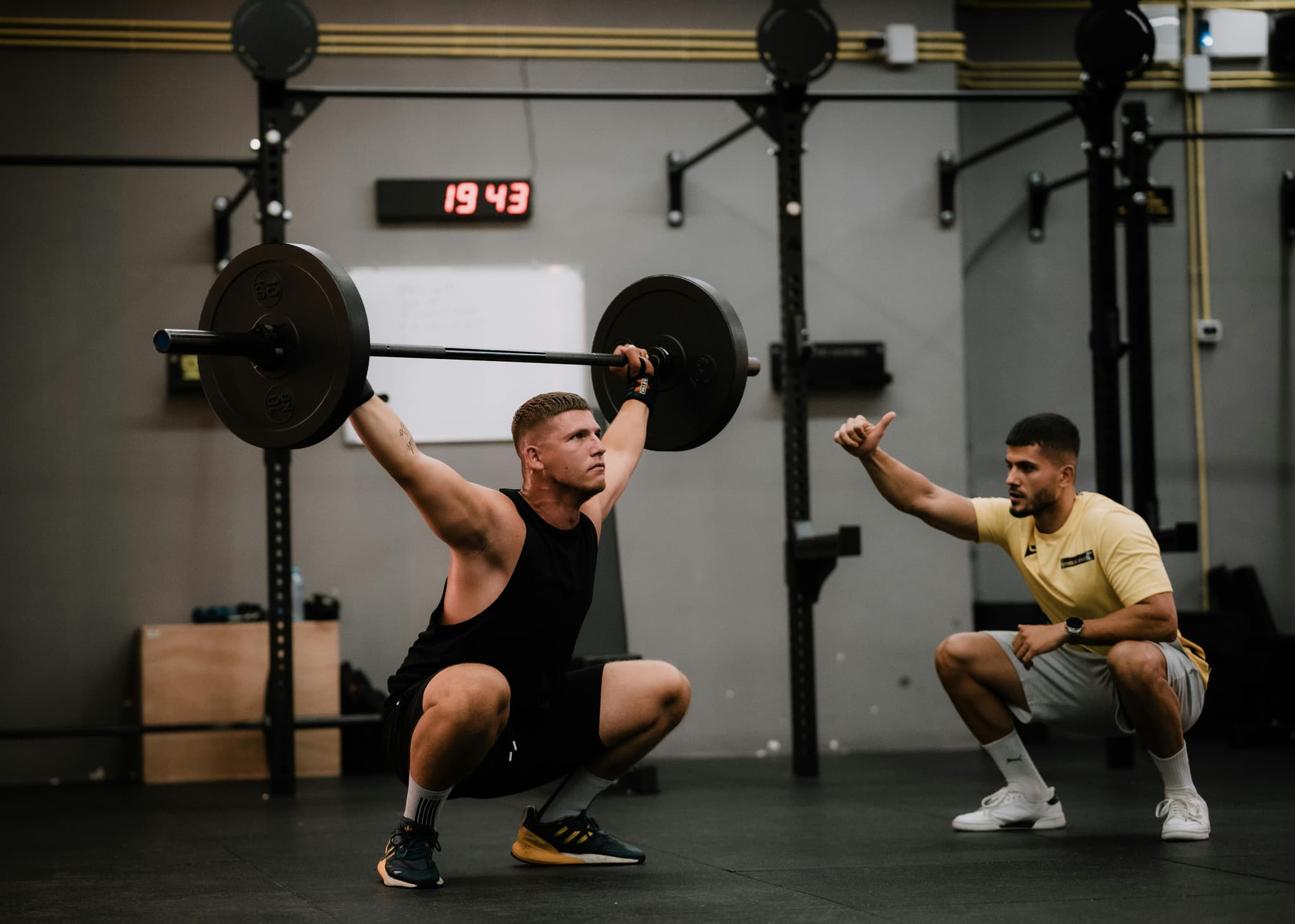
Provides real-time form and load feedback. Not cheerleading. Correction.
A systematic review on resistance training adherence found that partner-based formats, combined with goal setting and self-monitoring, measurably improve program compliance. Compliance, not motivation, is what builds a bigger squat.
Why a Fitness Accountability Partner Makes Progressive Overload Non-Negotiable
Progressive overload isn't a suggestion. It's the governing principle of every effective resistance training program, and it demands one thing above all else: consistency in applying increased load over time.
The Biology Behind Why You Need Someone Watching Your Load Progression
The NSCA is clear on this. Consistent increments in training load disrupt homeostasis, which triggers the physiological adaptations that actually move the needle on strength and muscle. Miss that disruption signal, and your body has no reason to change. A skipped session or a week of lifting the same weight isn't just a minor setback. It's a failed adaptation cue, and enough of them stall progress entirely.
That's where a fitness accountability partner becomes a training tool, not a morale boost. Someone tracking your loads week to week catches the stall before it becomes a plateau.
How Accountability Enforces Your Program When Motivation Doesn't
Motivation fluctuates. Your program doesn't care. Your training is built on load progressions that need to happen on schedule, and a systematic review on resistance training adherence found that partner-based formats, alongside self-monitoring and goal setting, positively influence long-term program adherence. An accountability partner for fitness enforces the structure your program requires, especially on the days you'd quietly drop five pounds off the bar and call it good enough.
Workout Buddy vs. Fitness Accountability Partner: Why the Difference Matters
A fitness accountability partner and a workout buddy sound interchangeable, but they're not, and that confusion is exactly why most informal gym partnerships fall apart within weeks.
What a Workout Buddy Does (And Where It Stops)
A workout buddy shows up, spots you on bench, and keeps the session from feeling like a solo grind. That has real value. One peer-reviewed study found that 95% of people who started a fitness program with a friend completed it, compared to 76% who trained alone. Company moves the needle.
But a workout buddy isn't tracking your rep progression. They're not flagging that your squat volume dropped off two weeks ago. When life gets in the way, there's no scheduled check-in to push through it.
What an Accountability Partner for Fitness Is Actually Responsible For
An accountability partner for fitness operates with a defined scope. They monitor your program variables, compare logged sessions against your targets, and hold scheduled check-ins that don't get cancelled because someone had a long day at work.
The structure is the point. Informal gym partnerships fail lifters on structured programs because they rely on proximity and mood rather than process. If your accountability structure has no mechanism for catching regression or enforcing follow-through, it's just companionship.
Companionship is fine. It's not the same as accountability.
What the Data Actually Says About Accountability and Strength Training Outcomes
The case for training with a fitness accountability partner isn't built on motivation theory or locker room wisdom. It's built on numbers. And those numbers point in one clear direction.
Adherence Numbers That Should Change How You Structure Your Training
A systematic review published via ResearchGate examined the factors that most reliably drive adherence to resistance training programs. Partner-based and group training formats, combined with self-monitoring, feedback, and goal setting, consistently produced positive adherence outcomes across the studies analyzed. That combination isn't coincidental. It's a system, and it mirrors exactly what a structured accountability relationship provides.
Research from structured exercise programs suggests that participants with defined accountability frameworks may see meaningful improvements in training consistency compared to those training without them, though effect sizes vary depending on program design. Treat those figures as directional, not definitive.
Why Logging Your Lifts Is Part of the Accountability Equation
Fitness accountability doesn't live only in the relationship between two people. It also lives in the data you generate. People who consistently log their workouts are more likely to stick with their training programs long-term. That's not a minor edge. That's a structural advantage.
Logging creates a record your accountability partner for fitness can actually use. Without it, accountability conversations are vague. With it, they're specific, and specific is what drives load progression.
The research, taken together, gives you a framework: pair up, set goals, and track everything. That combination outperforms effort alone.
What to Actually Look for in a Fitness Accountability Partner
Most advice on finding a fitness accountability partner defaults to "find someone positive and supportive." That's not wrong, but it's not enough for structured strength training. The criteria that actually matter are operational, not emotional.
Non-Negotiables for a Lifting-Focused Accountability Partner
Your partner needs to understand, or be willing to learn, basic program structure. That means recognizing why you're pulling back during a deload week instead of assuming you've gone soft. They need to engage with your actual data, sets, reps, loads, not just ask how you're "feeling" about training.
Scheduling alignment matters more than most people admit. A check-in partner who's unavailable during your training window, or who ghosts you during key programming phases, creates more friction than accountability. Your accountability partner should reinforce consistent logging habits, not replace them.
Red Flags That Signal a Poor Fit for Structured Strength Programs
If someone discourages you from tracking loads because it "takes the fun out of it," that's a fundamental mismatch. The same goes for anyone who prioritizes how hard a session felt over whether it matched your prescribed variables.
The right partner doesn't just check in. They hold you to the specifics of what you wrote down.
How to Find a Fitness Accountability Partner
In-Person Options: Who in Your Gym Is Actually Worth Approaching
Look for lifters who run structured programs, not people who drift between machines without a plan. The person logging sets in a notebook or tracking lifts on an app is a better candidate than someone who does whatever feels good that day. Approach them between sets, be direct about what you're looking for, and frame it as a mutual exchange.
Online Communities and Apps Built for Serious Lifters
Reddit's r/powerlifting and r/weightroom communities have threads specifically for finding an accountability partner for fitness and connecting with accountability check-in groups. Discord servers tied to specific programs, like GZCL or 5/3/1-based communities, connect you with lifters already running structured training. Apps like SHRED combine built-in tracking with social features that make remote accountability practical rather than performative.
How Often Should You Check In with Your Accountability Partner?
Daily for session logging, weekly for program reviews. That's the framework that holds. Daily check-ins keep the self-monitoring loop tight and leave no room for quietly skipping sessions. Weekly reviews give you and your partner space to assess load progression and catch problems before they stall your training.
How SHRED Functions as a Structured Accountability Layer
Where SHRED earns its place is in the structure it wraps around your training. It enforces progressive overload logic, tracks your sets and loads over time, and gives you a clear record you can bring into any accountability conversation with a partner or coach.
If you already have an accountability partner for fitness in place, SHRED sharpens it. If you're starting from zero, it gives you the tracking foundation that makes every future accountability relationship more productive.
Quick Answers: Fitness Accountability Partner FAQs What is a fitness accountability partner?
A fitness accountability partner is someone who tracks your training commitments alongside you and holds you to them. This relationship creates external pressure that reinforces follow-through when internal motivation drops, making it distinct from a casual workout buddy. An accountability partner for fitness functions as both motivator and monitor, whether training together or remotely.
How do I find a fitness accountability partner online?
Reddit communities like r/Fitness and r/weightroom, plus Discord servers built around specific programs, are solid starting points. Be upfront about your training style and what you expect from the partnership before committing.
What's the difference between a workout buddy and an accountability partner?
A workout buddy trains with you. An accountability partner tracks whether you're doing the work, whether they're physically present or not. The overlap is real, but the function is different, and understanding this distinction helps you choose the right support structure for your goals.
How often should I check in with my accountability partner?
Weekly check-ins work for most lifters. More frequent contact can help during a new program or a rough stretch.
What should I look for in a fitness accountability partner?
Consistency, honesty, and a training approach that complements yours. Reliability matters more than enthusiasm when selecting an accountability partner for fitness.
The Bottom Line
Accountability isn't a personality trait you either have or don't. It's a system, and like any system, it needs to be built for the specific job it's doing. For structured strength training, that job is enforcing progressive overload and keeping your program intact when motivation dips, life gets busy, or the weights get heavy.
A fitness accountability partner who understands how your program is built is one of the most reliable ways to hold that structure in place. The partner has to be the right one, though, not just the closest available.
Your next step is straightforward: identify one person or one tool this week that can actively monitor your program structure, not just your attendance. If you're training without a human accountability partner for fitness who fits that criteria, SHRED is built to fill that role. It tracks what matters, flags what you're skipping, and keeps your program running the way it was written.