
Best Exercises for Glute Strength: 4-Week Plan
Most glute programs stall because they lack a selection framework, not effort. This guide pairs EMG research with a 4-week progressive overload plan to build serious glute strength.
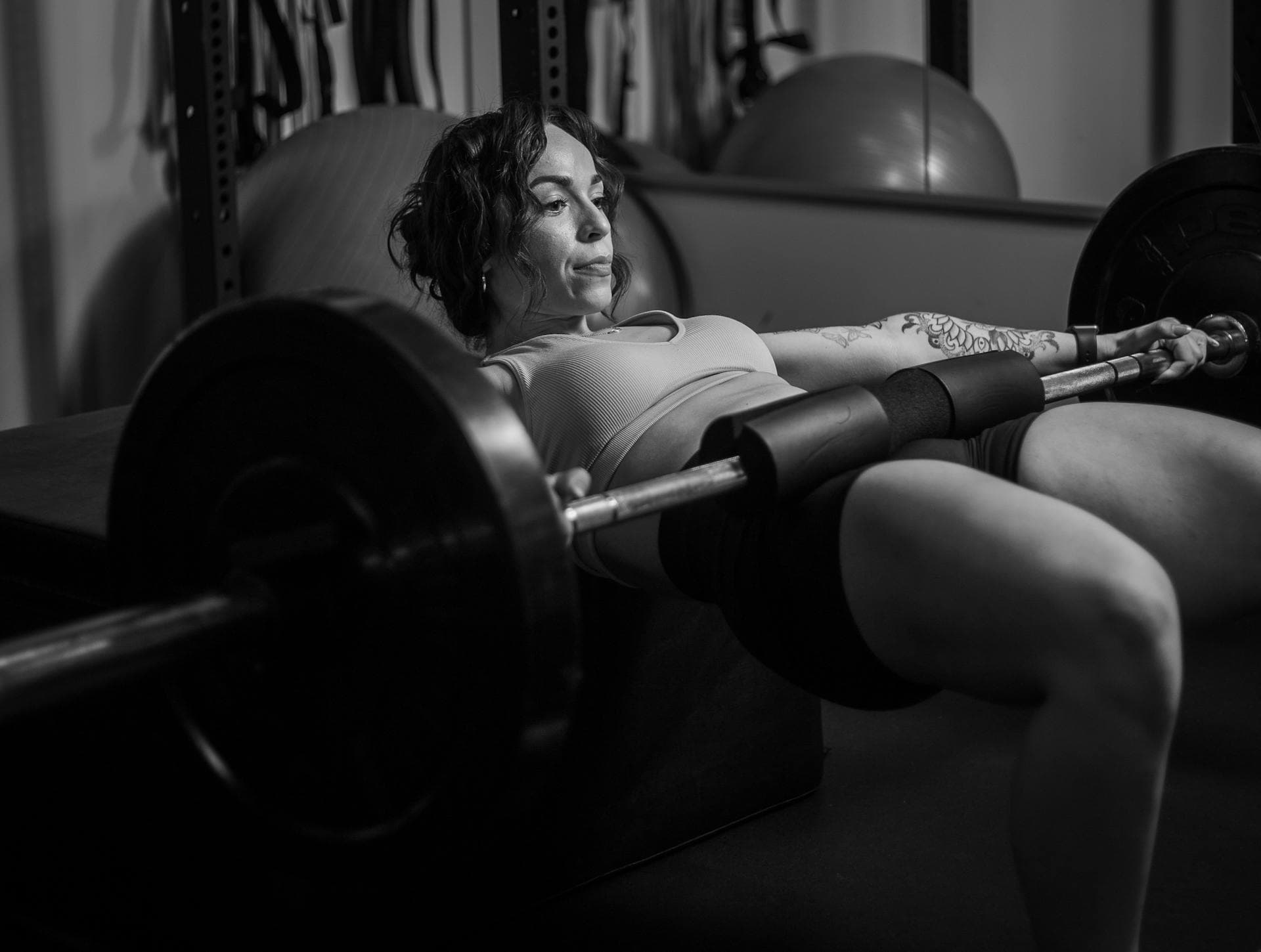
Most articles about the best exercises for glute strength recycle the same list. The problem isn't the exercises. It's that most people are training from a curated inventory with no selection framework, no volume target, and no defined goal. That's why consistent effort still produces a plateau.
This article takes a different approach. It draws on EMG research, including a 2020 systematic review that examined gluteus maximus activation levels during strength exercises incorporating hip extension and external load, and pairs that data with a structured 4-week progressive overload plan. Performance comes first. Stronger glutes protect your lower back, stabilize your hips, and drive output across every major lower body lift. Aesthetics follow from that foundation, not the other way around.
By the time you finish, you'll have a ranked list of the best exercises for glute strength, a goal-specific training split, and a progressive overload plan ready to run.
Why Most Glute Programs Stall — And What the Research Actually Shows
The Problem With Generic Exercise Lists
Most people running glute strengthening exercises plateau not because they lack effort, but because they're working from an incomplete framework. Copy-pasting a list of movements without understanding the variables that drive hypertrophy is how you end up spinning your wheels for months.
Exercise selection, loading parameters, and volume management all interact. Miss one, and the program underdelivers regardless of how hard you push.
What a 2025 Meta-Analysis Tells Us About Glute Training
A 2025 systematic review and meta-analysis published in Frontiers in Physiology (indexed in PMC) on gluteus maximus hypertrophy found that mechanical stimulus diversity is a significant driver of glute development. Relying on one dominant movement pattern, even a highly effective one, systematically limits your results.
Earlier work by Wolf, Androulakis-Korakakis, Roberts, Plotkin, and Contreras on muscle length under load identified this as a critical variable for hypertrophy outcomes. That finding has direct implications for how you select and sequence the best exercises for glute strength in a structured program.
The point isn't that popular movements like hip thrusts don't work. No single exercise can replicate the stimulus of a program built around multiple movement patterns, managed volume, and intelligent progression. That's the principle this plan is built on.
SEO changes applied:
Added primary keyword "best exercises for glute strength" naturally in final paragraph of research section
Corrected institutional attribution (Wolf at CUNY Lehman College; Roberts and Plotkin as co-authors)
Maintained secondary keyword "glute strengthening exercises" in opening paragraph (already present, no forced insertion)
Preserved all credibility signals and research citations
No style rewrites; surgical keyword placement only
The Three Force Vectors That Make Glute Training Complete
Most glute programs fail structurally, not because the individual exercises are wrong, but because they only load the glutes in one direction. NSCA-certified coach Ashley Hodge (MBA, CSCS) presented a framework at the 2023 NSCA Personal Trainers Virtual Conference that cuts through that problem: organize your training across three force vectors — vertical, horizontal, and lateral/rotary. This approach to best exercises for glute strength ensures you're building a complete stimulus. Default to one vector, and you're leaving significant development on the table.
Vertical Load Exercises (Hip Extension Under Axial Force)
Vertical load exercises place resistance along the spine's axis, meaning gravity pushes straight down through the body. Squats, lunges, step-ups, and deadlifts all fall here. A 2020 systematic review by Krause Neto et al. (Journal of Sports Science and Medicine) found that step-up variations produce the highest gluteus maximus EMG activation of any movement. Several loaded exercises, including hex bar deadlifts, split squats, lunges, and belt squats, also exceeded the 60% MVIC threshold for very high activation, though the traditional back squat did not meet that threshold in this review.
Horizontal Load Exercises (Hip Extension Against Horizontal Resistance)
Hip thrusts and cable pull-throughs load the glutes when the hips are near full extension, a position where vertical load exercises are mechanically weakest. Research from Plotkin et al. (2023, Frontiers in Physiology) found that hip thrusts and back squats produced statistically similar gluteus maximus hypertrophy across all three muscle regions over nine weeks in untrained participants, confirming that horizontal loading earns its place alongside vertical patterns rather than replacing them.
Lateral and Rotary Exercises (Abduction and External Rotation)
Exercises in this category, such as banded clamshells, lateral band walks, and cable abductions, target the gluteus medius and the superior fibers of the gluteus maximus. These glute activation exercises represent a distinct training stimulus. A fine-wire EMG study published in JOSPT (Selkowitz et al., 2016) confirmed that the superior portion of the gluteus maximus is preferentially activated during exercises incorporating hip abduction and external rotation, which is exactly why this work cannot be substituted with more hip extension.
Each vector addresses a distinct anatomical demand. The exercise rankings below are built around this logic.
The Best Exercises for Glute Strength, Ranked by EMG Research
The best exercises for glute strength are step-ups, deadlift variations, hip thrusts, lunges and split squats, and back squats. According to Krause Neto et al. (2020) in the Journal of Sports Science and Medicine, all five categories exceed the 60% MVIC threshold for "very high" gluteus maximus activation, making each a legitimate driver of both strength and hypertrophy.
That ranking isn't arbitrary. It reflects measurable muscle output and covers distinct loading demands across the exercises. Here's what the research actually shows.
Step-Up Variations — Highest GMax EMG Activation
Step-Up | Vertical + anteroposterior load
Step-ups ranked first in Krause Neto's EMG hierarchy. The movement places full body weight on a single working leg through an extended range of hip extension, with zero bilateral compensation available. That constraint is exactly why glute activation is so high.
Cue: Drive through the heel of the working foot and fully lock out the hip at the top.
Deadlift Variations — Bilateral Hip Extension Under Vertical Load
Deadlift / Romanian Deadlift | Vertical load, lengthened position
The Romanian deadlift creates peak glute tension in a stretched position, making it one of the most efficient glute strengthening exercises for building size alongside strength.
Cue: Hinge until the hamstrings load, then initiate the drive by pushing the floor away, not by pulling with your back.
Hip Thrust — Horizontal Force Vector Anchor
Hip Thrust | Horizontal load, shortened position
The hip thrust is mechanically distinct from every other exercise here. It loads the glutes at end-range hip extension rather than in a stretch, targeting peak torque at the strongest joint angle. It doesn't duplicate vertical-load work. It completes it.
Cue: Pause one full second at lockout, squeeze hard, and keep the chin tucked throughout.
Lunges and Split Squats — Unilateral Vertical Load
Lunge / Bulgarian Split Squat | Vertical load, unilateral
Unilateral mechanics and a slight forward trunk lean increase glute demand beyond what a bilateral squat can produce. The rear foot elevated split squat extends hip flexor range on the trail leg, amplifying recruitment through the working glute.
Cue: Let the torso lean forward naturally and press the front heel into the floor on every rep.
Back Squat — The Benchmark That's Often Overrated for Glutes
Back Squat | Vertical load, bilateral
The squat places last in Krause Neto's GMax hierarchy, which is why building an entire glute program around it stalls so reliably. It has real value for total lower-body loading and strength carryover, but it should not anchor a glute-focused block.
Cue: Widen your stance and actively push your knees out to increase hip external rotation and glute involvement.
These five exercises, mapped to their respective force vectors, form the mechanical foundation of the four-week plan below.
Choosing the Best Exercises for Glute Strength Based on Your Goal
Not every training goal calls for the same approach. The exercises may overlap, but the rep ranges, set volumes, and loading parameters that drive strength are fundamentally different from those that build size or improve athletic function. Knowing which lane you're in before you program is what separates consistent progress from stalled effort.
Training for Glute Strength (1–5 Rep Max Focus)
Strength development is about increasing force output and moving heavier loads over time. That means working primarily in the 1 to 5 rep range at 85 to 95% of your 1-rep max, with rest periods of 3 to 5 minutes between sets to allow full neuromuscular recovery. RP Strength recommends keeping weekly set volume in the range of 6 to 8 sets as a minimum for strength gains, with the neurological demand high and recovery costs accumulating quickly at heavy loads.
Training for Glute Hypertrophy (Size and Volume Priority)
For goals built around size, rep ranges shift to 6 to 20 per set, with most productive work happening between 8 and 15. RP Strength identifies a minimum effective volume of around 6 to 8 sets per week for the glutes, with weekly volume reaching 8 to 24 sets for most trainees. This is where the best glute workouts prioritize progressive overload and total training volume.
Plotkin et al. (2023, Frontiers in Physiology) found that upper, middle, and lower gluteus maximus hypertrophy was similar after 9 weeks of training with either the squat or hip thrust, despite all measured gluteal sites showing greater mean sEMG amplitudes during the hip thrust. That finding reinforces a key principle: for hypertrophy, progressive overload and total volume matter more than which exercise you choose.
Training for Athletic Performance (Power, Stability, and Transfer)
Understanding how to strengthen glutes for sport means prioritizing rate of force development alongside peak force output. That shifts your focus toward lower rep ranges of 3 to 6 performed explosively, with unilateral and rotary loading that mirrors real athletic demands.
Identify your goal first. Everything in the 4-week plan below is built around that decision.
The 4-Week Progressive Overload Plan
This plan is modular. You slot the sessions into your existing training schedule rather than rebuilding it from scratch. Each week shifts one variable—load, volume, or frequency—so the glutes stay in a consistent state of adaptation.
Week 1: Establish the Pattern (2 Sessions, Low Volume, Technique Focus)
Start at 2 sessions per week. As you build work capacity, you advance to 3 or 4, consistent with NSCA guidance on progressive frequency loading. Week 1 is not the week to grind. It's the week to lock in positions and establish baseline loads.
Select one exercise per force vector, keep sets at 2–3, and work at RPE 6–7. These foundational glute strengthening exercises form the base of your block.
Exercise | Sets | Reps | Load Guidance |
Barbell Hip Thrust | 3 | 10–12 | RPE 6–7, controlled descent |
Romanian Deadlift | 3 | 8–10 | RPE 6–7, hinge focus |
Lateral Band Walk | 2 | 12–15 per side | Light band, full hip extension |
Week 2: Add Load (Same Frequency, Progressive Resistance)
Same two sessions, same exercise selection. The only variable that changes is load. Add 5–10% to your compound lifts and step up band resistance on lateral work.
Plotkin et al. (2023, Frontiers in Physiology) found that hip thrusts and back squats produced similar gluteus maximus hypertrophy over 9 weeks when volume was equated, despite hip thrusts showing higher EMG amplitude. Load progression within a movement drives adaptation. Exercise-hopping does not.
Exercise | Sets | Reps | Load Guidance |
Barbell Hip Thrust | 3 | 8–10 | +5–10% from Week 1 |
Romanian Deadlift | 3 | 8–10 | +5–10% from Week 1 |
Lateral Band Walk | 2 | 12–15 per side | Medium band |
Week 3: Increase Volume (Add a Set Per Exercise or a Third Session)
Here you cross from low into moderate volume, following RP Strength's progressive accumulation model. Add one set per movement, or introduce a third session built around unilateral work: step-ups, Bulgarian split squats, or reverse lunges.
Exercise | Sets | Reps | Load Guidance |
Barbell Hip Thrust | 4 | 8–10 | Match or exceed Week 2 |
Romanian Deadlift | 4 | 8–10 | Match or exceed Week 2 |
Step-Up | 3 | 10 per side | Moderate load, controlled tempo |
Lateral Band Walk | 3 | 12–15 per side | Medium-heavy band |
Week 4: Peak and Deload Decision Point
You have two paths. If recovery is solid and performance is trending up, push to a peak: attempt a rep PR on your hip thrust and deadlift variation. If residual fatigue is dulling output, cut volume by 40–50% while maintaining load.
Both choices are correct. The point of Week 4 is not to accumulate more stress. It's to set up a stronger starting point for the next training block.
Run this cycle twice and you will have built the progressive structure most best exercises for glute strength programs skip entirely.
How to Strengthen Glutes With Your Weekly Resistance Program
You do not need a dedicated glute day. Glutes respond best when trained as part of a coherent lower body session, integrated alongside the compound movements that already load them. A standalone glute day typically adds unnecessary fatigue without adding meaningful stimulus.
Frequency: How Often Should You Train Glutes Per Week?
Getting frequency right is the foundation of effective glute training. NSCA-CSCS coach Ashley Hodge recommends 2 sessions per week as a practical starting point, progressing toward 3 or more as tolerance improves, noting that frequency can range from 2 to 6 sessions per week. That range aligns with what the evidence supports for hypertrophy: enough stimulus to drive adaptation without accumulating more fatigue than you can recover from.
Pairing Glute Strengthening Exercises With Existing Lower Body Days
Slot glute-focused exercises into your existing squat or deadlift sessions rather than building separate days. Plotkin et al. (2023, Frontiers in Physiology) found that upper, middle, and lower gluteus maximus hypertrophy was similar after 9 weeks of training with either the squat or hip thrust, which confirms your compound lifts are already doing meaningful glute work. You are adding targeted accessory volume on top of a productive base, not building from zero.
Pair horizontal-loaded movements like hip thrusts after your primary compound. Keep isolation work toward the end of the session when the glutes are primed but systemic fatigue is still manageable.
What to Reduce When Adding Glute Volume
Adding 3 to 4 sets of direct glute work per session means something else has to adjust. Trim one to two accessory sets from quad-dominant exercises like leg extensions or hack squats on the same training day. Total lower body volume needs to stay within a recoverable range. Adding volume without reducing elsewhere is how overuse and stalled progress happen.
With that structure in place, you are ready to apply it to a full weekly training template.
Glute Training FAQs
What is the single best exercise for glutes?
The single best exercise for glutes is the step-up. A 2020 systematic review by Krause Neto et al., published in the Journal of Sports Science and Medicine, found that step-up variations produce the highest gluteus maximus EMG activation of any exercise tested, surpassing deadlifts, hip thrusts, lunges, and squats. All five movements exceed the 60% MVIC threshold for "very high" activation.
No single exercise covers every demand. The step-up earns the top spot by the data, but a complete program uses all of them.
Are squats or hip thrusts better for glutes?
Squats and hip thrusts produce statistically similar gluteus maximus hypertrophy when volume is equated. Plotkin et al. (2023, Frontiers in Physiology) used MRI to measure glute growth across upper, middle, and lower regions after 9 weeks of training and found no significant difference between the two movements, despite hip thrusts showing higher mean EMG output. Pick the one you can load progressively and execute well. Better still, include both, since they load the glute through different portions of its range.
How often should you train glutes per week?
Train glutes 2 to 4 times per week depending on your training age and recovery capacity. Starting at 2 sessions per week and progressing to 3 or 4 as tolerance builds allows you to organize sessions around vertical, horizontal, and lateral force vectors. Frequency only pays off when intensity and technique are consistent. More sessions with sloppy loading is not an upgrade.
How long does it take to see glute results?
Most people notice measurable strength improvements within 3 to 4 weeks. Visible hypertrophy typically requires 8 to 12 weeks of consistent, progressive loading. Both timelines assume you are training with sufficient intensity and recovering adequately between sessions.
What causes weak glutes?
Weak glutes are most commonly caused by prolonged sitting, anterior pelvic tilt, and neuromotor inhibition. Sedentary habits shorten the hip flexors and reduce the glutes' ability to fire effectively, a pattern sometimes called reciprocal inhibition. Anterior pelvic tilt compounds the issue by placing the gluteus maximus in a chronically lengthened, mechanically disadvantaged position.
How do you activate glutes before a workout?
Glute activation exercises before a workout prime the neuromuscular connection so the glutes contribute fully during compound lifts. Low-load, high-rep movements like clamshells, glute bridges, and banded walks are effective for pre-session activation. Keep activation work brief—2 to 3 sets per movement. The goal is to prime the muscle, not pre-fatigue it before the main session begins.
The Bottom Line
The best exercises for glute strength are only as effective as the framework organizing them. Force vector variety, goal-specific programming, and consistent progressive overload separate a plan that produces real adaptation from one that just keeps you busy. That framework is what gives each exercise in this plan its purpose.
Start with Week 1 as written. Run the sessions, track your loads, and let the progression dictate when and how you push. Do not adjust the variables until you've completed the full four weeks.
To add extra glute activation exercises on top of your current training, the Sculpt split inside the SHRED app is built for that. It integrates targeted glute work without stacking unnecessary fatigue onto your schedule.
You have the structure. Now use it.
Related Articles
Dumbbell Arm Exercises for Beginners: Why Free Weights Beat Cables
Cables feel safer, but they hide the mistakes that matter most. See why dumbbell arm exercises beginners should master first build real strength, better balance, and honest form fast.
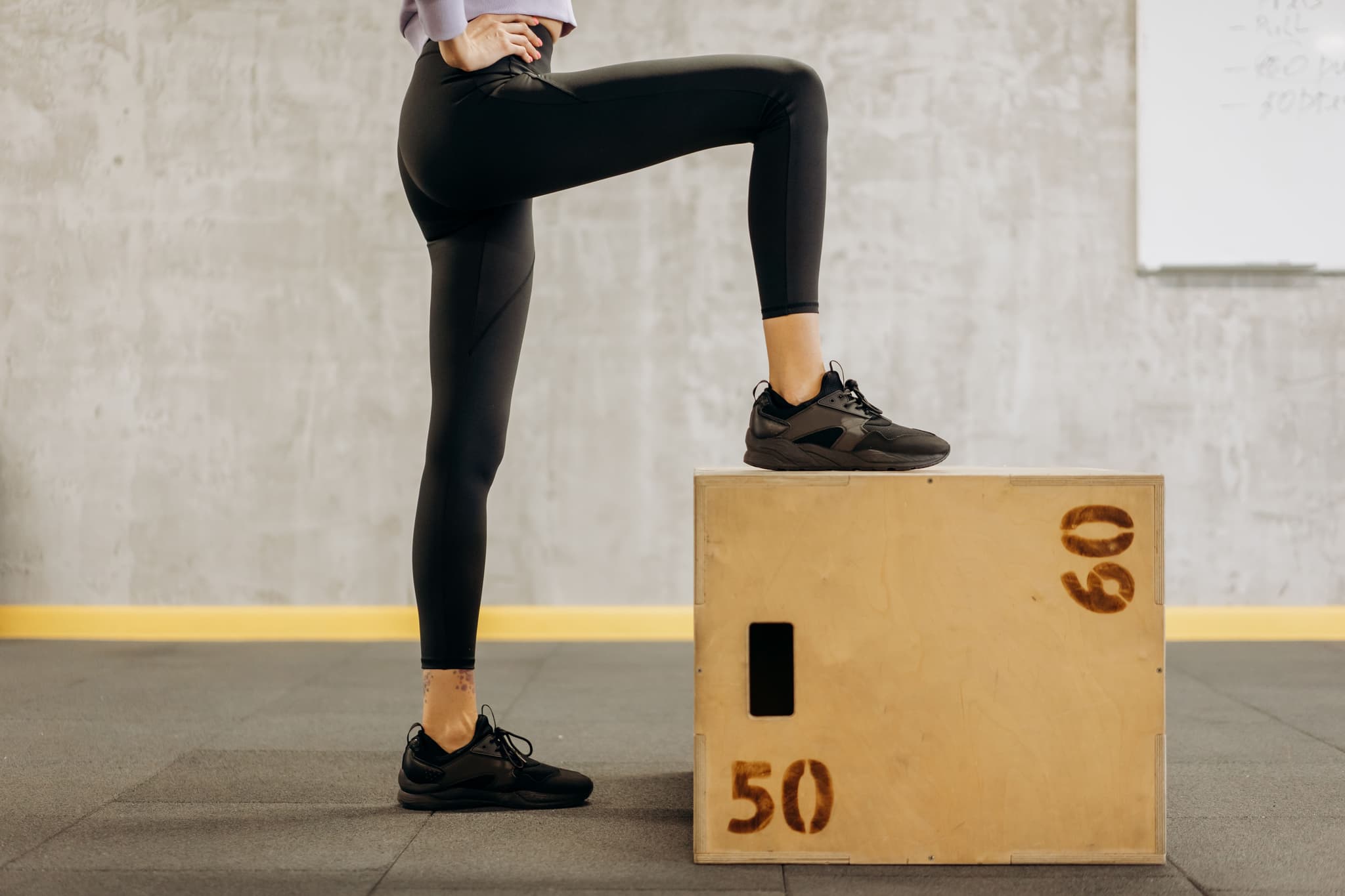
Step-Ups for Hamstrings: Box Height, Stance & Form Guide
Are step-ups actually a hamstring exercise, or just quads in disguise? Here's how box height, stance, and hip hinge decide the answer.
7 Progressive Overload Mistakes Beginners Make (and Fixes)
Stalled lifts? You might be making one of these 7 progressive overload mistakes beginners make without realizing it. Get the symptoms, causes, and exact fixes before it costs you months.