

How to Add Yoga to Your Strength Training Routine as a Beginner
Worried yoga will tank your lifts? Get a real day-by-day 2-week plan for how to add yoga to your strength training routine as a beginner, no guesswork required.
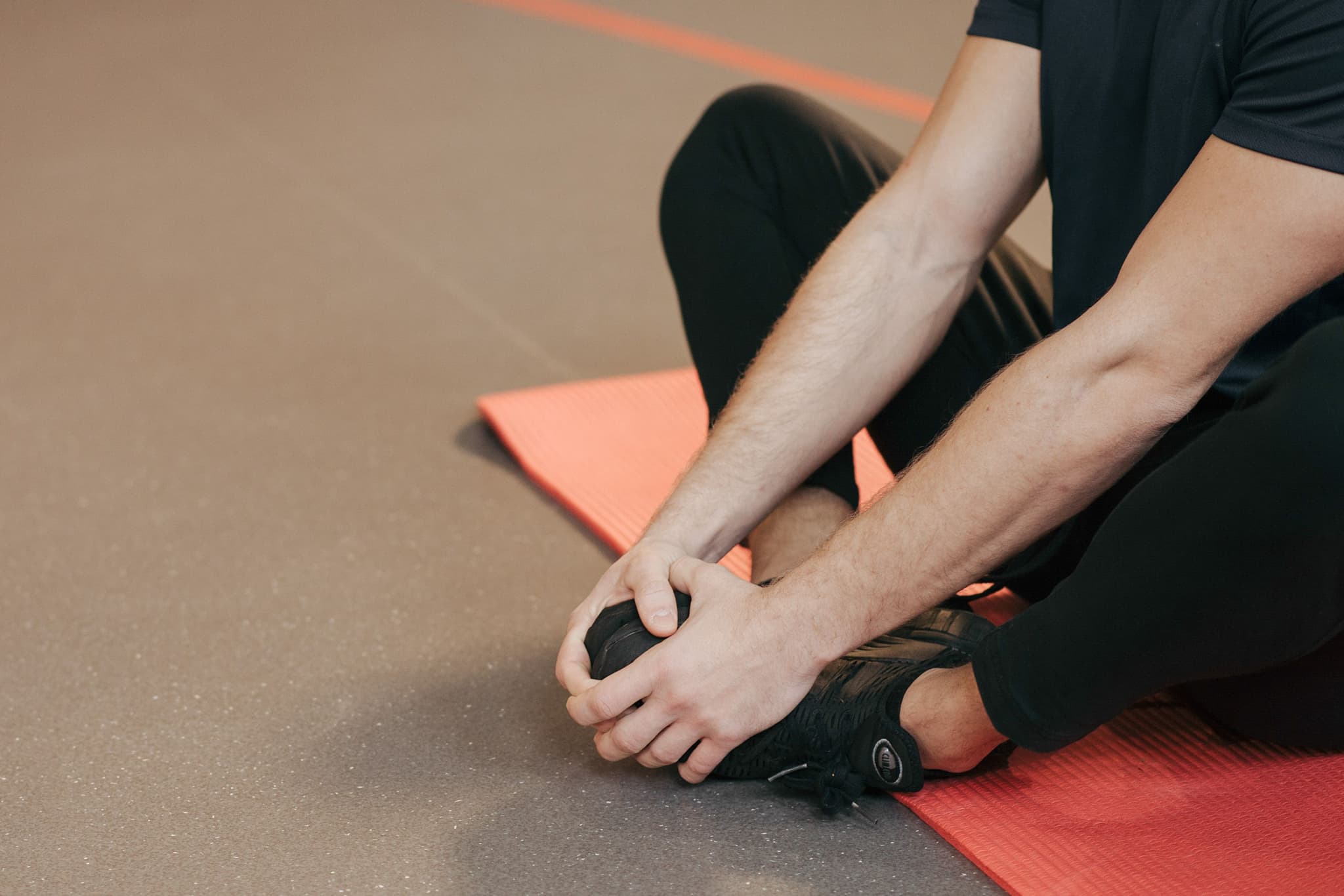
You lift weights to build strength, not lose it in a stretch hold. That's the risk with yoga if you time it wrong. Here's exactly how to add yoga to your strength training routine as a beginner, without wrecking your lifts.
Most guides stop at "try some poses" and leave you guessing. You'll get a real 2-week schedule here, day by day, showing which poses go where, plus the reasoning behind why timing matters more than which pose you pick. Research on static stretching backs this up: pre-event static stretching of the prime movers may have a negative effect on force production, power performance, strength endurance, reaction time, and running speed. Save static holds for after your lifts, when your muscles are warm and you're not asking them to fire at full strength.
This article breaks down how many days to combine both, which yoga style fits which part of your workout, and the mistakes that trip up most lifters in week one. Copy the plan, adjust it to your program, and start this week.
How to Add Yoga to Your Strength Training Routine: The Quick Answer
Here's how to add yoga to your strength training routine as a beginner:
Keep stretch holds under 30 seconds. Longer holds cause measurable strength loss.
Save yoga for after lifting, not before your working sets.
Pick 2-3 poses that target your trained muscle groups that day.
Practice full yoga sessions on separate days, 2-3 times a week.
Track strength numbers monthly to confirm you're not losing power.
Research shows that pre-exercise static stretching reduces strength by about 5.4% on average, and the effect worsens with longer stretch durations. The smallest strength losses occur when holds stay at or under 45 seconds. Timing and dose matter more than most lifters realize.
The plan below breaks down exactly how to schedule this week by week.
Warm-Up, Cooldown, or Separate Day? A Decision Framework Based on Your Goals
Do yoga after your lifting session, not before, unless you keep stretches under 30 seconds. The right placement depends on what you're training for.
If your goal is max strength or power
Skip long static holds before you lift. Research backs this up.
Deficits in strength and power measurements following static stretching have ranged from 5% to 30% according to research by Young and Behm. One study on knee flexion found that Winchester et al. investigated whether the number of sets of static stretching performed would decrease maximum strength on a knee flexion 1RM test, and other researchers measuring similar lifts found reductions of 7.3% and 8.1% in knee flexion and knee extension 1RM following acute static stretching.
Static stretching has also cut rep counts in exercises like the leg press compared to no stretching at all.
If you're chasing PRs or training for power output, save your yoga poses for after your working sets.
If your goal is hypertrophy or general fitness
You have more room to play here. A 2021 Journal of Strength and Conditioning Research study evaluated the effects of static and dynamic stretching performed before resistance training on knee flexor strength gains in 45 untrained young men, split into a static stretching group, a dynamic stretching group, and a no-stretching control group, following them through eight weeks of seated leg curl training. Neither stretching approach tanked their long-term strength or hypertrophy gains.
That's good news when you add yoga to strength training routine as a beginner and don't want to plan every session down to the minute. General fitness goals give you flexibility on timing.
Keep pre-lift holds short. Research suggests that short-duration static stretching of 60 seconds or less per muscle group only trivially impairs subsequent strength and power, cutting performance by roughly 1 to 2 percent, while longer stretch durations of more than 60 seconds per muscle group appear to cause substantial declines in strength and power of about 4 to 7.5 percent. Stay on the short side of that line and you'll dodge most of the deficit.
If you're short on time: the separate-day option
Some weeks don't leave room for stacking yoga onto lifting days. That's fine.
Block out one dedicated day for a longer yoga session. You get the mobility work without touching your strength numbers.
This works well if you're new to both practices and don't want to juggle too much in one workout.
How Many Days a Week Should Beginners Combine Yoga and Strength Training?
Start with two or three days a week when you first add yoga to strength training routine as a beginner. That's enough to build the habit without wrecking your recovery.
Your body needs time to adapt to new movement patterns. Beginners often push too hard in week one, then burn out by week three.
Pick your lifting days and tack on 10 to 15 minutes of yoga afterward. Keep it simple. This is how to begin yoga with strength training without overcomplicating things.
Timing matters as much as frequency. Research shows that stretch holds under 30 seconds during rest intervals don't cause much strength loss. Push past 30 to 45 seconds, and you're looking at a measurable drop.
One study found a single set of static stretching cut knee flexion 1RM strength by 5.4 percent. Six sets dropped it another 12.4 percent. Leg press strength fell as much as 20.8 percent compared to no stretching at all.
A 2021 study in the Journal of Strength and Conditioning Research tracked 45 untrained men through eight weeks of seated leg curl training, comparing static stretching, dynamic stretching, and no stretching before lifting. Save your deep stretching for after the session, not before it.
Twice a week is enough to start building a flexibility base.
How to Add Yoga to Strength Training Routine: Your 2-Week Beginner Starter Plan
Reading about how to add yoga to strength training routine only gets you so far. You need a schedule you can follow starting Monday.
Copy this plan into your notes app. Adjust the exercises to match your current program, but keep the timing and order as is.
Week 1: Learning the Pairing
This week is about getting your body used to combining the two without overthinking it.
Day | Session |
Mon | Lift (full session), then 5-min cooldown stretch targeting muscles you trained |
Tue | Rest or light cardio |
Wed | Lift (full session), then 5-min cooldown stretch |
Thu | Rest |
Fri | Lift (full session), then 8-min cooldown stretch, add 2 poses for hips and hamstrings |
Sat | 15-min standalone yoga flow, gentle pace, no lifting |
Sun | Rest |
Look at Friday: you stretch hips and hamstrings even if your lift that day didn't target your legs. That's deliberate, not an oversight.
One study had lifters stretch their chest for 40 seconds between sets of seated rows, a lift that depends on the lats and biceps, not the chest. Significant increases in the number of repetitions were noted under antagonist stretching compared with passive rest (p < 0.05). Significant increases on latissimus dorsi (p = 0.002) and biceps brachii (p = 0.001) muscle activity were noted between sets under antagonist stretching compared with passive rest. Stretching a muscle that isn't doing the work can still help the working muscle perform better.
Week 2: Building the Habit
Now you extend the stretch time and start layering in a proper standalone session.
Day | Session |
Mon | Lift (full session), then 8-min cooldown stretch |
Tue | 20-min yoga flow, focus on shoulders and thoracic spine |
Wed | Lift (full session), then 8-min cooldown stretch |
Thu | Rest |
Fri | Lift (full session), then 10-min cooldown stretch, 3 poses minimum |
Sat | 20-min standalone yoga flow |
Sun | Rest |
By day 14, the pattern runs on autopilot: lift, then stretch, plus one yoga session on the weekend.
Once this feels automatic, start picking poses for your specific weak points instead of generic ones.
Beginner Yoga for Lifters: Which Style Actually Fits Your Routine
Not all yoga works the same way. Two styles matter most when you add yoga to strength training routine as a beginner: flowing sequences and static holds. Knowing when to use each keeps you from sabotaging your own workout.
Vinyasa flow, for warm-ups
Vinyasa yoga moves you through poses without stopping. Think sun salutations, cat-cow, low lunges flowing into downward dog. Nothing gets held long enough to cool your muscles down.
Paul Warloski, RYT 200, a certified yoga instructor and personal trainer, says if your goal is general fitness, do your weight training or cardio first and save yoga for later. Before a lift, though, a moving flow works in your favor: it can act as part of a warm-up before running, lifting weights, or a HIIT class, as long as you save the long holds and deep stretches for your cooldown. That's the version you want on the barbell days.
Use vinyasa flow for 5 to 10 minutes before you touch a barbell.
Yin or restorative yoga, for cooldowns and rest days
Yin and restorative styles ask you to hold a pose for a minute or longer. Poses like pigeon, butterfly, or supported child's pose fall here.
Milica McDowell, a doctor of physical therapy, certified exercise physiologist, and VP of operations at Gait Happens, points to a slower session after strength work. Even after a strength training workout, a yoga session—ideally a restorative or yin class—can lock in muscle warmth to optimize mobility and flexibility work. Your muscles are already warm, so long holds support mobility instead of draining power.
Save these styles for after your lifts or on rest days entirely.
How to Add Yoga to Strength Training: A 5-Minute Pre-Lift Warm-Up Flow
Save the long holds for after your workout. Before you lift, your muscles need movement, not stillness. Paul Warloski, RYT 200, a certified yoga instructor and personal trainer, says that if your goal is general fitness, you should do your weight training or cardio first and save yoga for later. That advice lines up with the research: studies have found that pre-event static stretching of the prime movers may actually have a negative effect on force production, power performance, strength endurance, reaction time, and running speed. Save the deep holds for your cool-down.
Here's a 5-minute sequence to run before every lifting session on your schedule:
Cat-Cow, 8 rounds.
Inhale to arch, exhale to round. This wakes up your spine and core.
Downward Dog to Plank, 8 rounds.
Flow between the two on each breath. Warms shoulders, hamstrings, and wrists.
Low Lunge with Twist, 5 breaths each side.
Opens hips before squats or deadlifts.
World's Greatest Stretch, 5 reps per side.
Combines a lunge, twist, and hamstring reach in one move.
Standing Forward Fold to Roll-Up, 5 reps.
Finishes by loading the spine gently and standing tall.
Move fast and stay breathing. Now you're ready to hit your first working set.
The Post-Lift Cooldown Flow: 8-10 Minutes, Slow and Static
After your last set, your muscles are warm and pliable. This is when static holds actually earn their place in your routine.
Here's why timing matters. Static stretching exercises of a muscle group for more than 30 seconds should be avoided before performances requiring maximal strength. Hold a stretch that long before lifting, and you're weaker for your next set. Hold it after you're done training, and that deficit doesn't matter anymore. This is the key difference between how to begin yoga with strength training and how to warm up before it.
Try this sequence:
Child's Pose, 90 seconds. Sink your hips back, arms extended.
Seated forward fold, 90 seconds. Target hamstrings and lower back.
Figure-four stretch, 60 seconds per side. Open up your hips after squats or deadlifts.
Supine twist, 60 seconds per side. Release your spine.
Legs-up-the-wall, 2-3 minutes. Let gravity drain the fatigue out of your legs.
Physical therapist and exercise physiologist Milica McDowell notes that longer holds in a restorative or yin yoga class after a workout can work to your benefit. Save the dynamic flows for your warm-up. Save this slow, static work for right after you rack the weights.
Common Mistakes When Starting Yoga as a Weightlifter
Starting yoga as a weightlifter comes with a few predictable traps. Below are the ones that catch most beginners, along with how to fix them.
Mistake: Static stretching before heavy lifts. Long holds before squats or deadlifts kill your strength output. A single 30-second passive stretch was found to impair one-rep max by 5.4%, with the loss growing to 12.4% by the sixth stretch. In a separate trial, static stretching reduced the number of leg press reps performed by 20.8% compared to no stretching. Fix: save static poses for after your session.
Mistake: Adding daily yoga on top of your full lifting split. Too much volume too fast leads to burnout, not gains. Fix: start with two sessions a week and build from there.
Mistake: Pushing through post-lift soreness during yoga. Sore muscles need gentle movement, not deep forced stretches. Fix: ease into holds and back off if you feel sharp pain.
Get the timing right and yoga supports your lifts instead of competing with them.
FAQ: Yoga and Strength Training for Beginners
Does yoga count as strength training?
No, not in the traditional sense. Yoga builds isometric strength and control, but it doesn't overload your muscles the way barbells and dumbbells do.
Poses like chair pose or plank ask your muscles to hold tension, not progressively adapt to heavier loads. Yoga supports your lifts. It doesn't replace them.
Can yoga help you get stronger for lifting?
Yes, when you use the right type at the right time. Dynamic stretching before lifting warms up joints without sapping power output.
A 2021 study in the Journal of Strength and Conditioning Research evaluated the effects of dynamic and static stretching performed before resistance training on knee flexor strength gains in 45 untrained young men. Researchers compared a static stretching group, a dynamic stretching group, and a control group that skipped stretching altogether. The dynamic stretching group came out ahead on strength gains, giving you a reason to save static holds for after your session rather than before it.
Will yoga make me lose muscle?
No, not from occasional sessions. The real risk shows up when you stretch statically right before heavy lifts.
One set of static stretching can cut knee flexion 1RM strength by 5.4%, six sets push that deficit to nearly 18%, and leg press reps can drop by up to 20.8% compared to no stretching at all. Keep static holds under 30 seconds if you're stretching mid-workout, and you'll sidestep most of that strength drain.
The Bottom Line
The 2-week plan is a starting point, not scripture. If your legs are trashed from squats on Wednesday, push yoga to Thursday. If work blows up your schedule, drop to two sessions that week instead of three. Nobody's grading you on compliance here.
What actually matters is the decision rule: move first, hold still second. If you're short on time, put yoga on its own day entirely. Get that sequencing right and everything else—poses, duration, weekly frequency—is just detail you can adjust as you learn your own body.
When you add yoga to strength training routine as a beginner, focus on two things: protect your working sets and use the cooldown window on purpose. Stay consistent long enough to actually see what changes.
So skip the overthinking. Open your calendar, block 5 minutes before Monday's lift and 10 after, and start Week 1 this coming Monday.